
Courses
Digital marketing for plastic surgeons means using search, local listings, paid media, social proof and structured follow-up to turn private procedure research into booked consultations. What separates it from every other vertical is that four rulebooks govern it at once: medical council ethics, advertising self-regulation, consumer protection law, and the ad platforms. Get the marketing right and break the compliance, and you have bought a problem more expensive than an empty appointment diary.
Digital marketing for plastic surgeons defines the coordinated use of five channels to move a prospective patient from private curiosity to a scheduled consultation: search, local presence, paid media, social proof and structured follow-up.
The HIPAA Journal frames it as a multi-layered approach whose benefits vary with a surgeon’s certification, services, and the licensing laws where they practise. That last clause is the whole game. A routine tactic for a dentist in Ohio can be an ethics breach for a plastic surgeon in Kolkata.
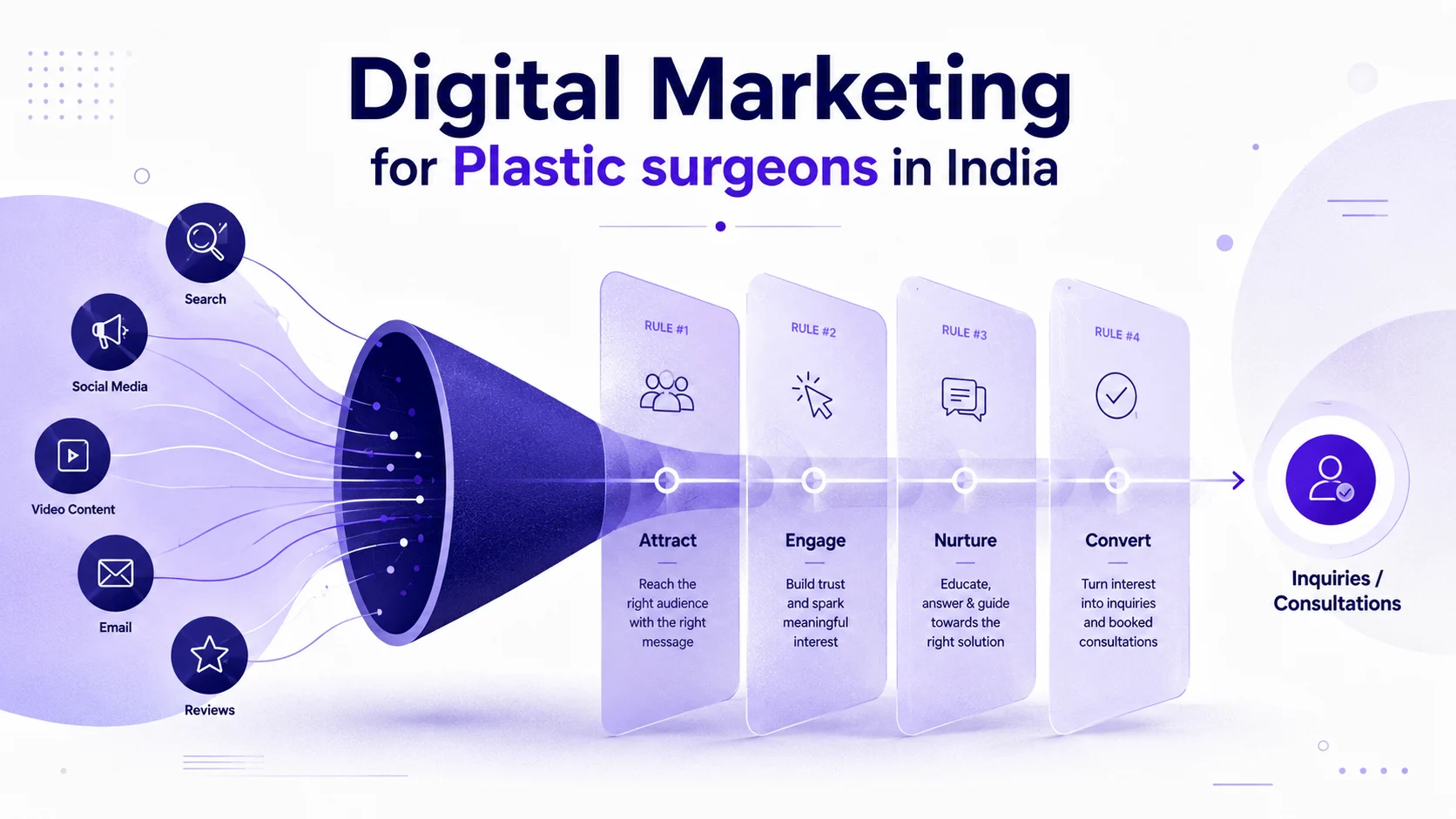
Cardinal Digital Marketing draws the line cleanly: plastic surgery addresses reconstruction of defects from birth disorders, trauma and illness; cosmetic surgery enhances appearance through procedures such as facelifts and rhinoplasty. Commercially, reconstructive patients arrive through referral and insurance, aesthetic patients through search and social. Same surgeon, two different funnels, and a services page that mashes them together serves neither.
Key Takeaways
In four stages, and each stage needs a different asset.
| Stage | What they type | Asset that wins |
|---|---|---|
| Problem awareness | “how to fix a deviated nose” | Blog or explainer video |
| Solution awareness | “blepharoplasty recovery time” | Procedure page |
| Surgeon evaluation | “plastic surgeon in Kolkata” | Google Business Profile plus surgeon bio |
| Consultation | “plastic surgery consultation booking” | Booking form and click-to-call |
Most clinic sites build only the last two rows, then complain that traffic is low. Demand is not the issue: citing the 2023 ISAPS survey, the Indian Journal of Plastic Surgery reported India ranked seventh overall in aesthetic procedures with over one million performed annually, and Grand View Research projects 10 to 12 per cent annual growth over five years. The question is what you can legally say to reach it.
Less than most clinics assume, and the rules are not where most people look.
Medical Council ethics: no solicitation. A registered medical practitioner may not directly or indirectly solicit patients, or invite attention to their skill, qualification or achievements. One nuance most agency blogs get wrong: writing for the India Corporate Law blog, Cyril Amarchand Mangaldas noted the NMC Registered Medical Practitioner (Professional Conduct) Regulations, 2023 addressed advertising by corporate and private hospitals for the first time, permitting only limited categories such as name, patient types, staff, facilities and fees.
The NMC then withdrew those 2023 Regulations. If a vendor quotes them as current binding law, you have learned something useful about that vendor. Who performs the procedure, meanwhile, is a factual differentiator you can state, since the NMC’s aesthetic-surgery guideline restricts these procedures to trained registered practitioners.
The Drugs and Magic Remedies Act, 1954: no outcome claims. The Act carries a schedule of conditions for which advertising a treatment is restricted. If a procedure touches a scheduled condition and your copy implies a cure or guaranteed result, that is a statutory problem, not an ethics problem. Describe the procedure; never promise the outcome.
The ASCI Code: no unsubstantiated superlatives. Per analysis by upGrowth, superlative claims require documentary evidence or recognised third-party validation under ASCI Code Chapter 1.1, read alongside the ASCI Healthcare Guidelines issued in 2023 and updated in 2024.
Consumer protection law: the one with teeth. The Central Consumer Protection Authority, under the Consumer Protection Act 2019 and its 2022 guidelines on misleading advertisements and endorsements, can issue penalties. Influencer and paid-testimonial disclosure obligations sit here.
The trap is filtering creative through one rulebook. ASCI evaluates the “best” language, the medical council evaluates the doctor’s face and the call to action, and the 1954 Act evaluates the outcome claim. Run creative through one filter, and you leave the other three exposed.
| Risky | Safer rewrite |
|---|---|
| Best rhinoplasty surgeon in Kolkata | Rhinoplasty performed by a qualified plastic surgeon |
| Guaranteed permanent results | Results vary between individuals |
| Painless, no downtime | Recovery timelines are discussed during consultation |
| 100% success rate | Over 400 procedures performed since 2015 |
| Look 10 years younger | Information on facial rejuvenation options |
| World-class cosmetic surgery centre | Accredited facility with in-house operating theatre |
Every rewrite still converts. None puts a registration at risk.
This is the most-asked and worst-answered question in the category of digital marketing for plastic surgeons. Meta’s standards restrict before-and-after transformation imagery for specific product types rather than banning the format, and its business help centre states it does not allow images that display idealised results. Agency reporting in July 2026 claims Meta has shifted health and wellness enforcement from product-based to claims-based; treat that as unverified until it appears in Meta’s own standards, because policy reporting frequently runs ahead of the official text.
The Indian position did not change. Branding Pioneers flags that before-and-after photographs draw particular scrutiny in aesthetics, dermatology and hair restoration, because they imply an outcome, function as testimonials, and can collide with the Drugs and Magic Remedies Act where the underlying condition is scheduled. The principle that survives every revision: platform approval is not legal clearance.
The standard advice is to drop before-and-after photos and use patient testimonial videos instead. That advice is comforting and wrong in the same breath. A testimonial that describes an outcome is the same claim as a photo that shows one. “The swelling was gone in a week,” spoken by a patient, is an unqualified efficacy statement the moment it is presented as generally representative rather than one person’s variable experience.
The CCPA’s 2022 guidelines require the claim inside a testimonial to be substantiated to the same standard as the advertiser’s own claim. A testimonial is not a liability shield; it is the advertiser’s claim in someone else’s voice. Two consequences most clinics have not absorbed. Incentivised or paid reviews carry a disclosure obligation, so a gifted procedure in exchange for a reel is a material connection that must be disclosed
The safer structure builds testimonial content around experience of care, meaning communication, comfort and staff, rather than procedure outcome. The uncomfortable part: clinics running testimonial-heavy feeds today carry the same exposure as before-and-after photos. They have simply not been reported yet.
Procedure explainer videos where the surgeon teaches rather than sells, facility footage that builds confidence without claiming outcomes, education carousels on recovery and candidacy, and credential proof such as fellowships and published papers. And remember Meta reviews the landing page, not just the ad, so a compliant ad pointing at a page full of superlatives still gets disapproved.
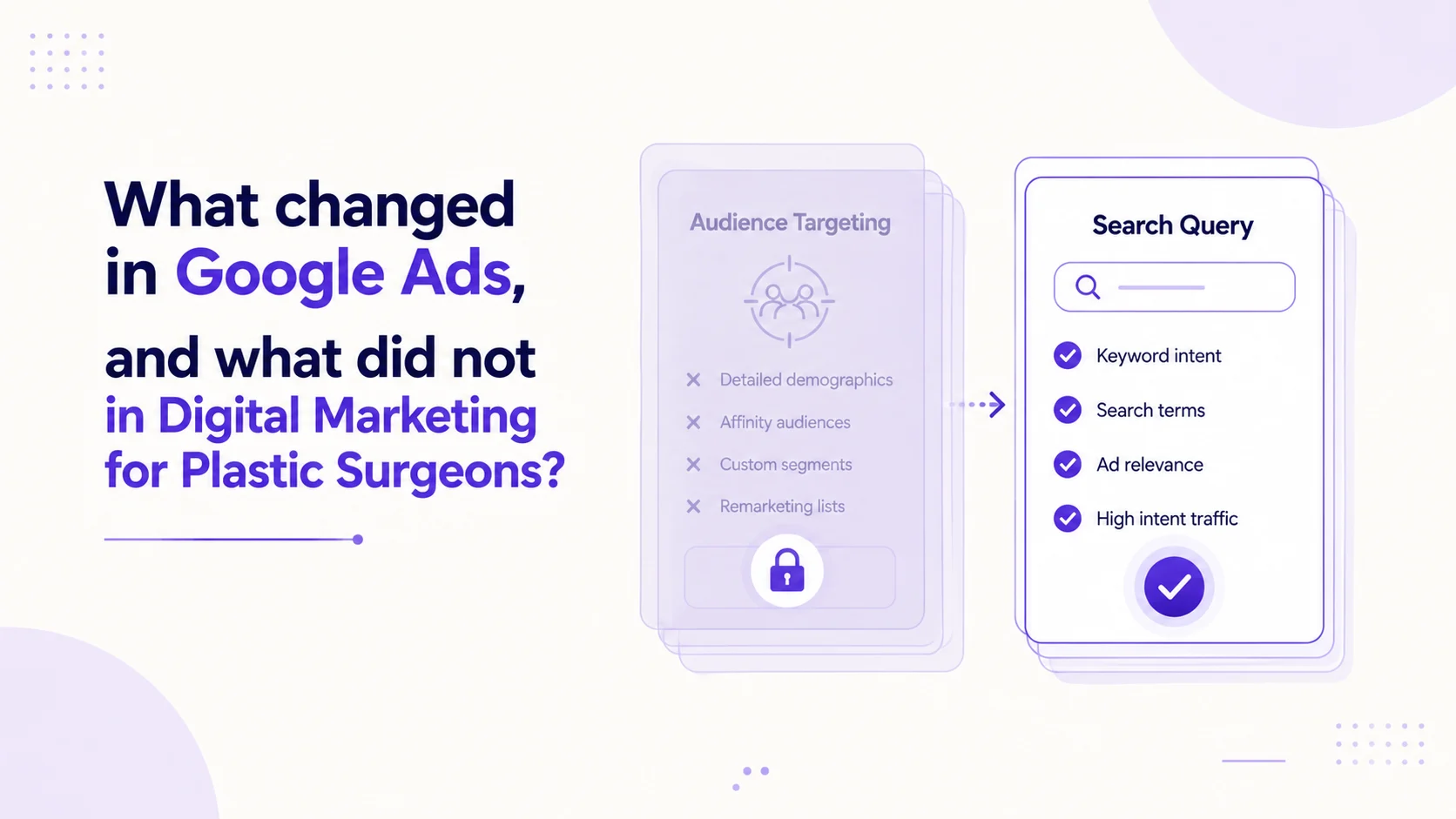
What loosened. Google announced on 4 September 2025 that it would remove Mature Cosmetic Procedures from its Sexual Content advertising policy, implemented from 22 September 2025. Before this, procedures involving intimate body areas were frequently caught by adult content filters even when medically appropriate. Nudity and minor-protection policies still apply.
What did not change and blocks most accounts. Google’s Health in personalised advertising policy names cosmetic surgery and injections as a sensitive interest category. For these, you can use predefined Google audiences, but you cannot use advertiser-curated audiences, and the same restriction applies to remarketing with Customer Match. Read that again if you run a clinic account. No remarketing lists. No Customer Match. Any vendor telling you to build the programme on CRM uploads is describing a policy violation.
What works instead: search intent, not audience intent, since “gynecomastia surgery cost in Kolkata” is a keyword, not an inferred health condition. One campaign per procedure family, because rhinoplasty and botox share nothing commercially. Geography and query specificity as your real targeting layer. And aggressive negative keyword hygiene, because this vertical attracts enormous informational and job-seeker traffic.
Usually not for showing a result, but for how the “before” is framed. Meta’s health and wellness standards rest on a principle most clinics never read: ads must not generate negative self-perception to sell a service. Circle the flaw, add a shame hook, and you have a policy violation regardless of how good the surgeon is. Close-ups that isolate a body area, pinching fat, and “problem area” framing are specifically restricted. Granular health-condition targeting is long gone, so broad aesthetic and lifestyle interests are the only route.
Every article on “digital marketing for plastic surgeons” topic treats cost as a messaging problem and stops there. Financing language is its own regulated surface, under a different authority. The Reserve Bank of India’s position, held since 2013, is that zero-interest or “no-cost” EMI does not exist as a genuine product. The cost is always recovered, through a processing fee or a price loading the customer never sees isolated. Advertising “0% EMI” or “No Cost EMI” on a cosmetic surgery landing page therefore carries a misleading-advertisement risk that has nothing to do with medicine, and it matters because financing availability moves conversion harder than creative once a procedure crosses roughly one lakh rupees.
If you compliance-checked only the medical claims on a clinic page, you audited half of it.
This is the section missing from every competing article, and it is now the most likely source of an actual penalty. The Digital Personal Data Protection Act 2023 has been in force since Presidential assent in August 2023, and MeitY notified the DPDP Rules 2025 on 13 November 2025. Compliance is phased: Consent Manager registration opens from 13 November 2026, and full enforcement of notice, consent and data principal rights lands in mid-May 2027.
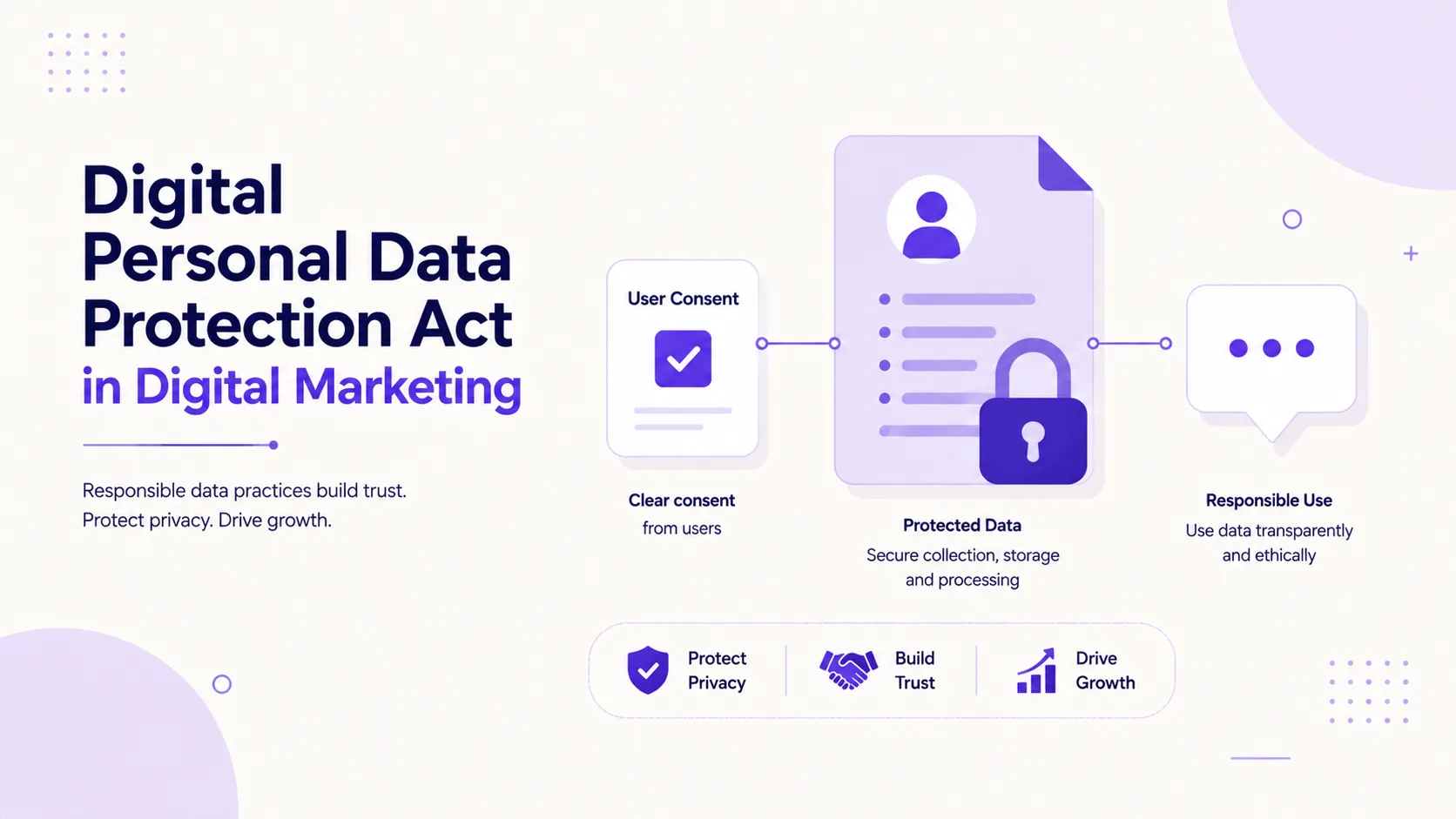
Section 6(1) requires consent that is free, specific, informed, unconditional and unambiguous, given through clear affirmative action. Blanket consent for “marketing and other purposes” does not qualify. In practice: every enquiry form needs a specific, unbundled, non-pre-ticked consent checkbox; consent must be recorded and retrievable, because a screenshot is not a consent record; withdrawal must be as easy as giving it, meaning a working opt-out in every WhatsApp template; and procedure interest attached to a phone number is health data, so storing “interested in gynecomastia surgery” in a shared spreadsheet is real exposure. Your CRM, your WhatsApp provider and your agency are all in scope.
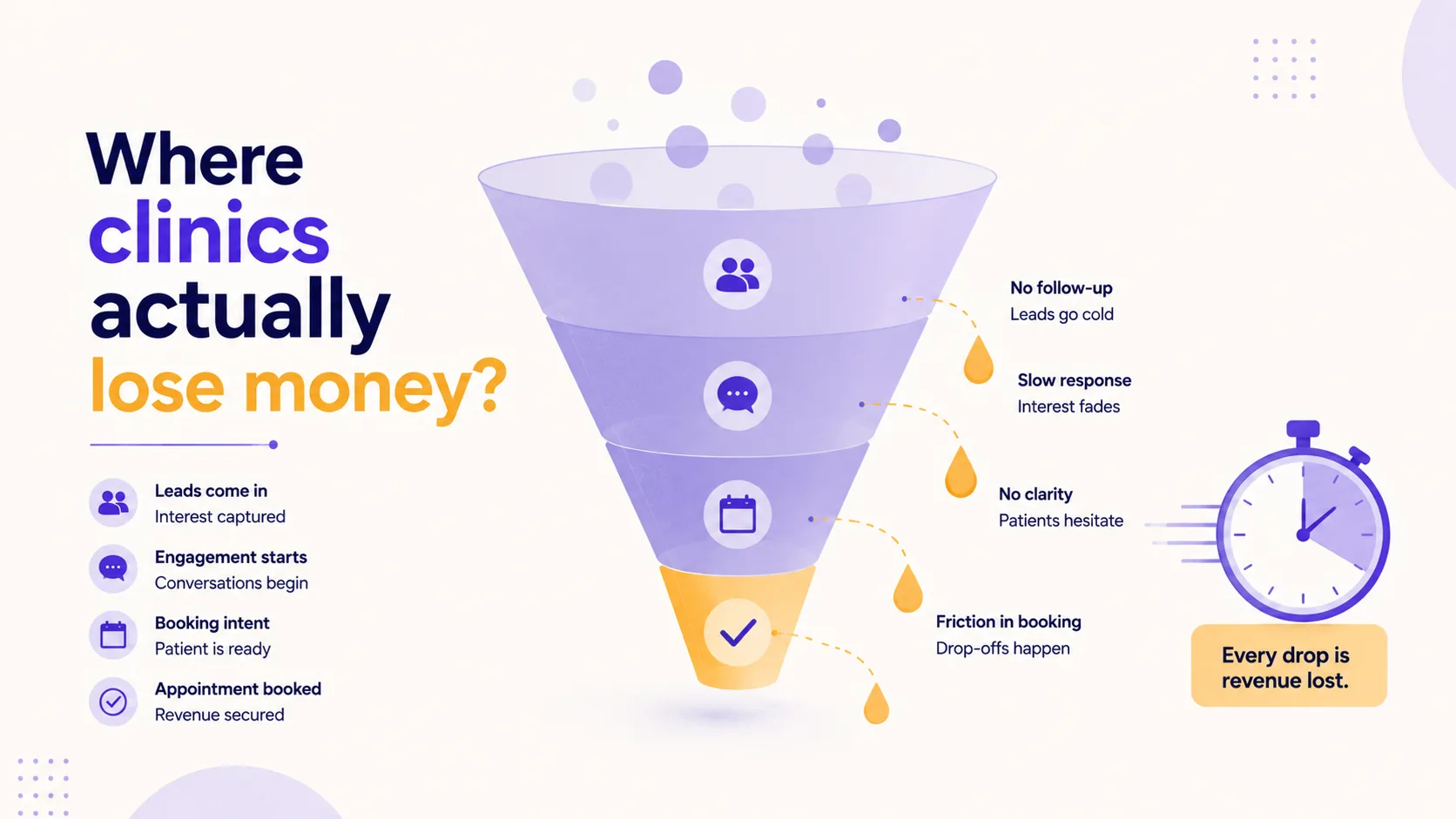
In case of digital marketing for plastic surgeons, it is not in the ads. In the seventeen minutes after the enquiry arrives. A clinic generating 60 enquiries a month and converting 8 to consultation does not have a marketing problem. It has an answering problem: unreturned calls, next-day WhatsApp replies, and untrained front desk staff quoting fees to a nervous first-time enquirer.
Fix these before increasing spend by a single rupee. Speed to first response, in minutes, because a patient who filled three forms consults with whoever calls first. Missed-call recovery for enquiries that came during OT hours. A trained patient coordinator rather than a receptionist with a script, since this person handles a self-conscious human asking about their body. Multi-touch follow-up, because elective decisions take weeks and a one-day two-call is not a sequence. And no-show recovery, because a confirmed consultation is not a completed one.
Stop using last-click. A patient may find you through a YouTube explainer in January and search your clinic name in June; last-click credits June and defunds January. The fix for competing articles never being named is offline conversion import. Capture GCLID and Meta click ID on every form submission against the lead in your CRM. Define CRM stages that mirror reality: Enquiry, Contacted, Consultation Booked, Consultation Attended, Surgery Scheduled. Push stage changes back into Google Ads as offline conversions and into Meta via the Conversions API, weighted by value. Set attribution windows to match the sales cycle, then optimise on Consultation Attended, not Lead.
Illustrative figures only. Substitute your own.
| Metric | Rhinoplasty | Botox |
|---|---|---|
| Enquiries | 40 | 60 |
| Cost per enquiry | ₹900 | ₹400 |
| Enquiry to consultation | 25% | 40% |
| Consultation to procedure | 30% | 60% |
| Cost per procedure | ₹12,000 | ₹1,714 |
Blended cost per enquiry is roughly ₹600, which tells you nothing. Only a procedure-level view shows which half of the budget is working.
Step Into the World of Digital MarketingLearn from Digital Marketing Experts |
|
| Advanced Diploma in Digital Marketing | |
| More Learning Options for you: Diploma in Digital Marketing | Google Ads Certification Training | Certification Course |
State medical council action in India, in terms of digital marketing for plastic surgeons, is frequently triggered by complaints, and the complainant is often another practitioner in the same city rather than a regulator running a sweep. That changes the calculus: you are not optimising against the probability of being audited, but against the probability that a competitor screenshots your Instagram ad. Two consequences follow. Your compliance standard should be the strictest reading, not the average one. And keep a dated archive of every ad creative, landing page version and claim substantiation document, because if a complaint lands, the file you can produce in a week is worth more than the argument you can make.
One page per procedure, not one page listing procedures. A services page mentioning fourteen procedures ranks for none of them; fourteen dedicated pages can rank for all fourteen. Structure each in order: plain-language definition in the first 50 words, suitable and unsuitable candidates, what the procedure involves, an honest recovery timeline, risks stated openly, cost factors without a fixed figure where compliance is a concern, surgeon credentials specific to the procedure, FAQs from real consultation questions, and a single clear next step. The risk section is not a conversion killer. It is a trust builder, and it is what quality raters look for on health content.
Then complete the Google Business Profile with real categories, photographs and accurate hours, because it outperforms most clinic websites for “near me” queries. Fix mobile page speed, because your patient is on a phone at midnight. Implement Physician, MedicalProcedure, FAQPage and LocalBusiness structured data.
Increasingly by asking rather than searching, and citation rules differ from ranking rules. Clinics cited by AI assistants share five traits: they answer directly in the first two sentences under a heading; they write self-contained sections a model can lift without context; they cite named sources with dates; they use tables, because structured data survives extraction; and they publish real author credentials, because an article by “Admin” carries no weight with a quality rater or a model. The practical move is a small library of procedure explainers, written or reviewed by the surgeon, with a visible author bio, citations and a last-updated date.
| Phase | Focus | Primary metric |
|---|---|---|
| Weeks 1 to 2 | Compliance audit; remove superlatives, guarantees, non-compliant imagery | Assets cleared |
| Weeks 2 to 4 | Consent and data layer; form language, opt-outs, records, vendor contracts | Consent records in place |
| Weeks 3 to 4 | Google Business Profile, review process, mobile speed | Profile completeness |
| Weeks 5 to 8 | Build top three procedure pages by margin, not by search volume | Indexed pages |
| Weeks 6 to 8 | Follow-up layer; missed-call recovery, coordinator training, WhatsApp workflow | Speed to first response |
| Weeks 9 to 12 | Launch narrow paid search on procedure plus city, small budget, strict negatives | Cost per consultation booked |
Advertising comes last. Sending traffic to a site that cannot convert and a phone nobody answers is an expensive way to learn a lesson.
Buying leads for instead of building assets, because vendors sell the same enquiry to four clinics and you then compete on speed and price rather than reputation. And treating the surgeon as a brand ambassador, because personal-skill promotion is exactly what the ethics code restricts. Position the practice, educate as the professional.
Most people researching “digital marketing for plastic surgeons” topic are not plastic surgeons. They are marketers and agency teams working out whether they can handle a regulated client without creating a liability. The honest answer: the channel skills are the easy part. What separates someone who can hold a healthcare account from someone who cannot is four competencies: reading a platform policy page as a primary source instead of a summary blog; structuring a paid account that performs without advertiser-curated audiences; setting up offline conversion import so a six-month decision cycle is measurable; and writing claim-safe copy that still converts. Those sit inside technical SEO, paid media, analytics and copywriting respectively, and it is the same sequence taught across the IDCM digital marketing programmes such as Advanced diploma in Digital Marketing, Diploma in Digital Marketing, Google Ads and so on.
Yes, with limits. Clinics may share factual information about services, facilities and qualifications. Individual practitioners may not solicit patients or promote personal skill, and no advertiser may make outcome guarantees or unsubstantiated superlative claims.
No. Google names cosmetic surgery and injections as a sensitive interest category, and advertisers in these categories cannot use advertiser-curated audiences. The same restriction applies to remarketing with Customer Match.
They carry significant risk. These photos imply a result and function as testimonials, and when the condition is scheduled under the Drugs and Magic Remedies Act 1954, they cross into a legal violation Treat it as a legal question, not a creative one.


 }})