
Courses
In the world of SEO and digital growth, your ability to answer content marketing interview questions is the difference between being a “writer” and being a “revenue generator.” Landing a top-tier role requires more than just knowing how to write; it requires a practical understanding of how content actually drives business outcomes. Whether you are preparing for your first big interview or looking to hire your next leader, this guide breaks down the essential concepts in an easy-to-understand, easy-to-apply format.
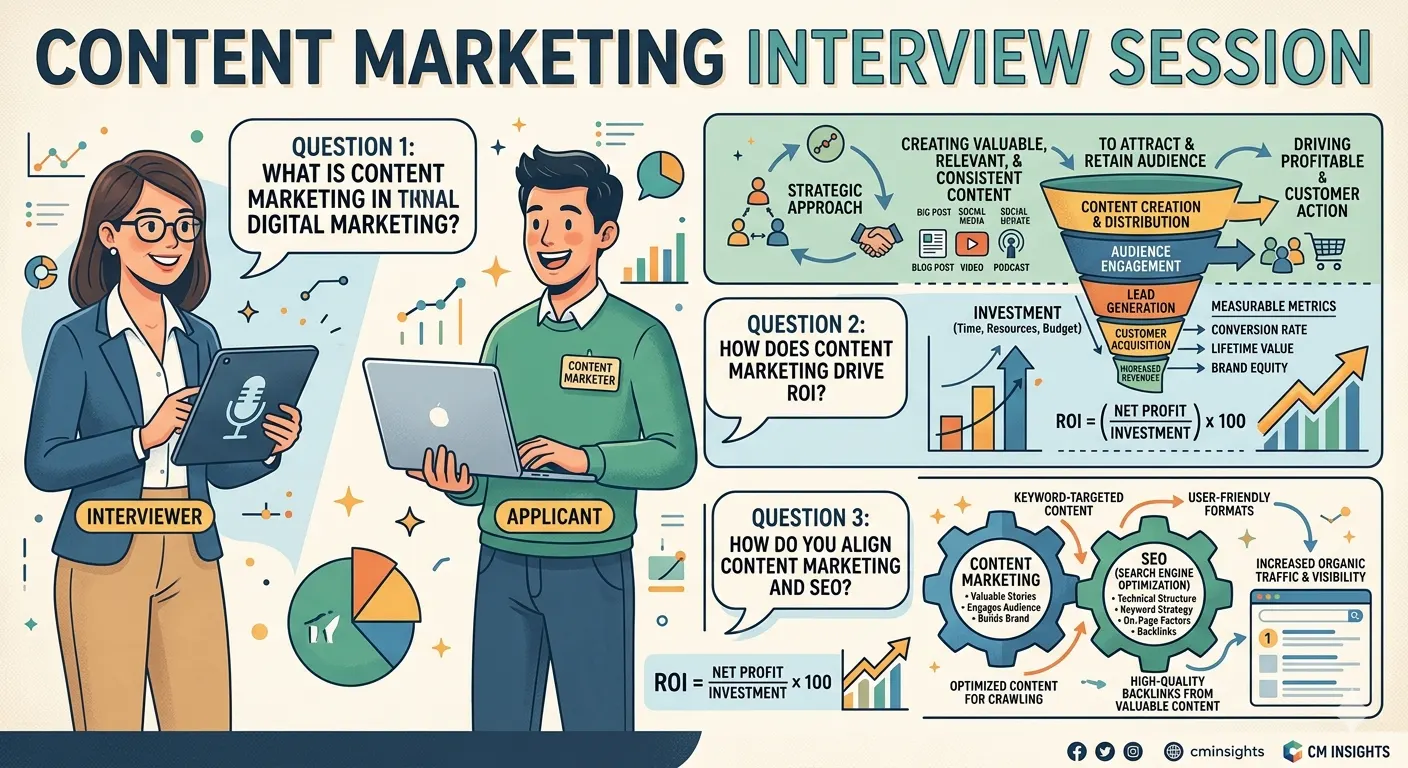
Content Marketing is a strategic approach focused on creating and distributing valuable, consistent content to attract a clearly defined audience. Unlike traditional ads that “interrupt,” content marketing “invites” the user in by providing value first.
Content marketing drives ROI (Return on Investment) by lowering long-term acquisition costs. While paid ads stop working the moment you stop paying, a high-ranking blog post acts as a permanent asset that generates leads for years at no additional cost.
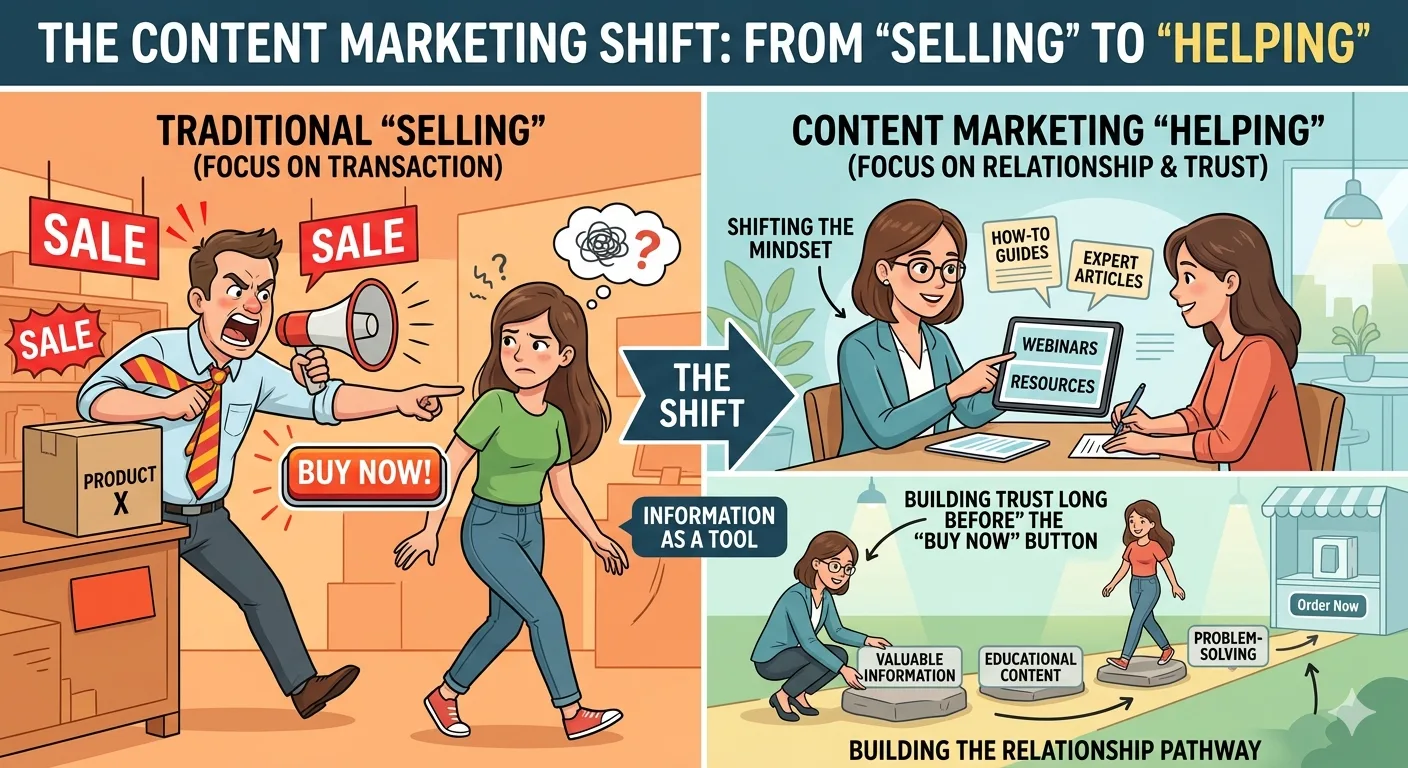
The content marketing meaning is the shift from “selling” to “helping.” It means using information as a tool to build a relationship of trust with a customer long before they ever see a “Buy Now” button.
To define content marketing today, we look at it as “owned media.” It is the process of a brand becoming its own publisher, creating a library of expertise that demonstrates to both Google and users that the brand is the top authority in its niche.
The importance of content marketing lies in its ability to differentiate. In a market where products are often similar, content is the only way a brand can showcase its unique personality, voice, and depth of expertise.
The advantages of content marketing include compounding traffic and brand authority. While PPC is great for quick wins, content marketing builds a “moat” around your business that competitors cannot simply outbid you for.
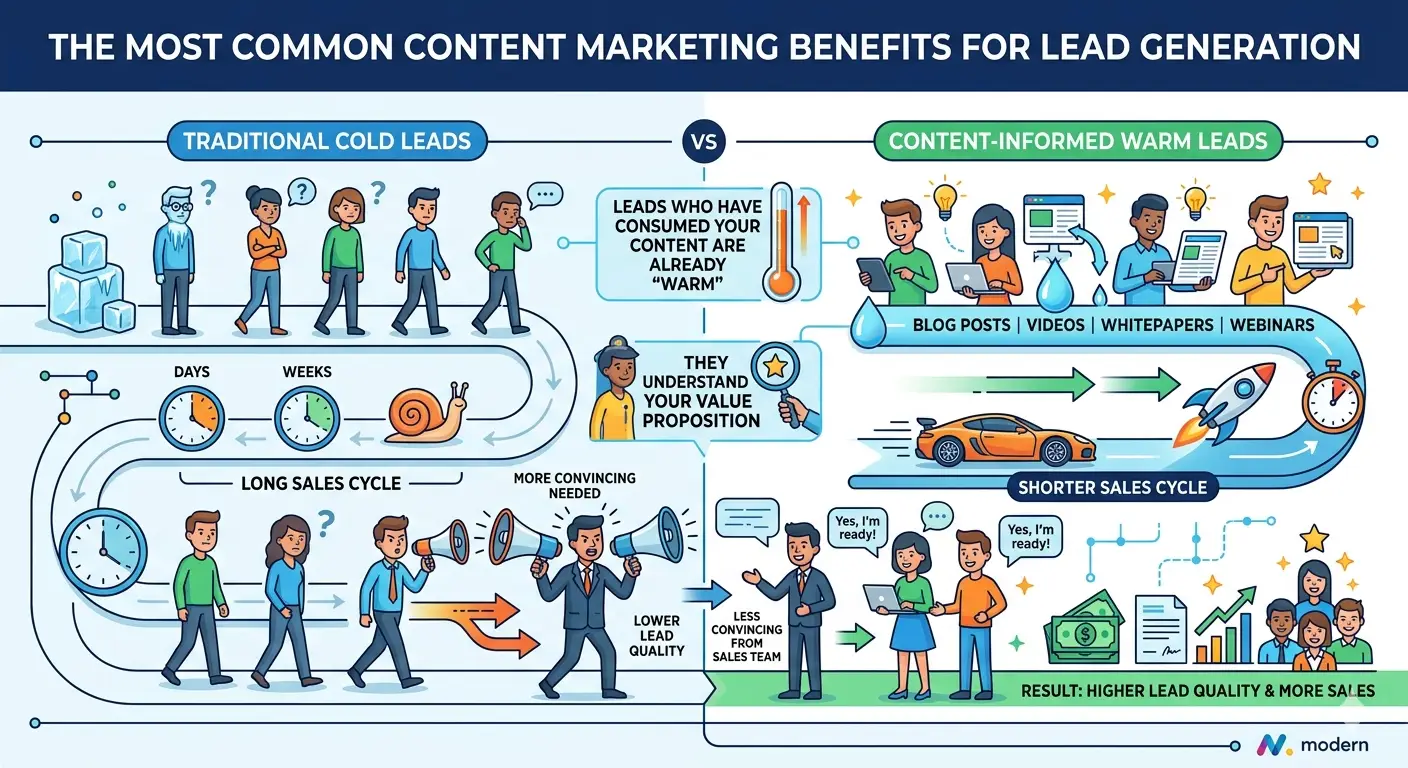
The top content marketing benefits are higher lead quality and shorter sales cycles. Leads who have consumed your content are already “warm”; they understand your value proposition and require less convincing from the sales team.
A content marketing plan must include target audience personas, a keyword strategy, an editorial calendar, and a distribution roadmap. It serves as the tactical guide to ensure every piece of content serves a specific business goal.
A content marketing strategy starts with identifying the “Search Intent” of your audience. You then map out “Topic Clusters” to ensure you cover every stage of the customer journey, from initial curiosity to final purchase.
Storytelling in content marketing is the bridge between data and emotion. It makes technical information relatable and helps customers visualise themselves achieving success with your product or service.
Step Into the World of Digital MarketingLearn from Digital Marketing Experts |
|
| Advanced Diploma in Digital Marketing | |
| More Learning Options for you: Diploma in Digital Marketing | Google Ads Certification Training | Certification Course |
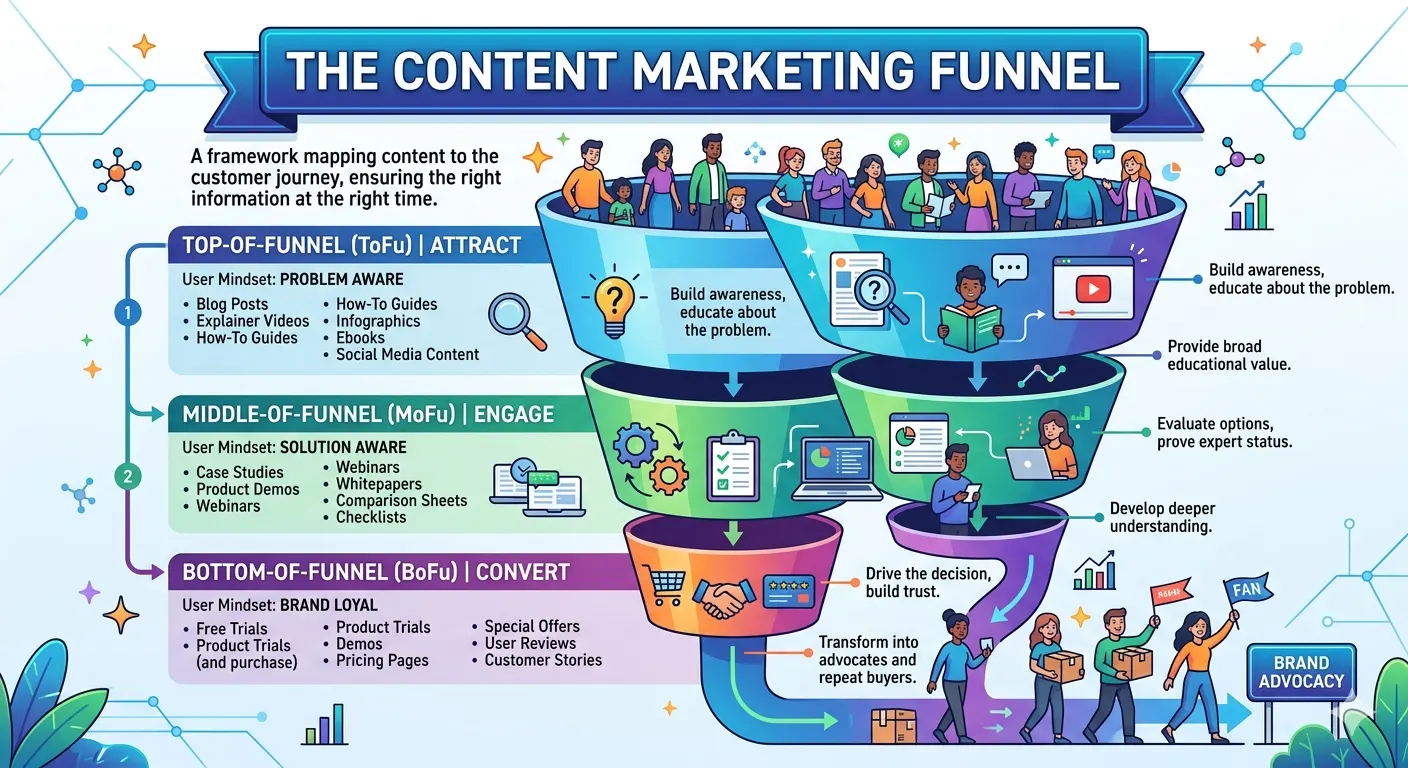
The content marketing funnel is a framework that maps content to the customer journey. It ensures you are providing the right information at the right time, moving a user from “Problem Aware” to “Solution Aware” and finally to “Brand Loyal.”
B2B content marketing is built on high-level expertise and logic. Since B2B purchases involve high stakes and multiple decision-makers, the content must address technical requirements, ROI, and long-term business scalability.
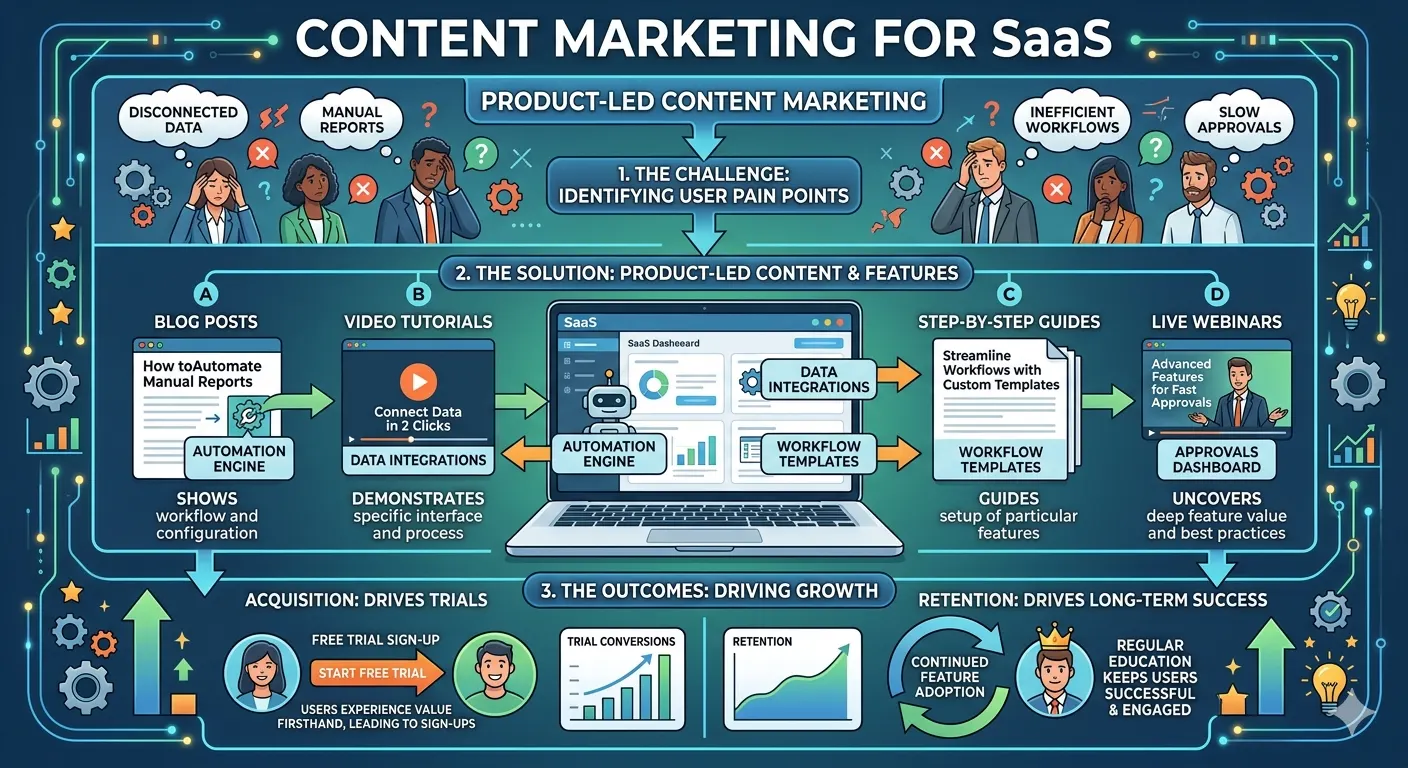
Content marketing for SaaS is primarily “Product-Led.” The goal is to show the user exactly how to solve their pain points using the software’s specific features, which helps drive both trials and long-term retention.
The most effective types of content marketing include SEO-driven blog posts for traffic, video tutorials for engagement, case studies for social proof, and whitepapers for deep authority in specialised niches.
Content marketing on social media involves creating “Native Content” that provides value without forcing a user to leave the platform. It builds brand affinity and ensures you are reaching your audience where they already spend their time.
Lead generation content marketing uses high-value assets, often called “Lead Magnets,” to exchange expertise for contact information. This allows you to build an email list and nurture prospects who aren’t quite ready to buy today.
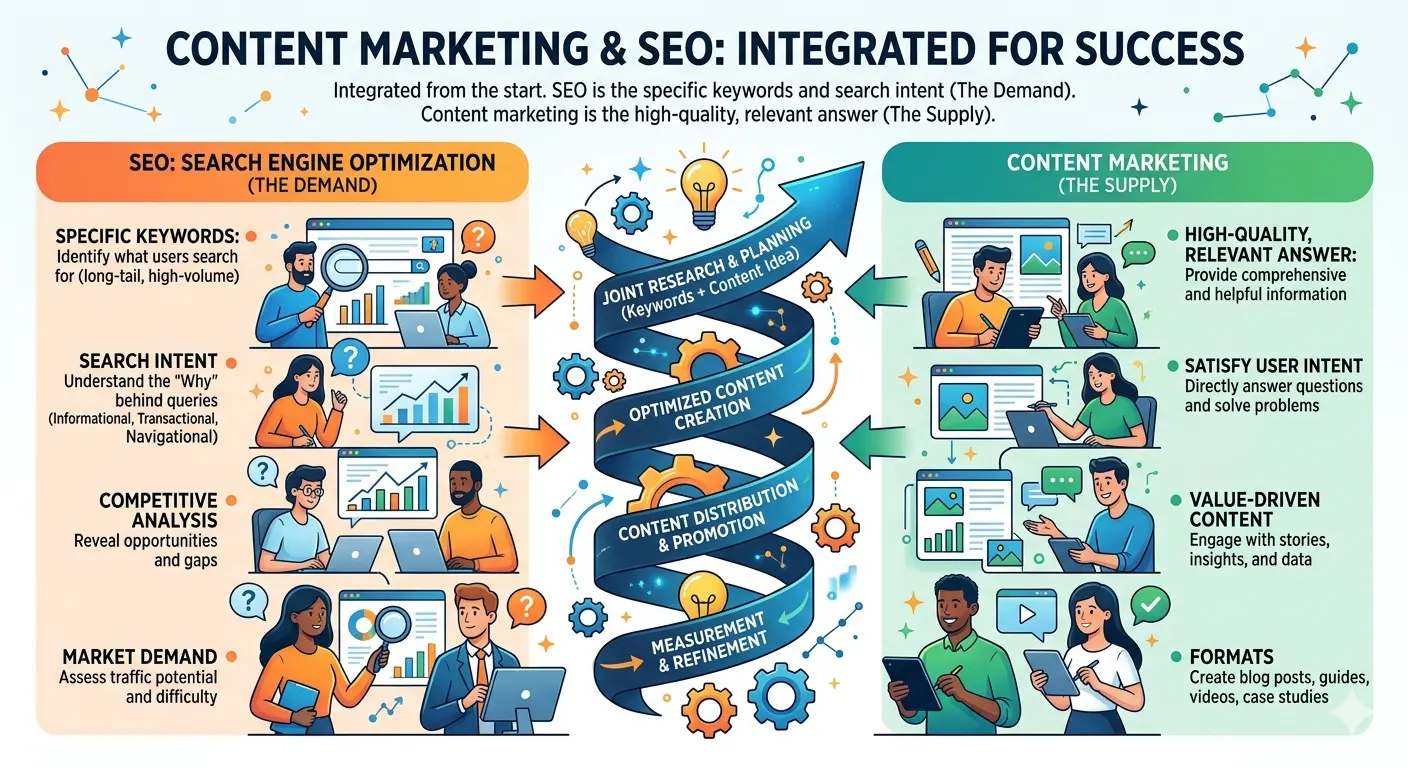
Content marketing and SEO must be integrated from the start. SEO identifies the specific keywords and search intent (the demand), while content marketing provides the high-quality, relevant answer that satisfies that intent (the supply).
My essential content marketing tools include SEMrush for keyword research, SurferSEO for content optimisation, and Google Search Console to track which pages are actually driving revenue-generating traffic.
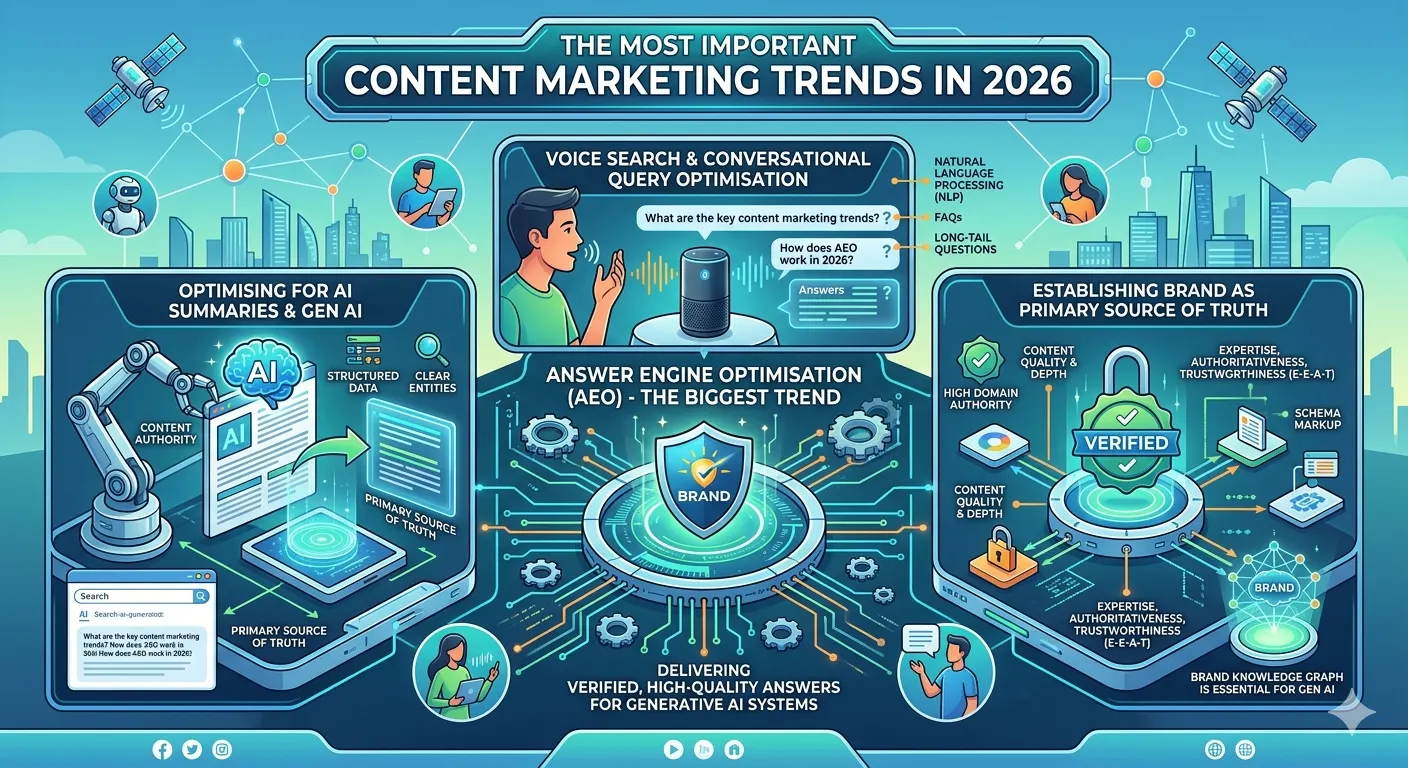
The biggest content marketing trends focus on “Answer Engine Optimisation” (AEO). This means optimising content for AI summaries and voice search, ensuring your brand is the primary source of truth for generative AI.
Effective content marketing examples include HubSpot’s vast educational blog and Red Bull’s lifestyle video series. Both brands focus on a specific audience interest rather than just their product, which builds massive global authority.
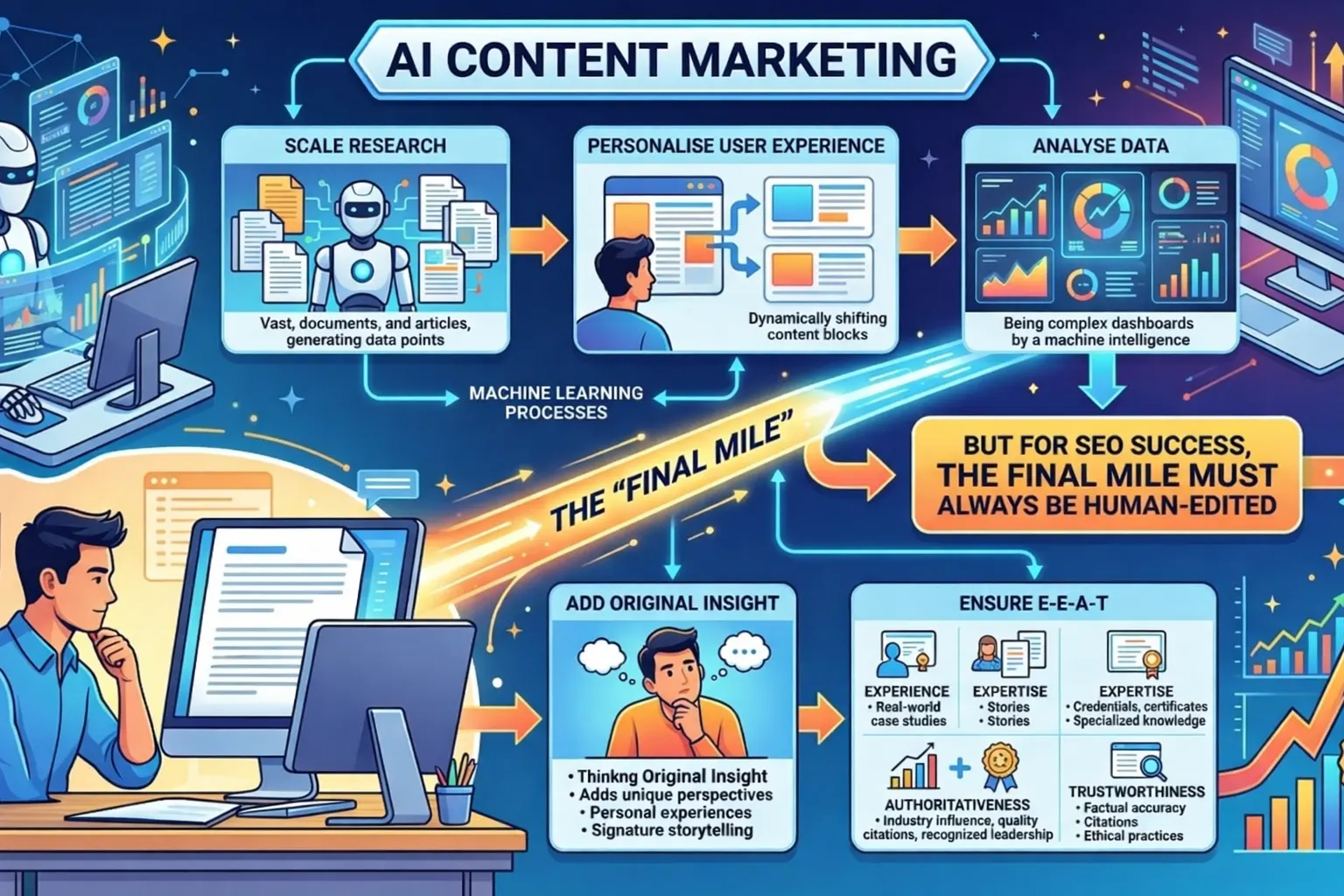
AI content marketing is the use of machine learning to scale research, personalise user experiences, and analyse data. However, for SEO success, the “final mile” must always be human-edited to ensure original insight and E-E-A-T.
User-generated content marketing (or UGC content marketing) involves leveraging content created by your customers, such as reviews or social media posts. It is the most authentic form of marketing because it acts as third-party validation for your brand.
It involves finding the highest-ranking content for a specific keyword and creating something significantly better, more data-driven, better designed, and more comprehensive to take over the No. 1 spot.
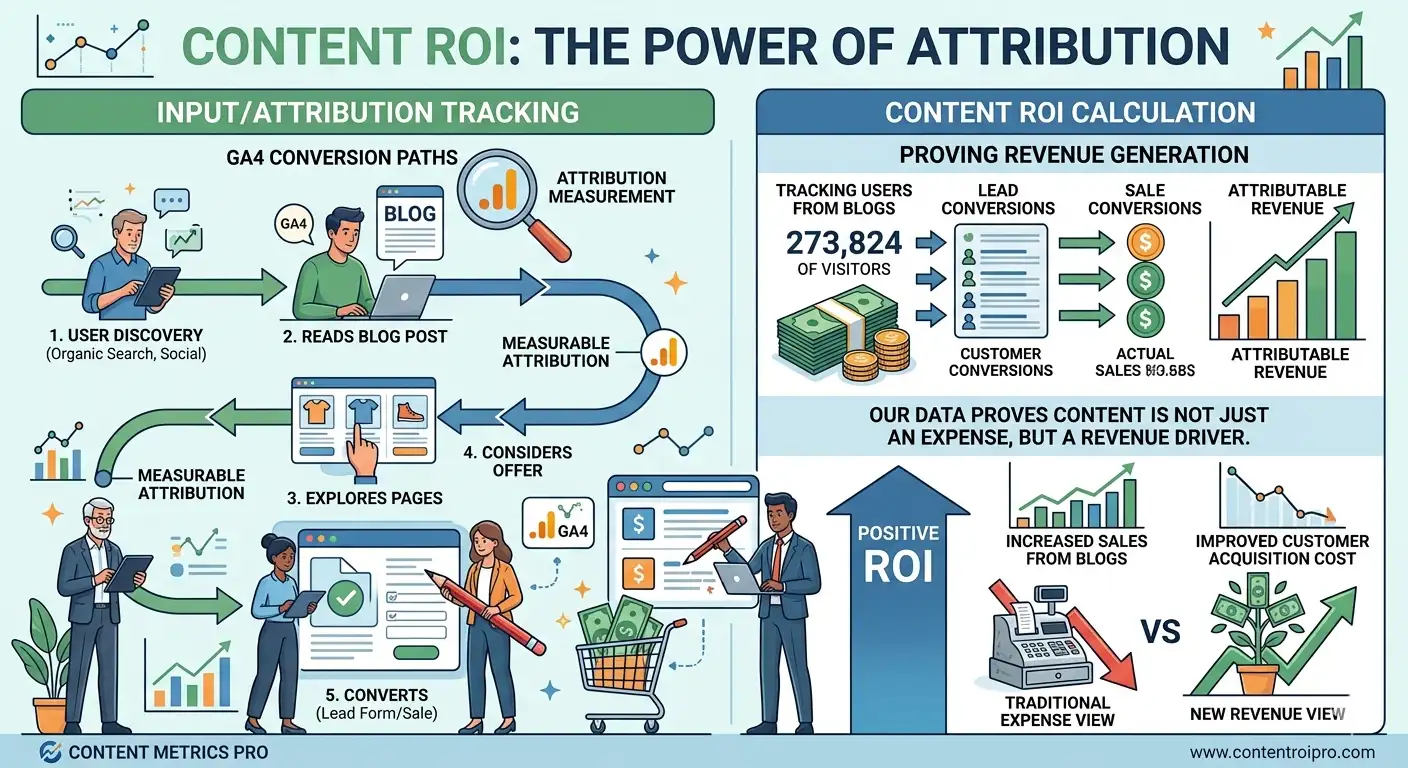
I look at “Attribution.” I track how many users read a blog post and eventually convert into a lead or sale. We measure this through GA4 conversion paths to prove that content isn’t just an expense, but a revenue driver.
Content decay happens when an old post loses rankings. We fix it by performing a “Content Refresh”; updating the statistics, adding new LSI keywords, and improving the user experience to reclaim the top position.
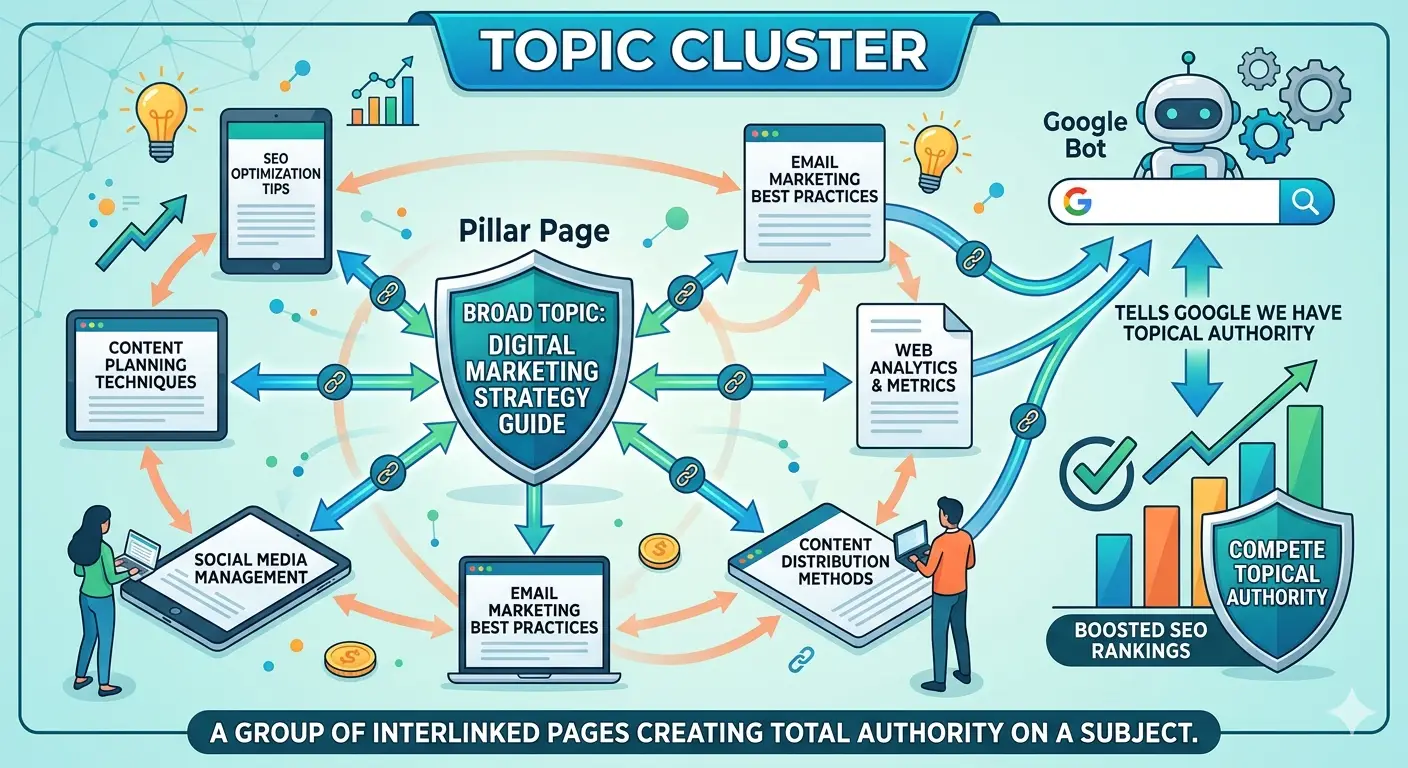
A topic cluster is a group of interlinked pages where one “Pillar Page” covers a broad topic and multiple “Cluster Pages” cover specific sub-topics. This structure tells Google that you have complete topical authority on a subject.
Search intent is the “why” behind a query. I categorise intent into four buckets: Informational (learning), Navigational (finding a specific site), Transactional (ready to buy), and Commercial Investigation (comparing options).
Evergreen content is information that stays relevant and useful for a long period, requiring minimal updates. It is the backbone of consistent organic traffic because it doesn’t rely on temporary trends.
It is the process of taking one large “hero” asset, like a 3,000-word technical guide, and breaking it down into dozens of smaller pieces, such as social posts, email tips, and short videos, to maximise reach.
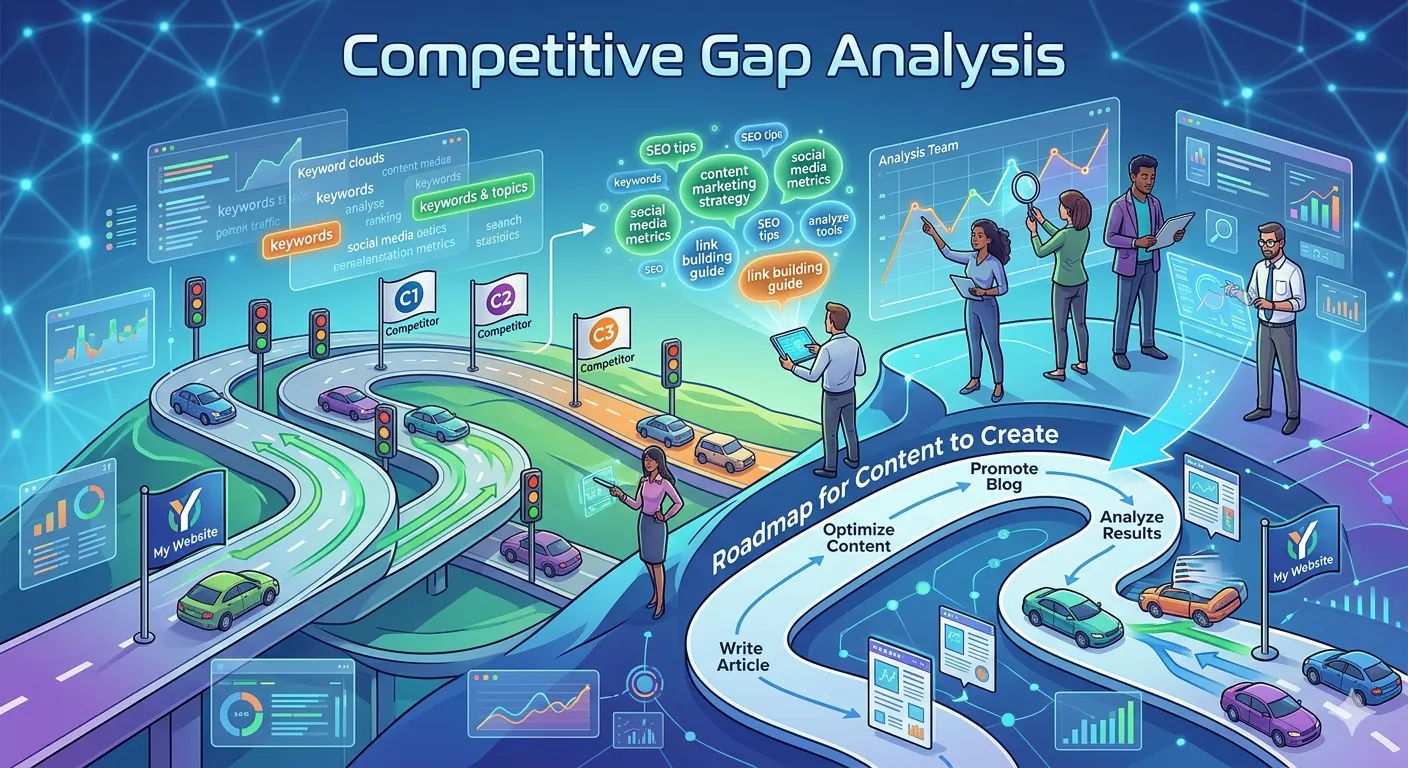
This is the process of identifying keywords and topics that your competitors are ranking for, but you are not. It provides a direct roadmap for what content you need to create to steal their traffic.
LSI (Latent Semantic Indexing) keywords are conceptually related terms that help search engines understand the context of your content. They prevent keyword stuffing while helping you rank for a broader range of related searches.
Snippet bait is a concise, 40-50-word paragraph or a bulleted list placed at the top of an article, specifically designed to answer a query so perfectly that Google features it in the “Position Zero” snippet.
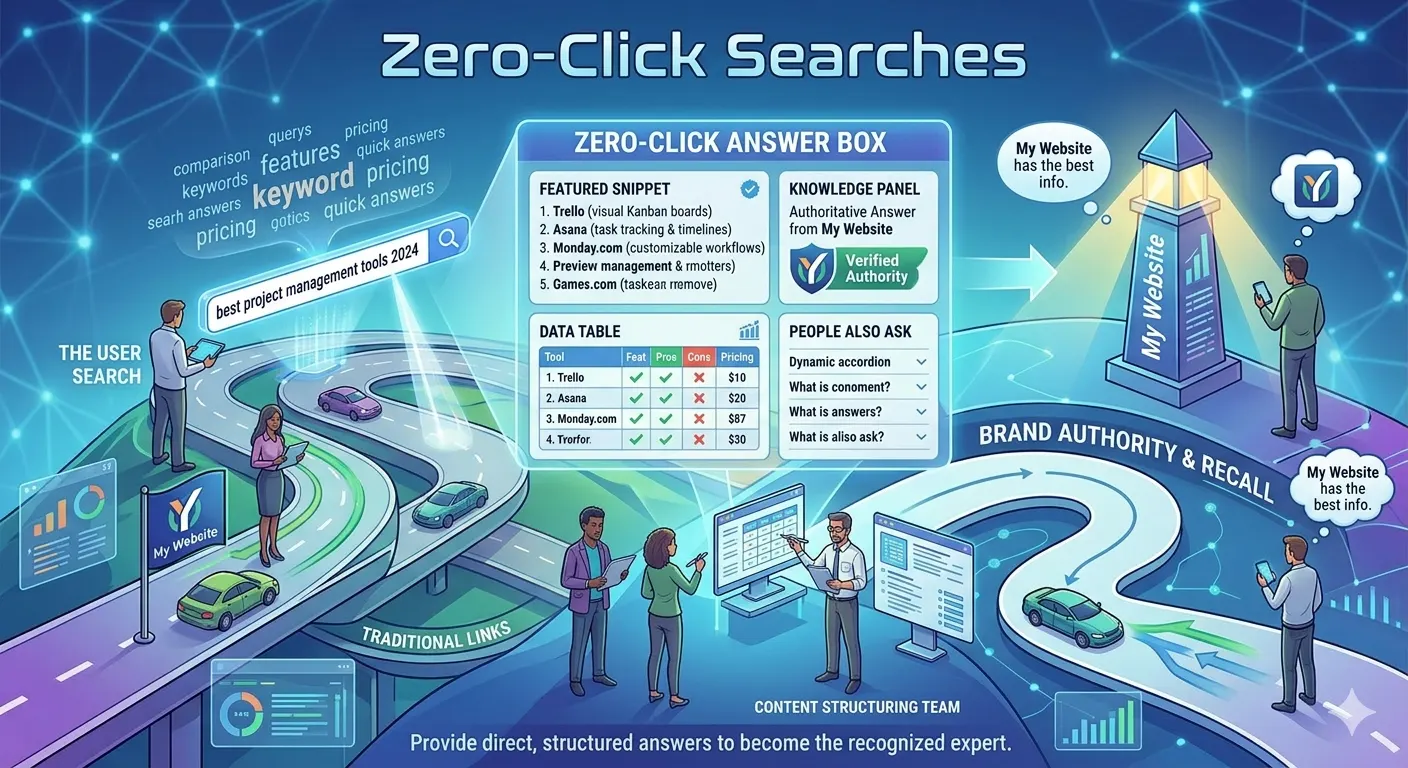
We optimise for zero-click searches by providing direct, high-value answers in a structured format (like tables or lists). This ensures that even if a user doesn’t click, your brand is the one providing the authoritative answer.
While not a direct ranking factor, the meta description is your “ad copy” on the SERP. A compelling description increases your Click-Through Rate (CTR), which signals to Google that your content is relevant to users.
Cannibalisation happens when multiple pages on your site compete for the same keyword. I solve this by either merging the pages into one authoritative guide or using “Canonical Tags” to tell Google which page is the priority.
Syndication is republishing your content on third-party sites like Medium, LinkedIn, or Forbes. It’s an effective way to reach a new audience as long as you use the rel=canonical tag to avoid duplicate content issues.
E-E-A-T stands for Experience, Expertise, Authoritativeness, and Trustworthiness. It is the framework Google uses to evaluate content quality, especially for “Your Money Your Life” (YMYL) topics like finance or health.
Gated content is high-value information (like a specialised BBA guide or a technical whitepaper) that requires a user to enter their email address to access. It is the primary tool for lead generation.
Internal links distribute “page authority” throughout your site. They help Google crawl your pages more effectively and keep users on your site longer by directing them to related, helpful resources.
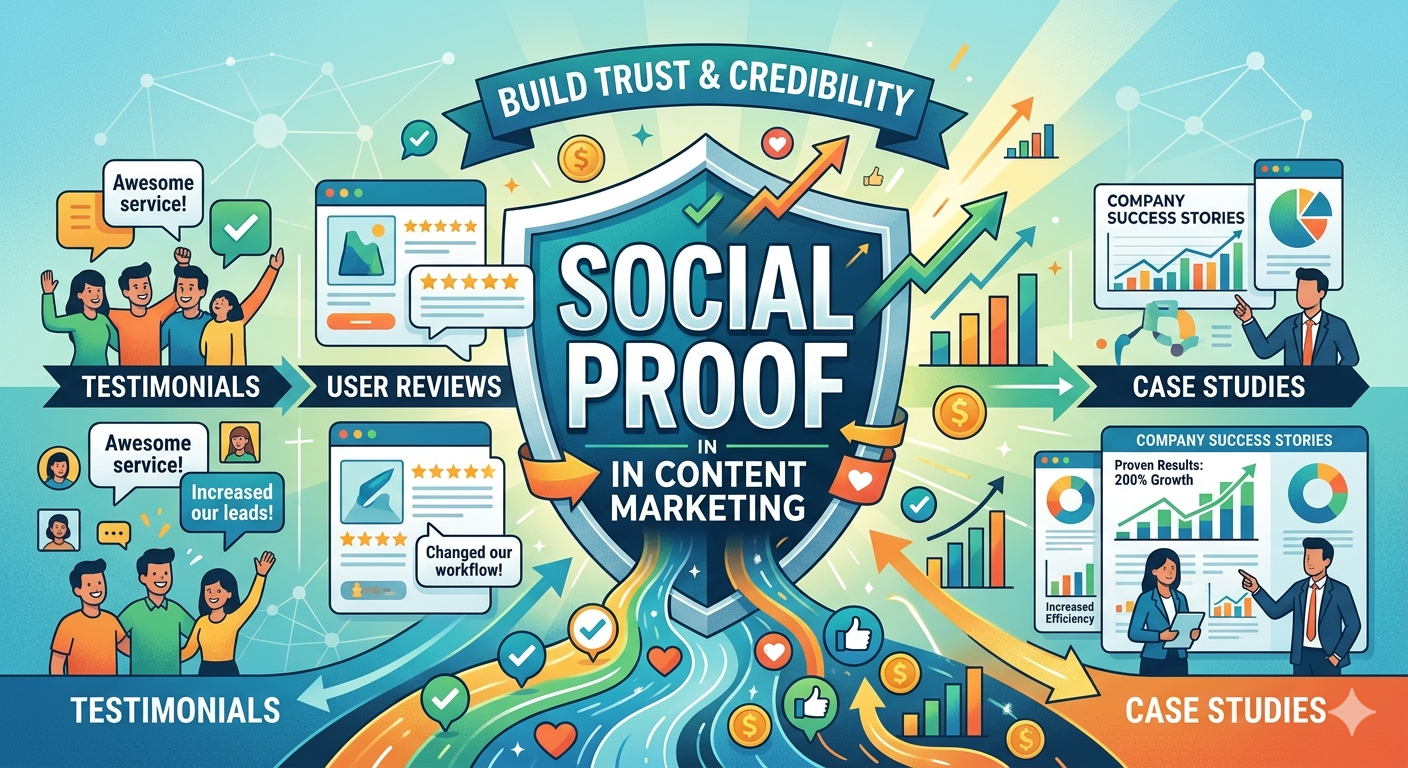
Social proof is the use of testimonials, case studies, and user reviews within your content to build trust. It proves to the reader that other people have successfully used your solution.
Bounce rate is the percentage of users who leave your site after viewing only one page. To fix it, I improve site speed, ensure the content matches the search intent, and use strong “Internal Links” to lead users to the next step.
I use AI to cluster data, analyse sentiment, and find common questions people are asking. However, I never let AI write the final draft; the human element is essential for the “Expertise” part of E-E-A-T.
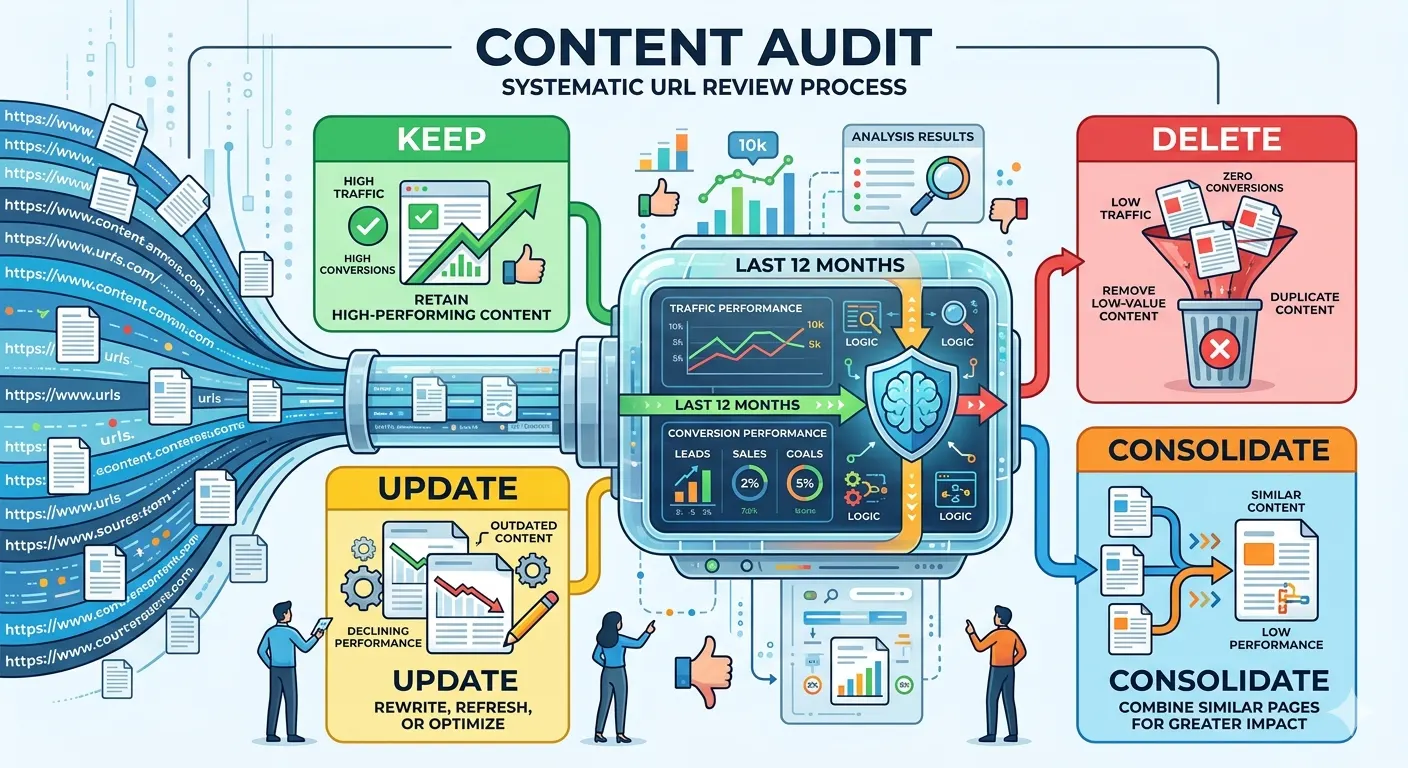
A content audit is a systematic review of all URLs on your site. We categorise them into “Keep,” “Update,” “Delete,” or “Consolidate” based on their traffic and conversion performance over the last 12 months.
Using GA4, I track “Assisted Conversions” to see which blog posts a user read before they eventually converted. This proves that top-of-funnel content is valuable, even if it wasn’t the final click.
Google prioritises up-to-date information for many queries. Regularly updating old posts with new data, current trends, and fresh keywords is often faster and more effective than writing something entirely new.
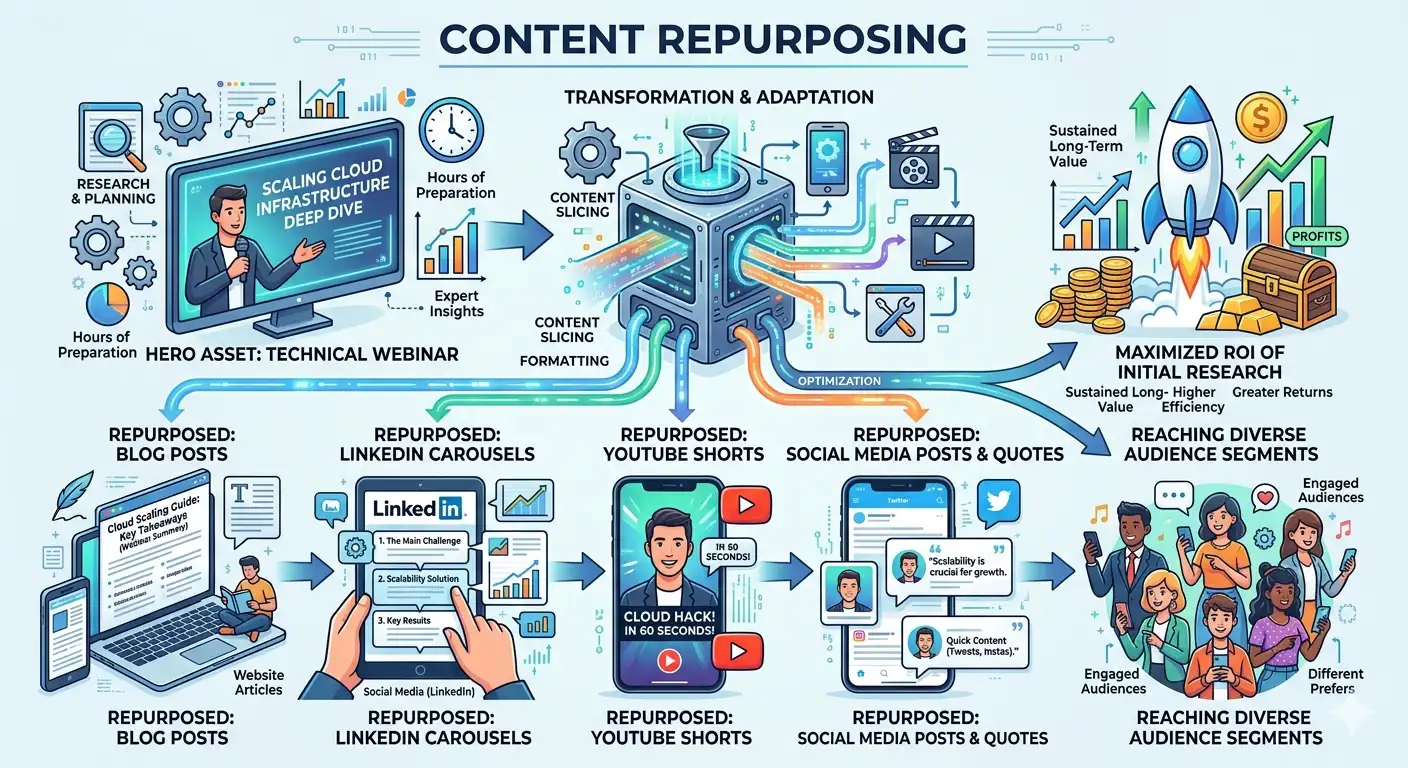
It is the process of taking one “Hero” asset (like a technical webinar) and transforming it into multiple formats (blogs, LinkedIn carousels, YouTube shorts). This maximises the ROI of your initial research and ensures your message reaches different audience segments on their preferred platforms.
Alt Text (Alternative Text) serves a dual purpose: it ensures your website is accessible to visually impaired users and provides search engines with context about the image. When optimised with relevant keywords, it helps your content rank in Google Image Search, driving additional organic traffic.
Long-form content (usually 2,000+ words) allows you to cover a topic with massive depth. This higher “Information Density” satisfies Google’s E-E-A-T requirements and tends to rank for a wider variety of long-tail keywords, leading to higher topical authority.
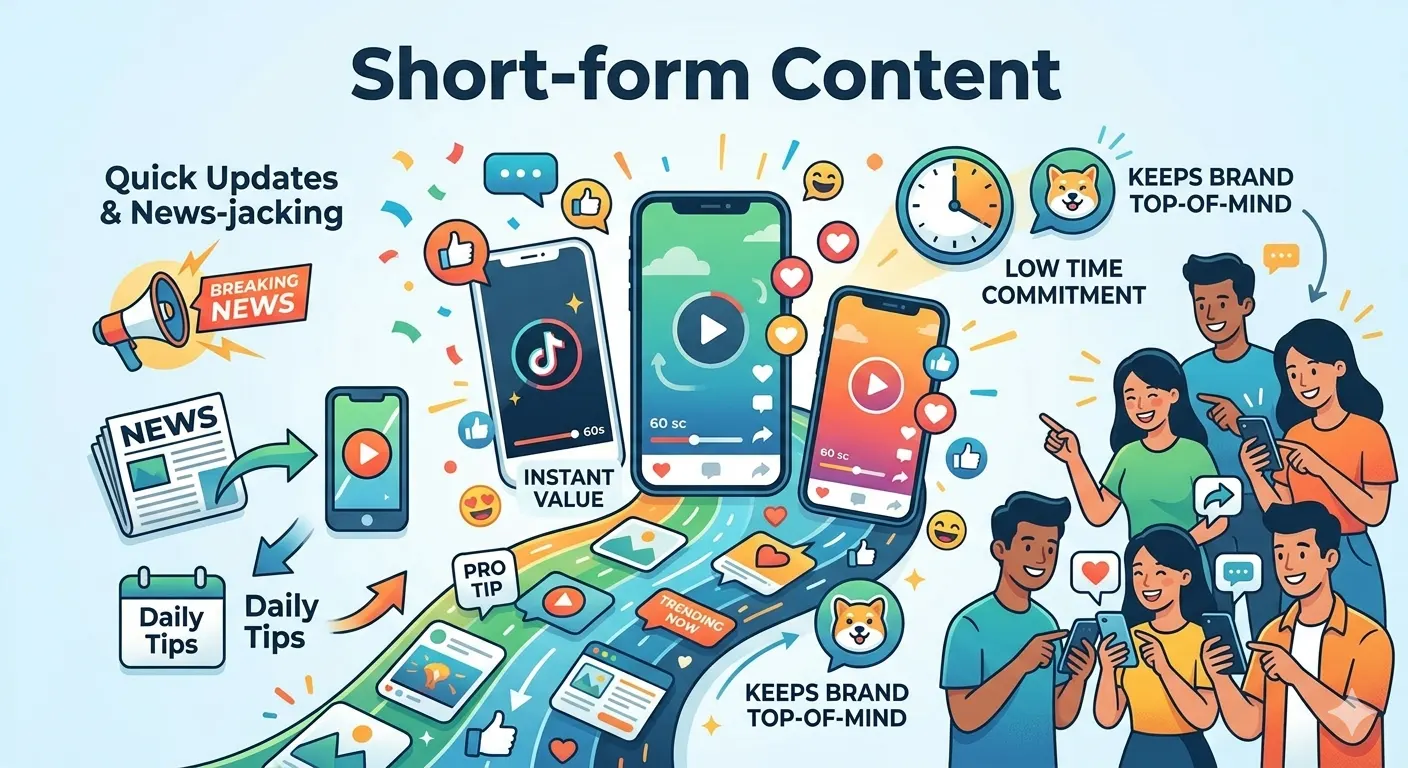
Short-form content is best for quick updates, news-jacking, or social media engagement. Its goal is to provide immediate value or “snackable” information that keeps your brand top-of-mind without demanding a significant time commitment from the user.
As users increasingly use smart speakers and AI assistants, content must be optimised for natural, conversational language. This means focusing on full-sentence questions (the “Who, What, Where, Why”) and providing direct, concise answers that AI can easily read aloud.
Mastering the art of the interview is no different from mastering the art of the rank: it requires preparation, authority, and a deep understanding of what your “user” (the interviewer) is looking for. By internalising these 50 questions and answers, you are no longer just a candidate; you are a growth specialist ready to turn content into a powerhouse for lead generation and brand authority. Remember, the goal isn’t just to rank No. 1 on a page, it’s to be the No. 1 choice in the room.
Beyond writing, emphasize Analytical Thinking. You need to show that you understand how to use data to choose topics, measure ROI, and pivot strategies based on performance metrics.
Be transparent but strategic. Explain that you use AI as a high-speed research and outlining assistant, but you provide the “human-led” expertise, original data, and final polish required to satisfy Google’s E-E-A-T standards.
Absolutely. Showing a portfolio with specific metrics, such as “Increased organic traffic by 40%” or “Generated 500 leads through a single pillar post”, proves you understand content as a business investment.
Explain your Framework. Walk them through how you would audit their current site, identify competitor gaps, and map out a topic cluster strategy to build authority in their specific niche.


 }})