
Courses
Most Local Businesses Do Not Have a Marketing Problem. They Have a Visibility Problem
Picture two cafes on the same street. Both serve great coffee. Both have friendly staff. Both charge about the same. Yet one gets three times the footfall. The coffee is not the reason. Someone searches “best cafe near me.” Only one cafe shows up in Google’s Local Pack. It has hundreds of reviews, fresh photos, correct hours, and a fast site that lets you book a table in seconds. The other cafe is invisible.
This happens across India every day. A dentist loses patients to the clinic next door. A coaching centre cannot fill its batches, even with great teachers. A boutique with premium stock watches buyers walk into a rival shop. The product is rarely the problem.
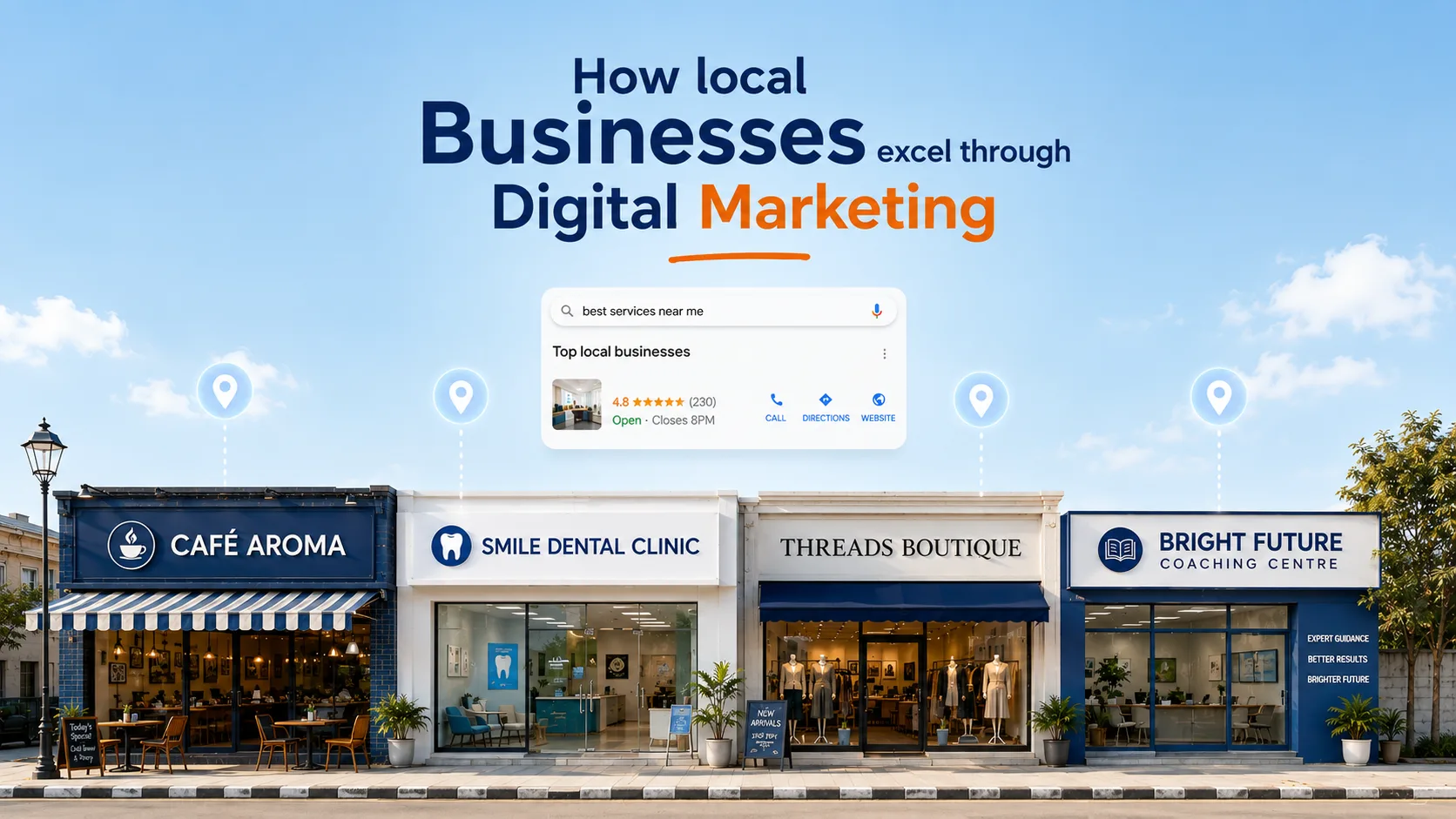
The reason is simple. Customers do not pick the business they drive past. They pick the business they find online. First, they search before they visit. Then they compare before they call. After that, they read reviews before they trust.More and more, they ask AI assistants before they decide. If you are missing at those moments, you hand customers to your rivals.
That is why digital marketing for local businesses is no longer optional. Moreover, it is one of the best growth investments you can make. Success does not come from posting daily on Instagram. It does not come from spending big on ads. It comes from building the right foundation in the right order. This guide shows you how.
Digital marketing for local businesses means promoting your service to people in one area using online channels. Those channels include Google Search, Google Business Profile, Google Maps, local SEO, your website, social media, Google Ads, Meta Ads, WhatsApp, email, and AI tools.
Big brands fight across the whole country. You do not. You compete inside your neighbourhood, city, or service area. That changes everything. Your goal is not to reach millions. Your goal is to be the clear choice for nearby people who already want what you sell. A dentist wants patients within 10 km. A cafe wants the offices nearby. A coaching centre wants students from local schools. So local marketing runs on three things: relevance, distance, and trust. Not mass reach.
Key Takeaways
The way people find local businesses has changed fast. India crossed 800 million internet users in 2025. The figure may reach 900 million soon (IAMAI-Kantar ICUBE report). WhatsApp alone has over 535 million users in India, the largest base of any country (DataReportal, Digital 2025).
Today your customers search Google before they visit. Besides, they compare shops on Maps and then read reviews. Furthermore, your customers watch Reels, ask AI assistants for tips. They message on WhatsApp, and expect a fast reply. The business that shows up first often gets the first enquiry, and the first enquiry often becomes the first sale.
Many owners think success comes from spending more. It does not. The winners are easy to find, easy to trust, easy to contact, and easy to recommend. Money makes good marketing bigger. It rarely fixes bad marketing.
One big mistake is treating every channel as equal. They are not. Local businesses grow in a set order. Hence, stop asking “which channel should I use.” Rather ask “which stage am I in.”
| Stage | Goal | Focus | Success Signal |
|---|---|---|---|
| Discover | Help nearby people find you | Google Business Profile, local SEO, Maps, local pages, NAP, citations | Map Pack spot, profile calls |
| Build Trust | Make people confident to choose you | Reviews, ratings, photos, case studies, certifications | Rising reviews and rating |
| Convert | Turn visitors into enquiries | Fast site, click-to-call, WhatsApp, landing pages, ads, booking | More leads |
| Retain | Win repeat business | WhatsApp, email, loyalty, referrals, review requests | Higher repeat rate |
| Expand | Scale with care | AI tools, analytics, CRO, performance ads, multi-location SEO | Steady, profitable growth |
Stage 1: Discover. Help nearby people find you. Focus on your Google Business Profile, local SEO, Google Maps, local landing pages, NAP consistency, and citations. Without visibility, nothing else works.
Stage 2: Build Trust. Give people the confidence to choose you. Focus on reviews, ratings, photos, case studies, and certifications. People do not buy from the first business they find. They buy from the one they trust most.
Stage 3: Convert. Turn visitors into enquiries. Focus on a fast website, click-to-call, WhatsApp, landing pages, and ads. Every extra step costs you leads.
Stage 4: Retain. Win repeat business. Focus on WhatsApp, email, loyalty, referrals, and review requests. A new customer is costly. Keeping one is cheaper and more profitable.
Stage 5: Expand. Scale with care. Add AI tools, analytics, and performance ads. Scale only after your system reliably brings in profitable customers.
The biggest mistake in digital marketing for local businesses is running ads too soon. Build the foundation first. That means a fast website, a full Google Business Profile, matching business details (NAP), and proper tracking. Ads make a working system bigger. They cannot fix a broken one.
Businesses that generate consistent enquiries follow a different sequence:
Every stage supports the next. Additionally, running ads on a weak site is like pouring water into a leaky bucket. Steady-enquiry businesses follow an order. Build the base. Improve visibility. Earn trust. Get leads. Then scale. Each step feeds the next.
Your website is not a brochure. It is your best salesperson. It answers questions, builds trust, and takes enquiries all day. Yet most local sites fail in one of three ways. They look nice but bring no enquiries. They pack in too much and give no clear next step. Or they load slowly and break on phones. Most visitors decide in 5 to 10 seconds whether to stay.
Your homepage must answer three questions fast. First, what do you do? Skip vague lines like “quality solutions since 2005.” Write something clear: “dental clinic in Salt Lake for cosmetic, root canal, and emergency care.” Clarity beats clever. Second, where do you work? Name your area plainly, like “physiotherapy clinic in Ranchi.” This helps both people and Google. Third, what should a visitor do next? Give each page one main action. Book now, call now, chat on WhatsApp, or get a quote. Never make people hunt for your number.
Every local business website should include these essential pages:
| Page | Purpose |
|---|---|
| Home | Introduce business and services |
| About | Build credibility and trust |
| Services | Explain individual offerings |
| Location Pages | Target specific cities or neighbourhoods |
| Reviews | Showcase customer success |
| Blog | Build topical authority |
| Contact | Drive enquiries |
Many businesses combine everything into one page. That makes it harder for Google to understand your expertise and reduces your ability to rank for service-specific keywords.
Speed is a business issue, not a technical one. Slow sites lose people before the page even loads. That hurts your bounce rate, your leads, and your rank. Aim for under three seconds on 4G. Use a mobile-first design, small images, clean menus, and HTTPS. More than two-thirds of local searches happen on phones. Those people want to act now. So let them call in one tap, open WhatsApp fast, and get directions. If they cannot reach you in 30 seconds, you are losing sales.
More than two-thirds of local searches happen on smartphones. People searching for:
They are usually looking for immediate action. Your mobile experience should allow visitors to:
Ask yourself:
Could someone contact your business within 30 seconds of opening your website? If not, you’re creating unnecessary friction.
A visitor should move through your website like this:
Every additional step reduces conversions. Simplify everything.
For most local businesses, the Google Business Profile brings more leads than social media. It reaches people who are searching nearby right now. A full, fresh profile lifts your spot in Search and Maps. It also drives more calls, visits, and direction requests.
If your website is your office, your Google Business Profile is your shopfront. It is often the first thing people see. They judge you on your rating, reviews, photos, hours, and services long before they open your site. Picture two plumbers. One has 425 reviews, a five-star average, fresh photos, and quick replies. The other has 18 reviews, no recent photos, and wrong hours. Most people trust the first one before they even click. Google sees this too. That is why profile quality lifts your rank.
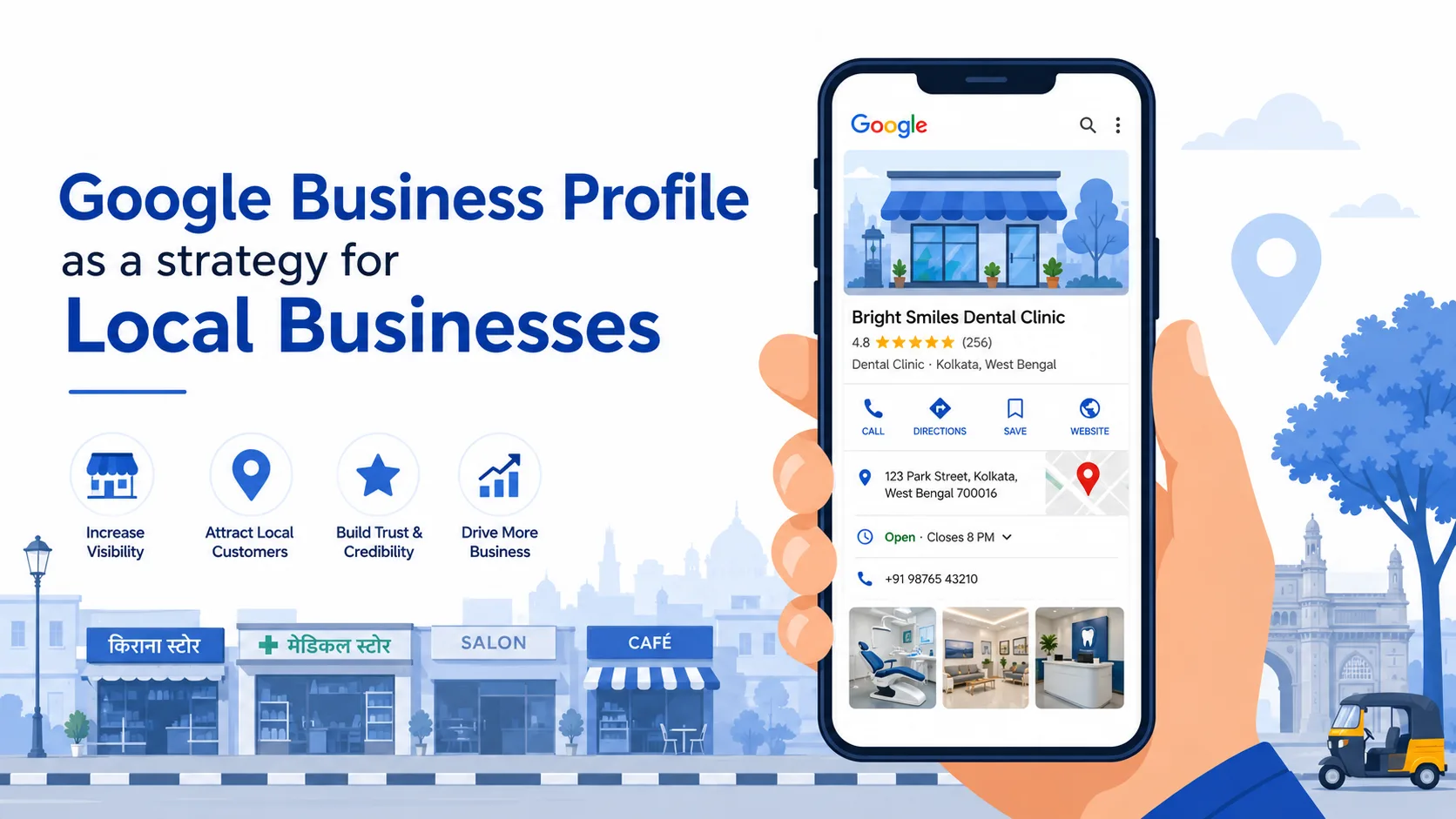
Fill every field. Add your name, address, phone, website, categories, description, hours, services, products, photos, and booking links. A half-filled profile looks weak. Upload real photos of your shop, your team, and your work. Real photos beat stock images because they lower doubt. Reviews are your trust multiplier. A profile with 250 recent, well-answered reviews often beats one with 1,000 old reviews and no replies. Google values fresh reviews, not just the count. So ask for reviews all the time, not in big batches. And never reply with just “Thanks.” Use the person’s name, mention the service, and invite them back. This adds natural keywords too.
NAP means Name, Address, and Phone Number. Google checks these across hundreds of sites. When they do not match, Google trusts you less and drops your rank. Say one site reads “ABC Dental Clinic” and another reads “ABC Dental Care.” That small gap hurts you.
So keep them the same everywhere. Match them on your website, Google Business Profile, Facebook, Instagram, LinkedIn, Justdial, IndiaMART, and Sulekha. Match them on vertical sites too, like Practo, Zomato, Swiggy, or MagicBricks. Copy the exact spelling, format, and pincode. Then check every listing twice a year with a simple spreadsheet.
Most owners focus on getting enquiries. Smart owners focus on removing doubt. Every visitor quietly asks one thing: can I trust this business? Answer it. Show testimonials, Google reviews, case studies, before-and-after photos, awards, and your team. The more trust you build, the less you need to sell.
Local SEO helps you show up in Google Search and Maps when nearby people look for your service. Unlike ads, it brings traffic without paying for each click. That makes it one of the highest-return parts of digital marketing for local businesses.
Local SEO is not about convincing people they need you. It is about making sure they find you, not a rival, when they already want to buy. That is why the leads are so good. Google weighs hundreds of signals. But local rank comes down to three: relevance, distance, and prominence. A well-reviewed small shop often beats a bigger rival because of them.
| Ranking Factor | What Google Checks | What You Control |
|---|---|---|
| Relevance | How well you match the search | Categories, service pages, description, reviews, schema |
| Distance | How close you are to the searcher | Location pages, correct address, citations, service-area settings |
| Prominence | How known and trusted you are | Reviews, local links, brand mentions, site authority |
Say someone searches “best dentist near me” or “gym near Salt Lake.” Google usually shows three businesses in the Local Pack, above the normal results. This is also called the Map Pack. A spot here lifts your calls, direction requests, visits, and walk-ins. For many businesses, it beats ranking first in the normal list.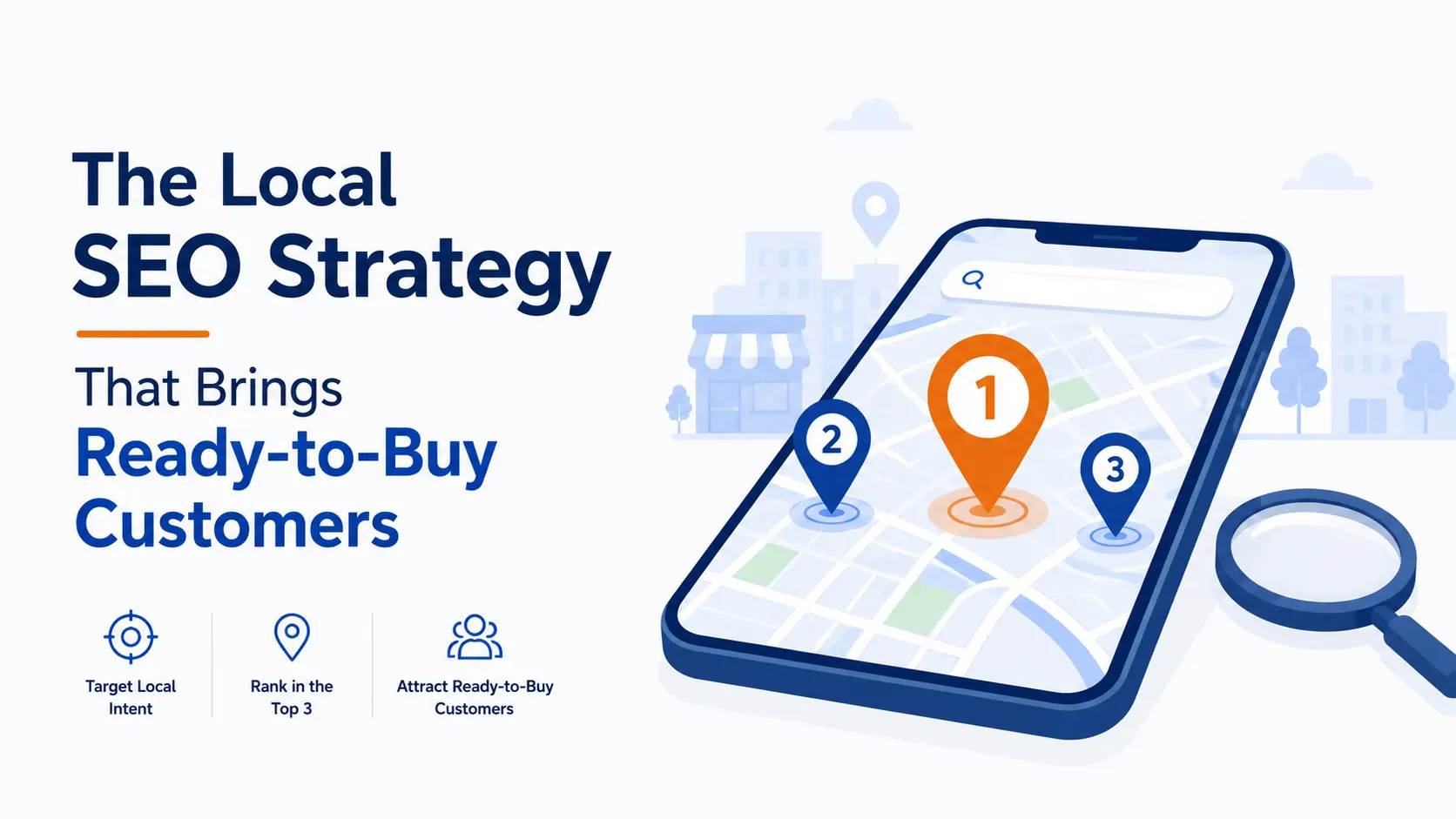
Local SEO is not just keywords. Think of it as a pyramid. At the base is the tech layer: a fast, mobile-friendly, secure site with LocalBusiness schema. Above that sits business authority: your Google Business Profile, matching NAP, citations, and reviews. These tell Google you are real. Next comes topical authority. You build it by writing about your services, areas, and customer questions. Above that is community authority: links and mentions from local news, schools, and event sponsors. At the top are brand signals: repeat searches, direct visits, and social mentions. These grow over time. Furthermore, there are five important levels of local SEO pyramid:
Level 1 – Technical Foundation
Without this, everything else becomes harder.
Level 2 – Business Authority
This tells Google your business is legitimate.
Level 3 – Topical Authority
Create content around:
Google rewards businesses that demonstrate expertise.
Level 4 – Community Authority
Earn mentions from:
These links strengthen your local reputation.
Level 5 – Brand Signals
Google notices when people search directly for your business. Strong brands generate:
Brand authority compounds over time.
Most shops target “dentist in Kolkata.” That is crowded. Target smaller instead. Try “dentist in Salt Lake Sector V” or “emergency dentist near Bidhannagar.” The search volume is smaller. But the intent and conversion are far higher. If you serve many areas, build a page for each one. Give each page local reviews, nearby landmarks, directions, and its own content. Never copy the same text across pages. Then add local citations, which are any online mention of your business. Ten trusted local citations beat hundreds of junk listings.
Content marketing answers customer questions before they buy. Good content brings organic traffic, lifts your rank, builds trust, and grows enquiries over time. It is a core part of digital marketing for local businesses. Every question a customer asks before buying is a chance to write. Instead of only answering “how much does physiotherapy cost in Kolkata” on the phone, answer it on your site first. Then you become the expert before they even call. “Best family restaurants in Salt Lake” beats “best restaurants in Kolkata.” The smaller the area, the lower the competition and the higher the intent.
Do not post at random. Build topic clusters. For a dental clinic, one main page (“dental clinic in Kolkata”) is backed by smaller posts. Those cover root canal cost, teeth whitening, implants, and dental emergencies. Each one links back to the main page. This builds authority, and keep it local.
Building pillar page acts as an excellent strategy in dispplaying your epertise over the domain. For eaxmple: For a Dental Clinic in Kolkata
Supporting Articles:
Every article links back to the pillar page. This strengthens topical authority.
Step Into the World of Digital MarketingLearn from Digital Marketing Experts |
|
| Advanced Diploma in Digital Marketing | |
| More Learning Options for you: Diploma in Digital Marketing | Google Ads Certification Training | Certification Course |
Social media is one visible part of digital marketing for local businesses. The biggest social mistake is joining every platform. Master one first. Then expand. Instagram suits cafes, salons, restaurants, fashion, fitness, and clinics. It rewards before-and-after posts, Reels, staff stories, and testimonials. Facebook works for local groups, events, families, and coaching centres. Its Groups are great for local reach. LinkedIn fits consultants, B2B firms, and agencies, where you share know-how, not offers. YouTube, owned by Google, is a strong long-term asset for FAQs, demos, and customer stories. Video builds trust faster than text.
| Platform | Best For | Content That Works |
|---|---|---|
| Cafes, salons, restaurants, fashion, fitness, clinics | Before-and-after, Reels, staff stories, testimonials | |
| Local communities, events, families, coaching, healthcare | Group engagement, event promotion, community posts | |
| Consultants, B2B, agencies, financial and training services | Expertise, case studies, thought leadership | |
| YouTube | Any business building long-term trust | FAQs, demonstrations, customer success stories |
Only 20% of your content should promote your business. The remaining 80% should educate, entertain, or solve customer problems. People follow businesses that provide value. They ignore businesses that constantly advertise.
Paid ads are the accelerator in digital marketing for local businesses. They bring fast visibility. But they work best only after your website, Google Business Profile, and local SEO are in place. Ads are an amplifier. On a weak base, they just help more people notice the weak spots.
For local businesses in India, four paid channels earn their budget. Google Search Ads catch buying intent. Someone who searches “emergency plumber near me” wants to act now. That makes Search one of the best channels for clinics, lawyers, repair services, and agencies. Always turn on Call and Location extensions, sitelinks, and callouts. They lift both clicks and visibility.
Meta Ads work the other way. They create demand instead of catching it. They show your business to people who were not searching. That suits restaurants, events, fashion, and real estate. In India, send Meta ads to WhatsApp, not to a cold landing page. The person sees the ad, taps, and WhatsApp opens at once. Then reply within 60 seconds. Conversion drops fast after the first 15 minutes.
| Channel | Demand | Best For | How You Pay | Typical Daily Budget |
|---|---|---|---|---|
| Google Search Ads | Catches existing intent | Clinics, lawyers, repair, education, agencies | Per click | ₹300 to ₹500 |
| Meta Ads to WhatsApp | Creates demand | Restaurants, events, fashion, fitness, real estate | Per click or impression | ₹200 to ₹400 |
| Geofencing | Creates demand in a zone | Cafes, coaching, retail near dense footfall | Per impression, per fence | ₹200 to ₹500 |
| Local Services Ads | Catches intent, top slot | Legal, real estate, home services (eligible cities) | Per qualified lead | Varies by lead price |
Most visitors won’t convert immediately and that’s normal. Retargeting allows you to advertise specifically to people who have already:
These audiences convert far better than cold traffic.
Use WhatsApp tools like Interakt, Wati, or ChakraHQ to reply fast and automatically. Geofencing draws a virtual fence around a spot, like a tech park, a mall, or a rival’s shop. It then shows ads only to people inside it. A cafe can target the offices within 1 km. A coaching centre can target a campus. It runs from as little as ₹200 to ₹500 a day per fence. Google Local Services Ads run in some Indian cities and categories. They sit at the very top with a “Google Screened” or “Google Guaranteed” badge. You pay per lead, not per click. If you qualify, spend here first. And do not forget retargeting. Most people do not buy on the first visit. Showing ads to past visitors converts far better than cold traffic.
Move into paid channels only after the free base works. Then set a budget that fits your category. Start small. Prove a return on ₹300 to ₹500 a day. Then scale. Split the total about 40% ads, 30% content and local SEO, 20% tools, and 10% for testing.
| Business Type | Indicative Monthly Budget |
|---|---|
| Neighbourhood salon, boutique studio, coaching centre | ₹15,000 to ₹25,000 |
| Dental or specialist clinic, real estate agent, wedding photographer | ₹40,000 to ₹80,000 |
| Restaurant or diagnostic centre in a tier-1 metro | ₹60,000 to ₹1,20,000 |
AI is now part of digital marketing for local businesses. It is not replacing marketers. It is making them faster. Use it to draft blog outlines, social captions, and ad copy. Use it to write review replies, build FAQs, and plan emails. Keep humans on strategy, creativity, and customer talks. The winning mix is AI-assisted marketing, not AI-only marketing.
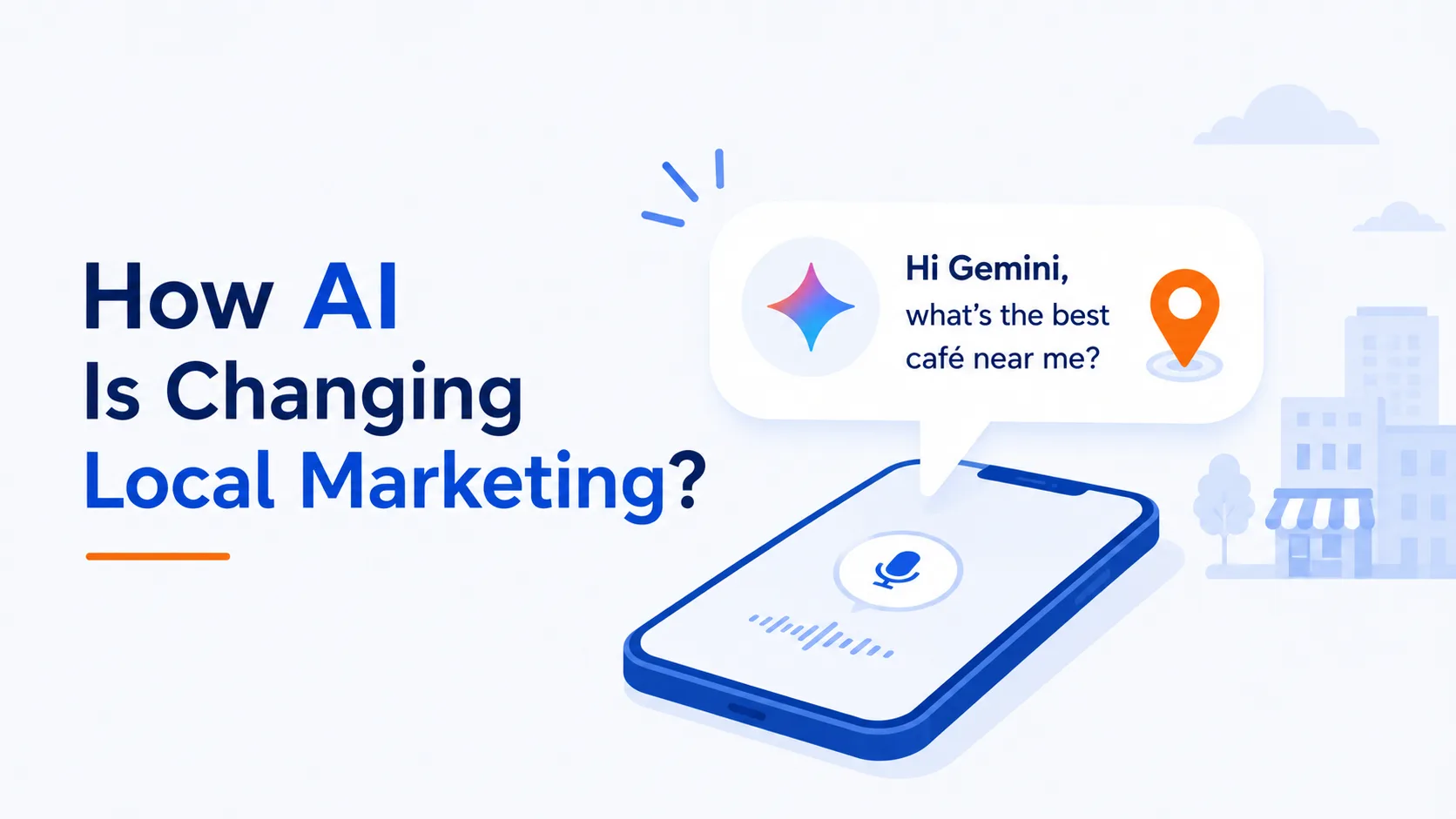
Two shifts matter for your visibility. First, voice search is growing. People speak in full questions, like “who is the best dentist near me that is open today.” So write in plain language. Use FAQs and question headings. Second, AI search now shapes local discovery. People ask assistants to “recommend a digital marketing agency in Kolkata.” The businesses that show up have strong content, structured data, real reviews, and clear trust signals.
| Tool | Best For | Cost |
|---|---|---|
| ChatGPT / Claude | Post ideas, blog outlines, review replies, ad copy | Free tier available |
| Interakt / Wati / ChakraHQ | WhatsApp auto-replies, broadcasts, chatbot flows | ₹999+/month |
| Canva | Social creatives, profile posts, catalogue images | Free tier available |
| BrightLocal | Local SEO and NAP audit across directories | Paid |
| Local Falcon | Grid-based Map Pack rank tracking | Paid |
| Google Ads Editor | Bulk-edit campaigns offline | Free |
| Meta Business Suite | Manage Facebook, Instagram, and WhatsApp together | Free |
Winning a new customer costs far more than keeping one. Local businesses that invest in retention, through WhatsApp, email, loyalty, and personal messages, tend to earn more and grow more steadily than those that only chase new leads.
Many businesses celebrate each new customer. Then they rush off to find the next one. Meanwhile the old customers hear nothing. That is a waste. The easiest person to sell to is someone who already liked your work. Picture two salons. Salon A spends ₹40,000 a month only on new customers and Salon B spends ₹25,000 on new customers and ₹15,000 on keeping them, with birthday offers, WhatsApp reminders, and referrals. Therefore, Salon B usually earns more over time.
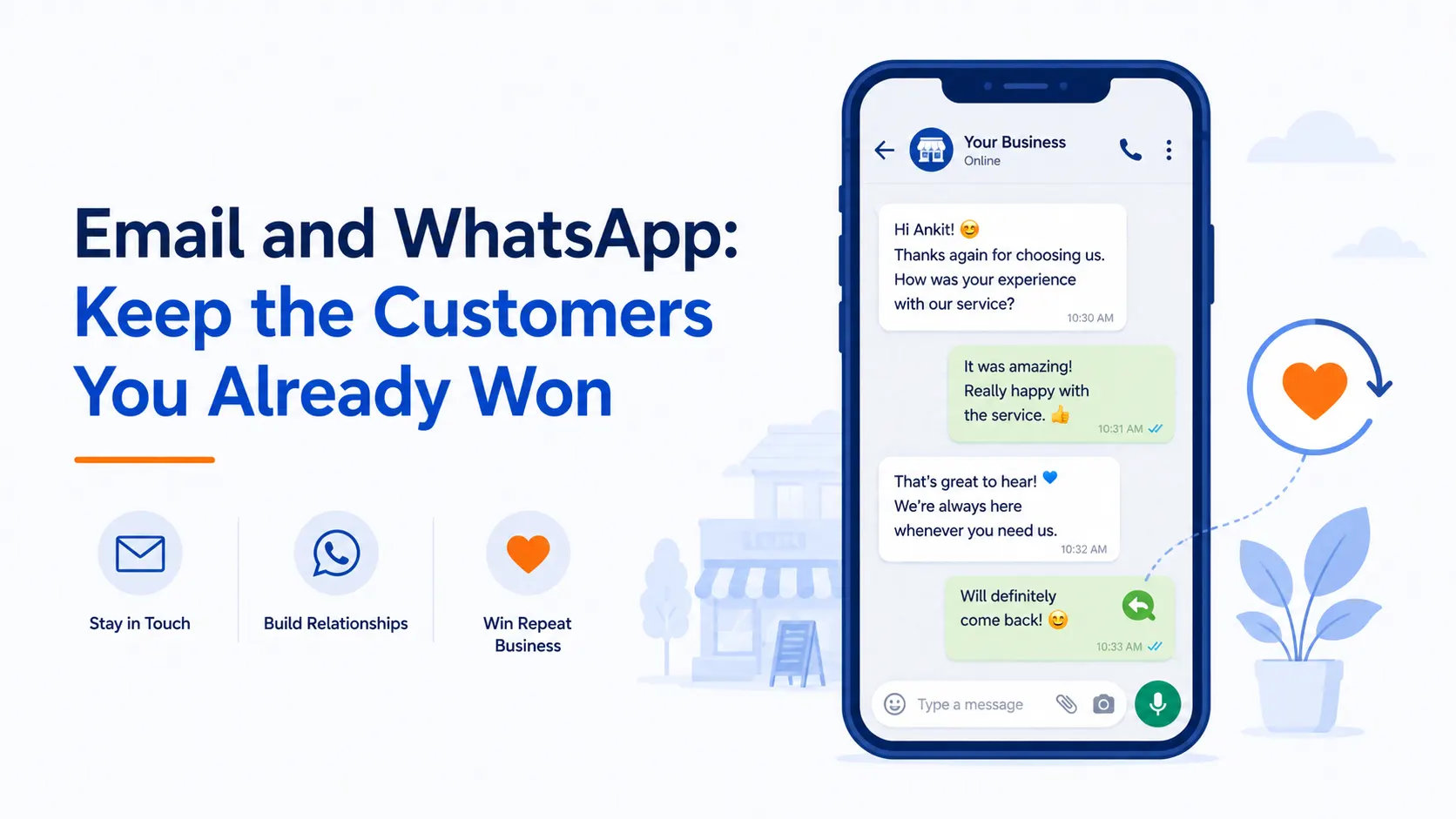
Build retention into your system. Do not leave it to memory. Welcome each customer with a thank-you message and a useful tip. Ask for a review when they are happiest, right after a good result. Timing matters more than wording. Then stay in touch with helpful notes, like reminders, seasonal advice, and festival greetings. Do not send only offers. Keep plain SMS for urgent alerts, like booking confirmations and flash sales.
The Digital Personal Data Protection Act 2023 sets the rules for customer data in India. Three rules matter most. First, get clear consent before you add anyone to a marketing list. Second, do not reuse a number given for billing to send offers, unless you ask again. Third, give an easy opt-out in every message, like “Reply STOP to unsubscribe.” Add a privacy link under every enquiry form. Keep one clean database so you can remove people fast. The fines are steep, so build consent in from day one.
Reputation is central to digital marketing for local businesses. Word of mouth alone is not enough now. Online reviews are often the first thing a customer sees. They shape both your rank and your image. Bad reviews will come. Ignoring them is a choice. A good reply does four things. It hears the concern and says sorry where needed, thus moves the chat to private. And it explains the fix. Never argue in public. A calm reply shows every future reader that you care.
Measurement is what separates good digital marketing for local businesses from guesswork. Do not judge marketing by likes or followers. Track four numbers. Cost per lead, lead-to-customer rate, cost to win a customer, and lifetime value. These four show real growth and profit.
Cost per lead is your channel spend divided by the enquiries it brought. Track it per channel so you know what works. Lead-to-customer rate is the share of enquiries that become paying customers. Below 15% means weak leads or slow follow-up. Cost to win a customer is your total spend divided by new customers. Lifetime value is the total revenue one customer brings you. The rule is simple. If lifetime value is at least three times the cost to win a customer, you can scale safely. Set up Google Analytics 4 and Search Console in Week 1. Likes feel nice. Revenue builds a business.
| Metric | What It Tells You | Benchmark |
|---|---|---|
| Cost Per Lead (CPL) | What one enquiry costs, per channel | Lower over time |
| Lead-to-Customer Rate | Share of enquiries that become customers | Above 15% |
| Customer Acquisition Cost (CAC) | Full cost to win one customer | Below one-third of LTV |
| Customer Lifetime Value (LTV) | Total revenue per customer | At least 3x CAC before you scale |
Do it yourself while your ad spend is under ₹20,000 a month and you have a few hours a week. The free base, your profile, reviews, and organic social, is easy to run in-house. Bring in help once spend crosses ₹40,000 a month, or when your time is better spent with customers. Even then, pick a specialist freelancer or a small local marketer over a big agency. And insist they report on leads, cost per lead, and return on ad spend. Not likes.
| Your Situation | Recommended Approach |
|---|---|
| Ad spend under ₹20,000/month, still learning | Do it yourself: profile, reviews, organic social |
| Ad spend over ₹40,000/month, or time is scarce | Hire a specialist freelancer or small local marketer |
| Want control but need expertise | Run the base in-house; outsource ads and technical SEO |
The strongest local businesses do not rely on one campaign. They build a loop that feeds itself. Local SEO brings traffic. Traffic brings enquiries. Enquiries become customers. Happy customers leave reviews. Reviews lift your rank. A higher rank brings more traffic. Each happy customer creates trust that pulls in the next one. Over time, this loop cuts your need for ads and builds steady organic growth.
Many local businesses fail because they try to do everything at once. Build momentum in stages instead:
In Week 1, claim and complete your Google Business Profile. Fix your NAP across every listing. Install Google Analytics 4 and Search Console. In Week 2, get your site under three seconds on mobile. Add click-to-call and WhatsApp buttons at the top. Add LocalBusiness schema. In Week 3, publish your service pages and your first local blog post. In Week 4, ask your last 30 happy customers for a review. Upload at least 20 real photos. Reply to every review. Your goal this month is trust and visibility.
Launch Google Search Ads on your top three services at ₹300 to ₹500 a day. Run Click-to-WhatsApp Meta ads at ₹200 to ₹400 a day. Set up conversion tracking. Publish one helpful post a week. Share three good social posts a week. Build local links. Create area pages. Run a 14-day geofencing test at ₹200 to ₹500 a day. Your goal is steady enquiries and clear cost benchmarks.
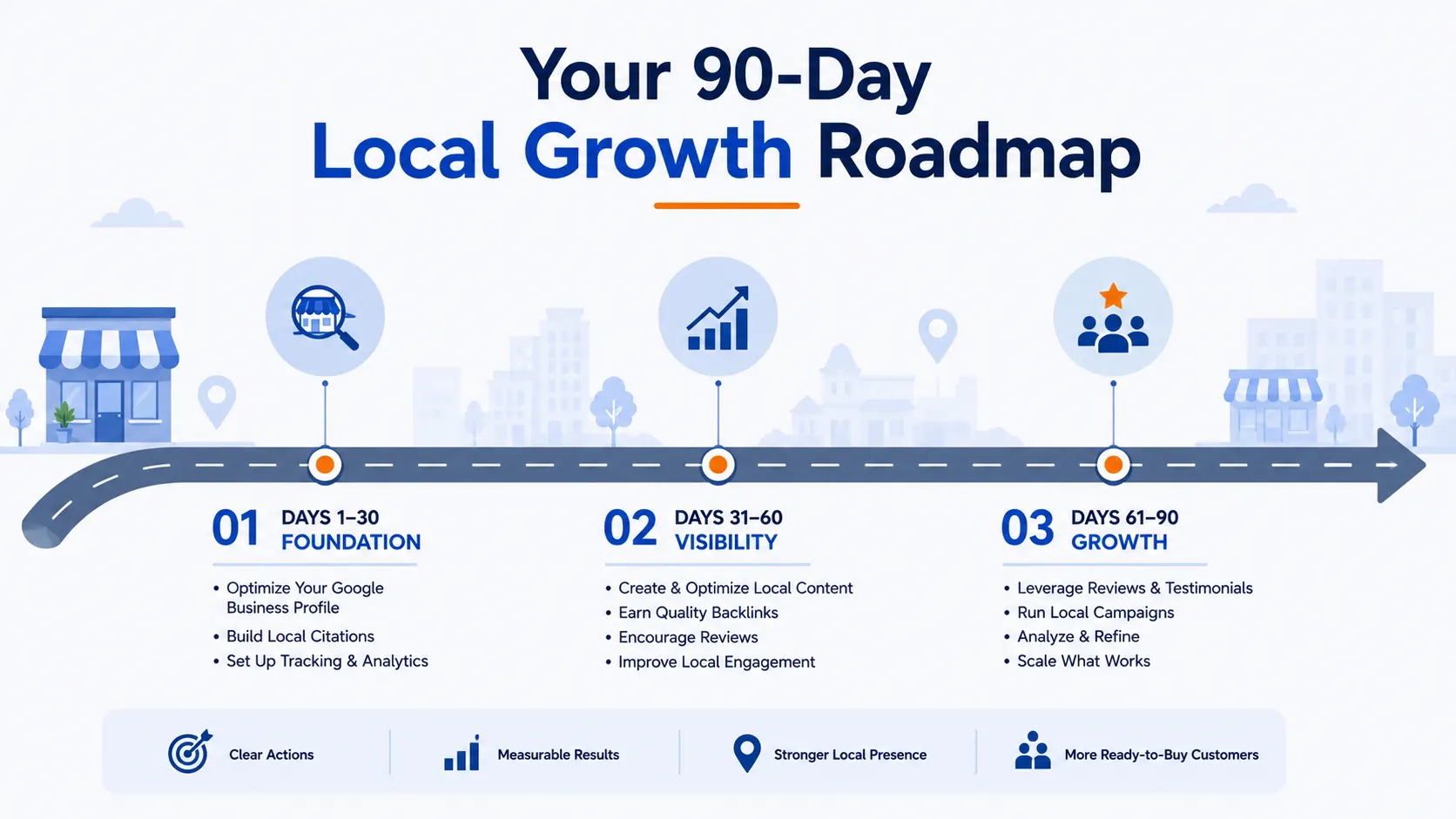
Study your data. Pause what fails. Move budget to what works. Scale your winning ads by 30 to 50%. Copy them to lookalike audiences. Publish three deeper posts on your best topics. Launch a referral offer. Automate WhatsApp follow-ups. Start an email newsletter. Your goal is steady weekly leads and a falling cost per lead.
A few mistakes quietly drain most local marketing budgets, and they are worth naming. Many businesses run ads with no conversion tracking, so they never learn what works. Others let their name, address, and phone number fall out of sync across listings, or leave their site slow on mobile with no easy way to call or message. Some have no plan for reviews, copy-paste the same text across every area page, and let their Google Business Profile go stale.
Plenty lean on stock photos instead of real ones, and spend on ads before they have earned any trust. It is just as common to go all-in on Instagram while ignoring Google Search, where buying intent is far higher, or to spread thin across six platforms instead of mastering one. And too many now use AI with no human check, or judge success by likes instead of leads. The pattern is simple. Fix these before you spend more, not after.
This is the heart of digital marketing for local businesses. The future of local growth does not belong to the biggest ad budgets. It belongs to the businesses that answer customer questions, earn trust, and make the next step easy. When your site is fast, your profile is full, your reviews are real, and your content truly helps, you build a system that keeps working long after a campaign ends. Start with the basics. Improve one thing each week. Measure what matters. Stay steady. Small gains add up to a real edge. The demand is already there. Someone near you is searching right now. If you are not on page one, they are calling your rival. So start your Week 1 checklist today.
It means promoting your service to people in one area using online channels. Those channels include your Google Business Profile, local SEO, website, social media, paid ads, WhatsApp, email, and AI tools. The aim is to get found by nearby people, win enquiries, and build lasting ties.
Google ranks the Map Pack mostly by how close you are to the searcher. If you are in a suburb or a rural spot, set your profile as a Service Area Business. Then list the pincodes and areas you serve. This keeps your local relevance without tying you to a far-off address.
Do not reply in anger. First, click Report to flag it, in case it is from a rival or a bot. Then post a calm public reply for future readers. For example: “We take feedback seriously but have no record of a client by this name. Please contact our manager so we can look into it.” That shows others you are fair.
Not directly. There is no link between ad spend and organic rank. But ads help in an indirect way. They bring traffic, more brand searches, more visits, and more reviews. All of those lift your organic rank over time.
Compliance is about habits, not lawyers. Add a privacy link under every enquiry form. Use a clear consent tick-box when you collect numbers. And keep one database so you can remove anyone who opts out. That covers the basics.
For most local businesses, yes. The profile reaches people who are searching nearby right now, so the traffic converts better. Social media is great for reach and trust. But it supports local SEO. It does not replace it.
Many businesses see movement in one to three months. That is after they fix their profile, improve their site, and earn steady reviews. Very crowded fields take longer to build the authority needed to rank.
For most local businesses, local SEO plus a strong Google Business Profile wins. It catches people who already want to buy. And it keeps bringing traffic without paying for each click.

 }})