
Courses
Digital marketing for car dealerships has changed the way buyers discover, compare and choose vehicles. A customer may search for a model on Google, compare prices on third-party websites, watch a walkaround video, read reviews and check a nearby dealership before ever speaking to a salesperson.
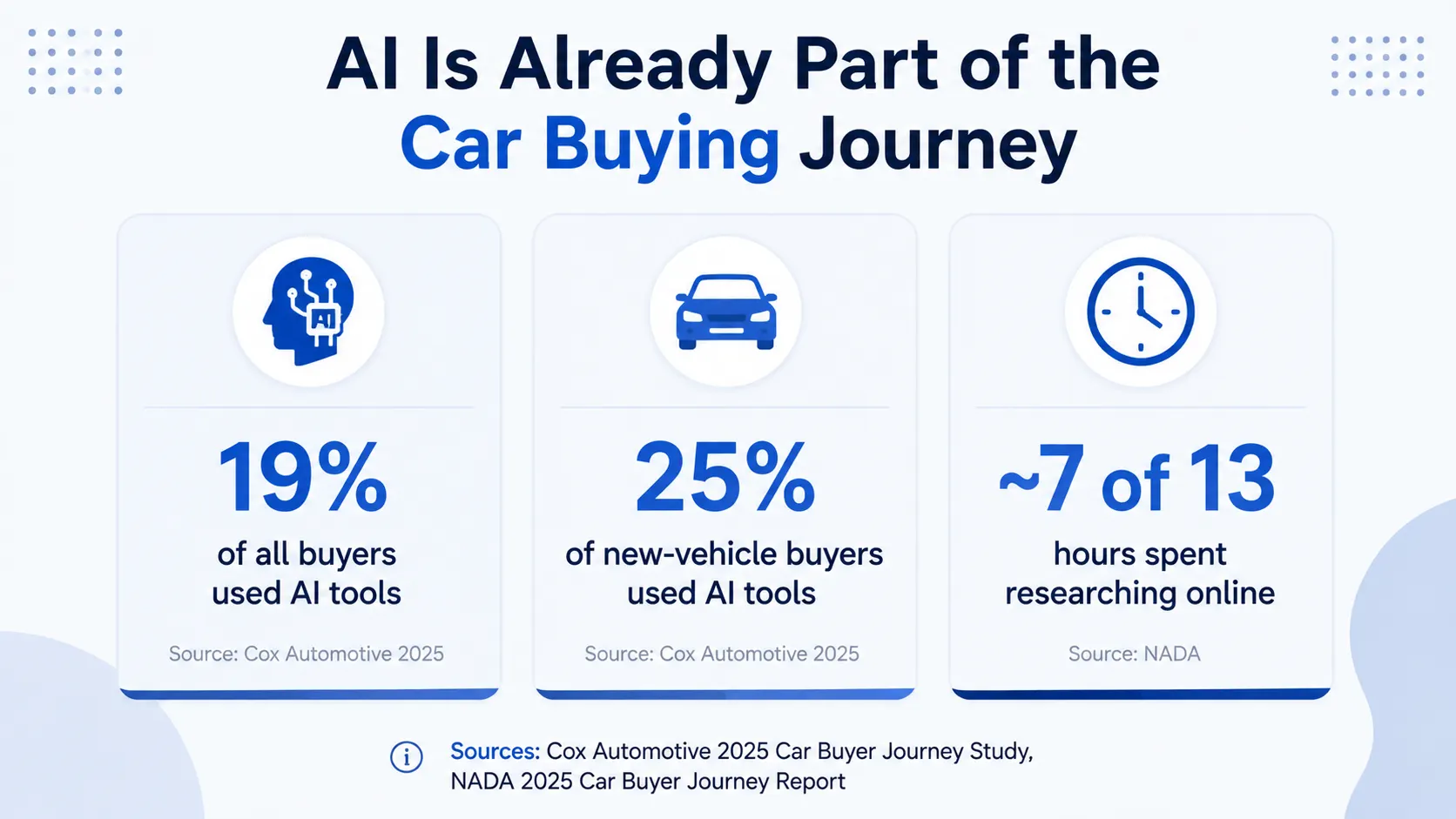
Cox Automotive’s 2025 Car Buyer Journey Study found that 19% of all vehicle buyers and 25% of new-vehicle buyers used AI tools during their shopping process. The study also found that 63% of buyers consider a combination of online and in-person activities the ideal way to purchase a vehicle.
For digital marketers, this creates a practical career opportunity.
The automotive industry needs people who understand SEO, paid advertising, social media, content, lead generation, analytics and AI. Learning how these skills work together in a real business can be more valuable than simply learning how to operate individual marketing tools.
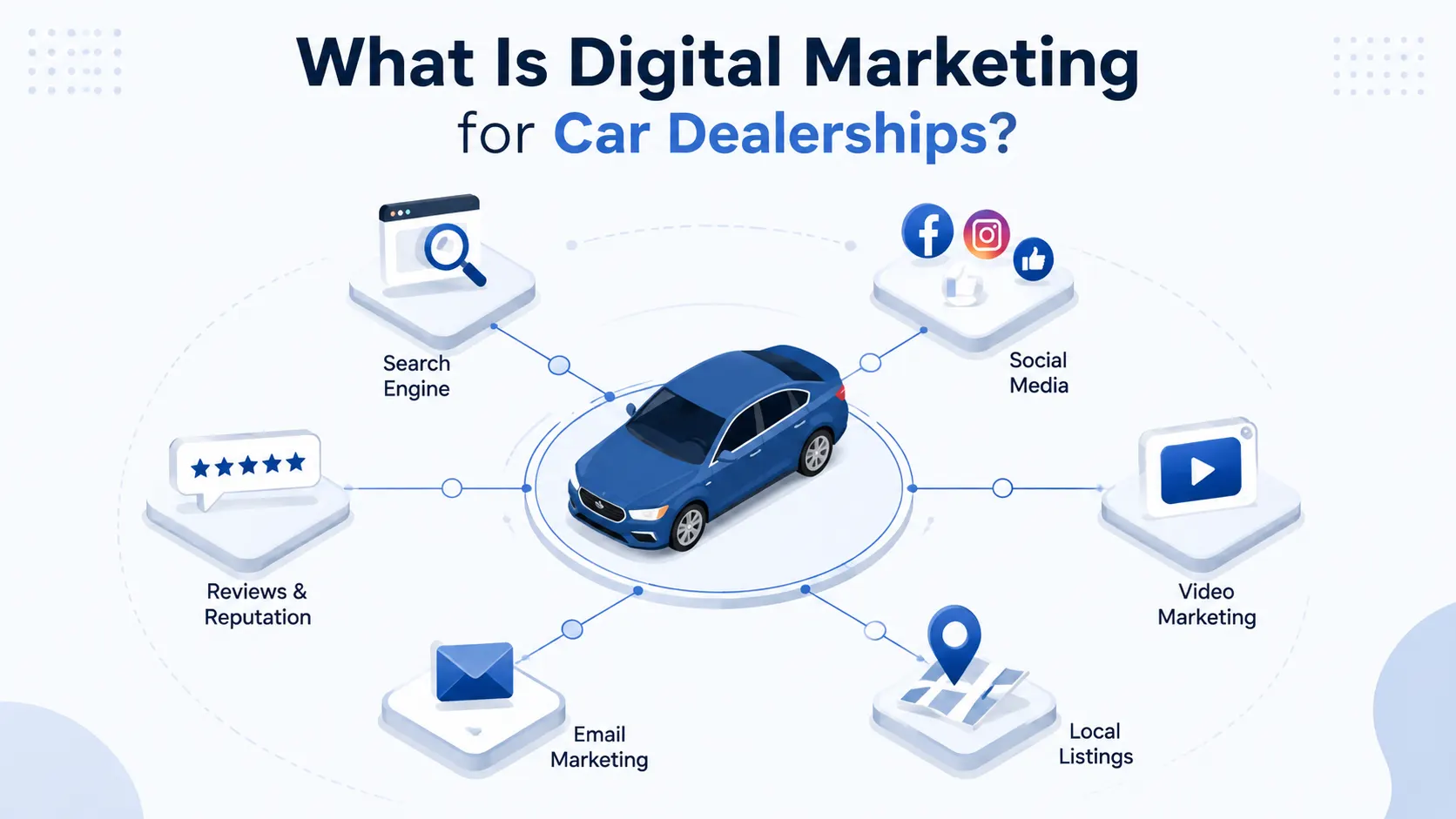
Digital marketing for car dealerships means using online channels to attract potential buyers, help them research vehicles, generate enquiries and move them towards actions such as a test drive or dealership visit.
These channels include:
The important point is that these channels work together.
Someone searching for “best SUV for a family” needs useful information. Someone searching for “SUV dealer near me” has stronger buying intent. A digital marketer needs to understand this difference and create the right content, advertisement or landing page for each stage.
Car buyers increasingly research vehicles before visiting a showroom. NADA reports that new-vehicle buyers spend around 7 hours of a total 13 hours and 4 minutes shopping online, while 74% of vehicle buyers purchase the vehicle they researched online. At the same time, 85% of shoppers still want to buy in person and 90% would not buy without a test drive. This creates an important role for digital marketing. The goal is not to replace the showroom. It is to connect the buyer’s online research with the physical dealership experience.
For a marketer, this means understanding how to:
That is why automotive marketing is a useful example for anyone learning digital marketing.
A simple dealership marketing funnel can be divided into five stages:
| Stage | What the buyer does | Useful marketing channel |
|---|---|---|
| Discover | Searches for cars, models or features | SEO, social media, video |
| Research | Compares models, features and prices | Blogs, videos, comparison content |
| Decide | Searches for dealers, offers or local options | Google Ads, local SEO |
| Enquire | Requests a call, price or test drive | Landing pages, forms, WhatsApp |
| Return | Comes back for service or another purchase | Email, messaging, reviews |
The same customer can move through several channels before making a decision.
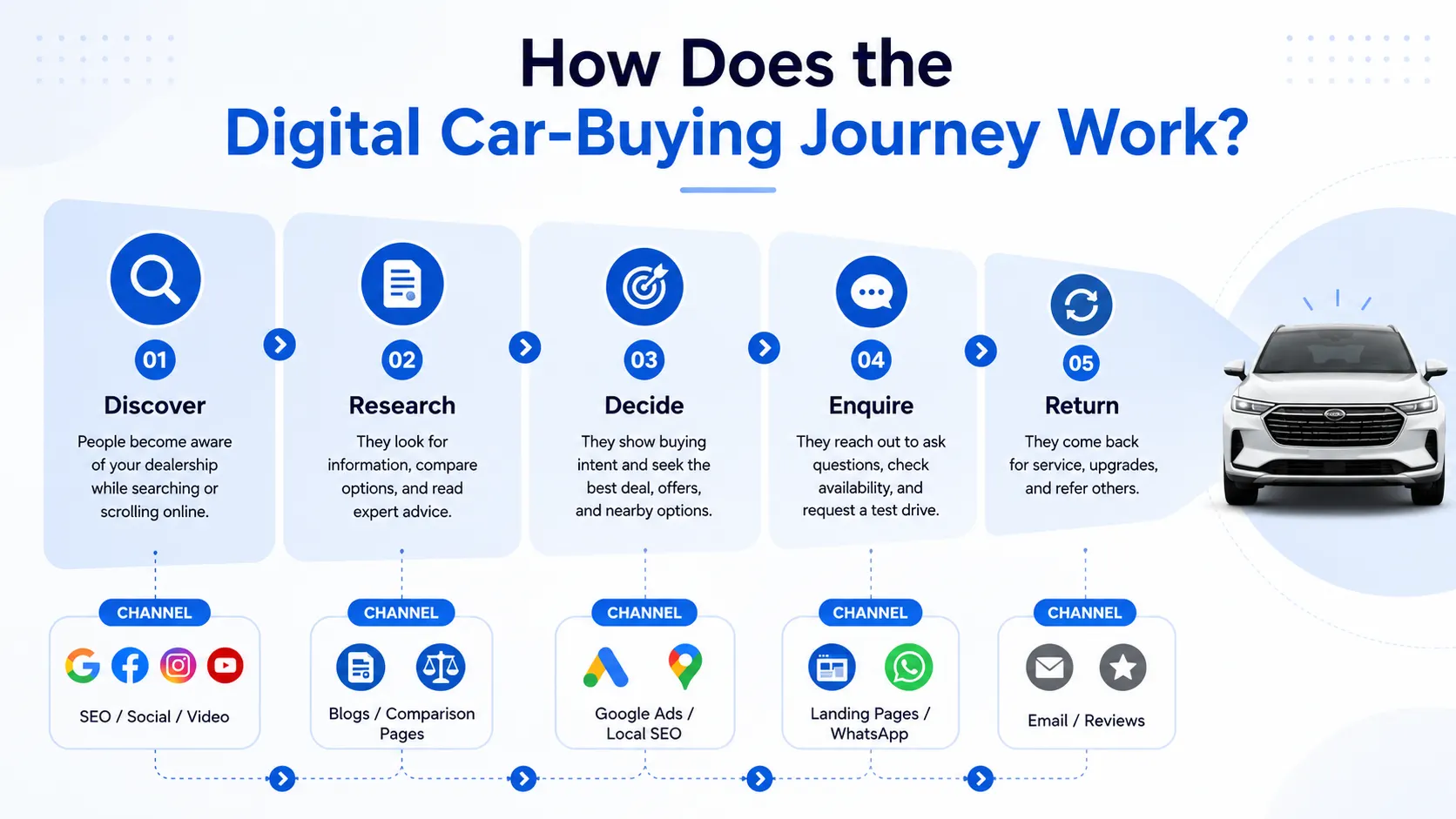
For example, someone may discover an SUV through Instagram, watch a YouTube review, search Google for its price, visit a dealership website and finally submit a test-drive request. This is why digital marketing should be viewed as a connected customer journey rather than a collection of separate platforms.
SEO helps dealerships appear when potential buyers search for information.
A dealership can create content around:
For example, “best SUV for long-distance travel” is an informational search, while “car dealer near me” has much stronger local intent. A marketer who understands this difference can match keywords with the correct content and buying stage.
Car dealerships are location-based businesses. Searches such as “car dealer near me,” “used car dealer in Kolkata” or “Toyota dealer near me” indicate that location can strongly influence the buying decision. A marketer can support local visibility through:
Local SEO is therefore an important practical skill for anyone who wants to work with dealerships or other local businesses.
Google Ads can help dealerships reach people who are already searching for a vehicle, dealer or offer. But advertising is only one part of the job.
A digital marketer should also ask:
A campaign can generate clicks without generating useful enquiries. Understanding the complete journey is therefore more important than simply increasing traffic.
Social media is not only a place to publish offers.
Dealerships can use Instagram, Facebook and YouTube to publish:
The content should help people make decisions. A short video showing the interior, boot space and key features of a vehicle may answer questions that a traditional advertisement cannot. For an aspiring digital marketer, this also means learning content planning, video strategy, audience targeting and performance measurement.
A dealership can answer many buyer questions before a customer contacts the sales team.
Examples include:
This type of content can attract users earlier in the buying journey and help a dealership become a useful source of information.
For a content marketer, it is also a practical lesson in search intent, keyword research and topic planning.
Getting someone to a dealership website is only the beginning. The website should make it easy to:
The ideal journey is simple:
Search → Website → Enquiry → Test Drive → Dealership
Cox Automotive’s latest research reinforces this online-offline connection: 63% of buyers said an omnichannel combination of online and in-person activities would be their ideal buying experience.
Car dealerships can generate online leads through a combination of local SEO, Google Ads, social media campaigns, vehicle pages, landing pages and useful content. However, generating a lead is not the final goal. The lead needs to be handled properly.
A person who requests a test drive may also be contacting other dealerships. Fast and useful follow-up can therefore influence whether an online enquiry becomes a dealership visit.
This is where digital marketing connects with sales.
A marketer needs to understand not just how many leads a campaign generates, but also:
Step Into the World of Digital MarketingLearn from Digital Marketing Experts |
|
| Advanced Diploma in Digital Marketing | |
| More Learning Options for you: Diploma in Digital Marketing | Google Ads Certification Training | Certification Course |
AI is becoming part of the vehicle research process.
Cox Automotive’s 2025 study found that 25% of new-vehicle buyers used AI tools during their shopping journey. Buyers using AI reported benefits such as faster answers and personalised recommendations.
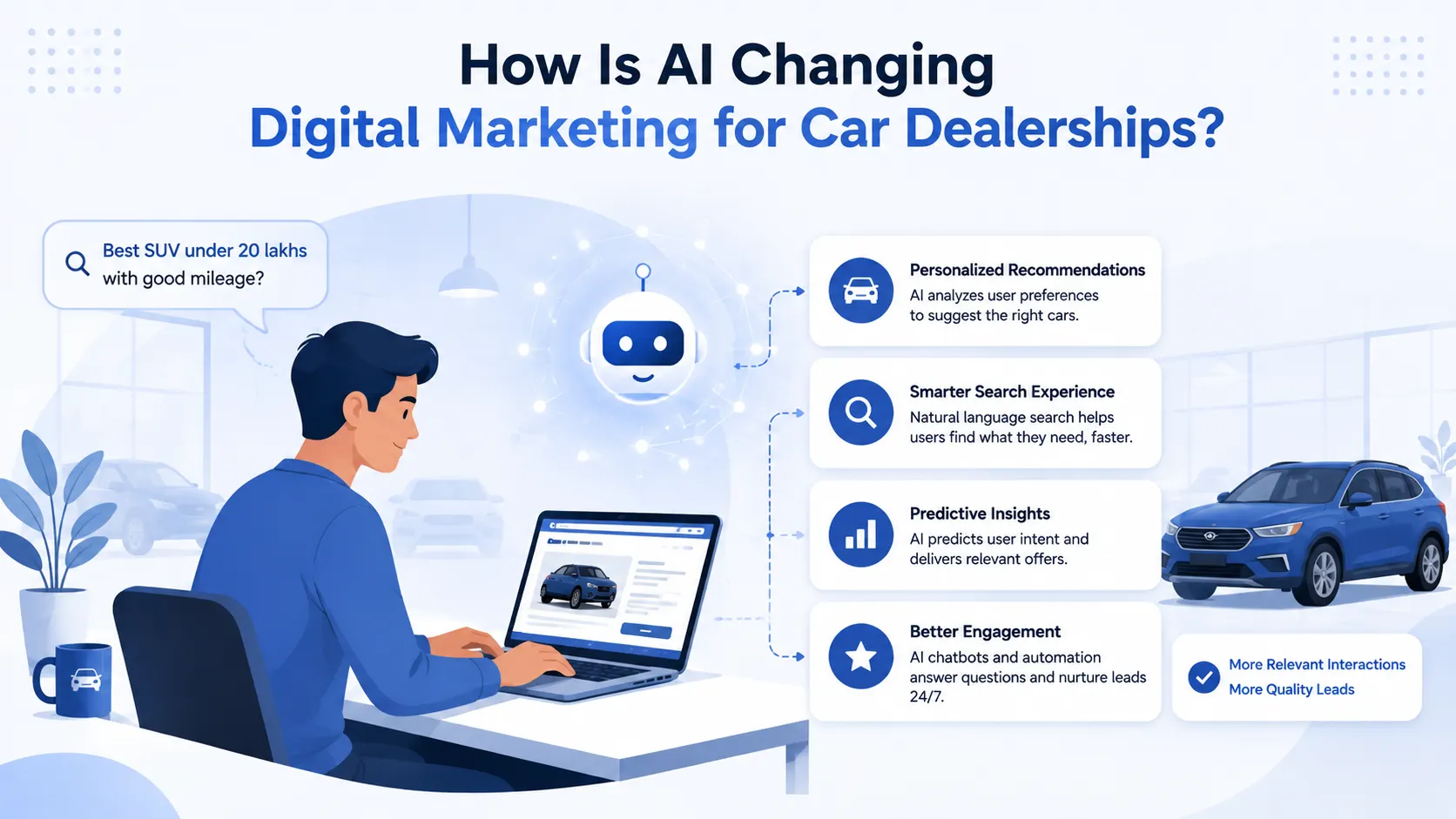
This creates a new responsibility for digital marketers.
Dealership information needs to be:
Google’s current guidance is particularly important here. Google says there are no additional technical requirements specifically for appearing in AI Overviews or AI Mode. The same foundational SEO practices still matter: pages need to be accessible, indexed and useful, with helpful, reliable, people-first content.
For someone learning digital marketing, this means AI search should not be treated as a shortcut around SEO. It is another reason to become better at creating useful and trustworthy content.
Automotive digital marketing requires several connected skills and these are:
Search and Content
Advertising
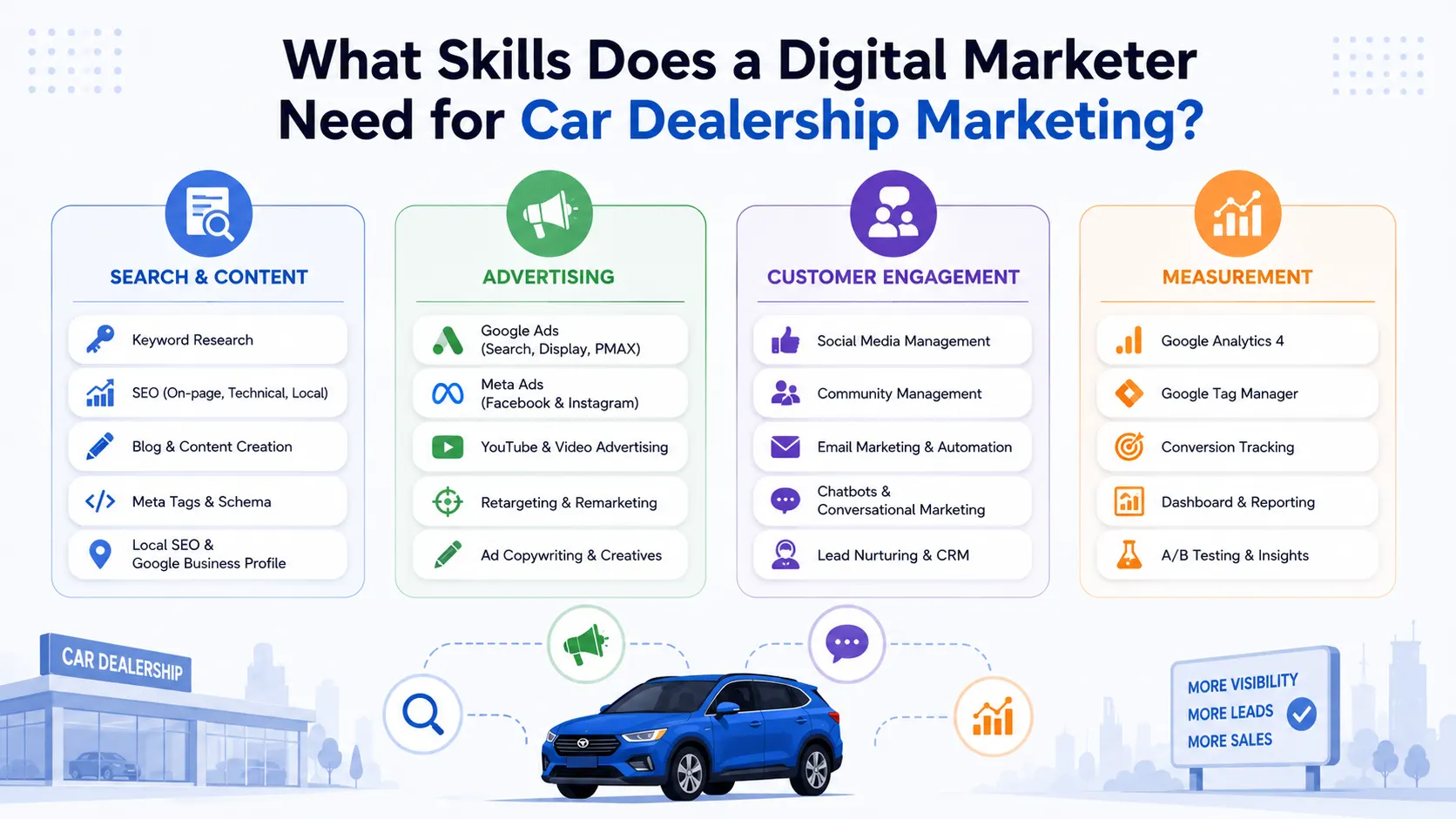
Customer Engagement
Measurement
The most important skill is understanding why a campaign is working or failing. For a fresh graduate or career changer, this is the difference between learning individual tools and learning digital marketing as a business function.
Yes. Automotive marketing is a useful niche for digital marketers because it combines several major areas of digital marketing within one business.
A trained marketer may work on:
These skills are not limited to automotive businesses. The same fundamentals can be applied to education, healthcare, real estate, retail, finance and other industries. For a student, fresh graduate or working professional changing careers, automotive marketing can therefore be viewed as a practical case study of how digital marketing contributes to real business outcomes. Hence, for gaining expertise in the field you can opt for the digital marketing coueses. If you are a beginner, you can opt for Certificate in Digital Marketing and for more advanced level Diploma and Advanced diploma courses.
In doing so, you can fulfil the goal which is not simply to learn how to run a Facebook campaign or write a blog. The goal is to understand the connection:
Customer behaviour → Search → Content → Advertising → Lead → Conversion → Business result
Traffic and social media followers do not tell the complete story. A dealership should connect marketing activity to business outcomes such as:
For example, a campaign that generates 1,000 clicks but very few relevant enquiries may be less useful than a campaign that generates 200 highly interested visitors. The objective is not simply more traffic. It is more useful customer actions.
Digital marketing for car dealerships is ultimately about understanding how modern buyers make decisions.
A customer may discover a vehicle on social media, research it through search, compare alternatives online, visit a dealership website and then book a test drive. The marketer’s job is to make that journey easier, more useful and more measurable.
For students, fresh graduates and working professionals planning a career in digital marketing, automotive marketing provides a practical example of how SEO, advertising, content, social media, analytics and AI can work together.
The valuable digital marketer is not simply someone who knows how to operate a tool.
It is someone who understands the customer, the channel, the data and the business outcome behind the tool.
Digital marketing for car dealerships uses online channels such as SEO, Google Ads, social media, content, local search and websites to attract potential buyers and generate enquiries.
A strong strategy usually combines local SEO, Google Ads, social media, useful content, video, an effective website and consistent lead follow-up. The right combination depends on the dealership’s location, inventory, audience and goals.
Dealerships can generate online leads through search advertising, SEO, social media campaigns, landing pages, vehicle pages, local search and useful automotive content.
Local SEO helps dealerships become visible when nearby customers search for terms such as “car dealer near me,” specific vehicle models or used-car dealers in their city.
AI can help buyers research vehicles, compare options and receive faster answers. For marketers, it increases the importance of providing clear, accurate and useful online information. Cox Automotive found that 25% of new-vehicle buyers used AI tools during the shopping process in its 2025 study.
A digital marketer working with car dealerships should understand SEO, local search, paid advertising, social media, content, lead generation, website optimisation and campaign measurement.

 }})