
Courses
Brand marketing interview questions can feel overwhelming, especially when one irrelevant answer can cost you the opportunity. The competition is sharper than ever, and expectations have evolved. Recruiters no longer look for textbook definitions. Instead, they assess strategic thinking, business acumen, and real-world application.
If you are unsure what to expect, preparation becomes quite stressful. That’s why this guide covers 30 of the most common Brand marketing interview questions. It will help you walk with confidence, structure, and full preparation.

In 2026, brand marketing combines positioning, performance, and customer experience to drive profitable growth. It no longer focuses only on advertising campaigns.
For example, Nike strengthened its direct-to-consumer strategy. As a result, it improved margins and controlled customer experience. Today, effective brand marketing connects data, distribution, and experience.
Brand positioning defines the space a brand owns in the customer’s mind. It explains what the brand stands for and who it serves. Most importantly, it clarifies why the brand is different. For example, Apple focuses on simplicity and innovation. Therefore, it commands premium pricing and builds loyalty.
Strong positioning reduces price sensitivity. Additionally, it increases customer lifetime value. When a brand owns a clear meaning, it competes on value instead of discounts. Therefore, it builds loyalty and lowers acquisition costs over time.
Differentiation comes from value innovation. It does not come from adding too many features. First, I analyse reviews and social conversations. Then, I aim to identify unmet needs. Finally, reposition the brand around a unique strength. Meaningful difference strengthens brand marketing impact.
Promotions create short-term sales spikes. However, positioning builds long-term value. Heavy discounting can reduce perceived value. In contrast, strong brand marketing builds emotional connection and sustainable revenue.
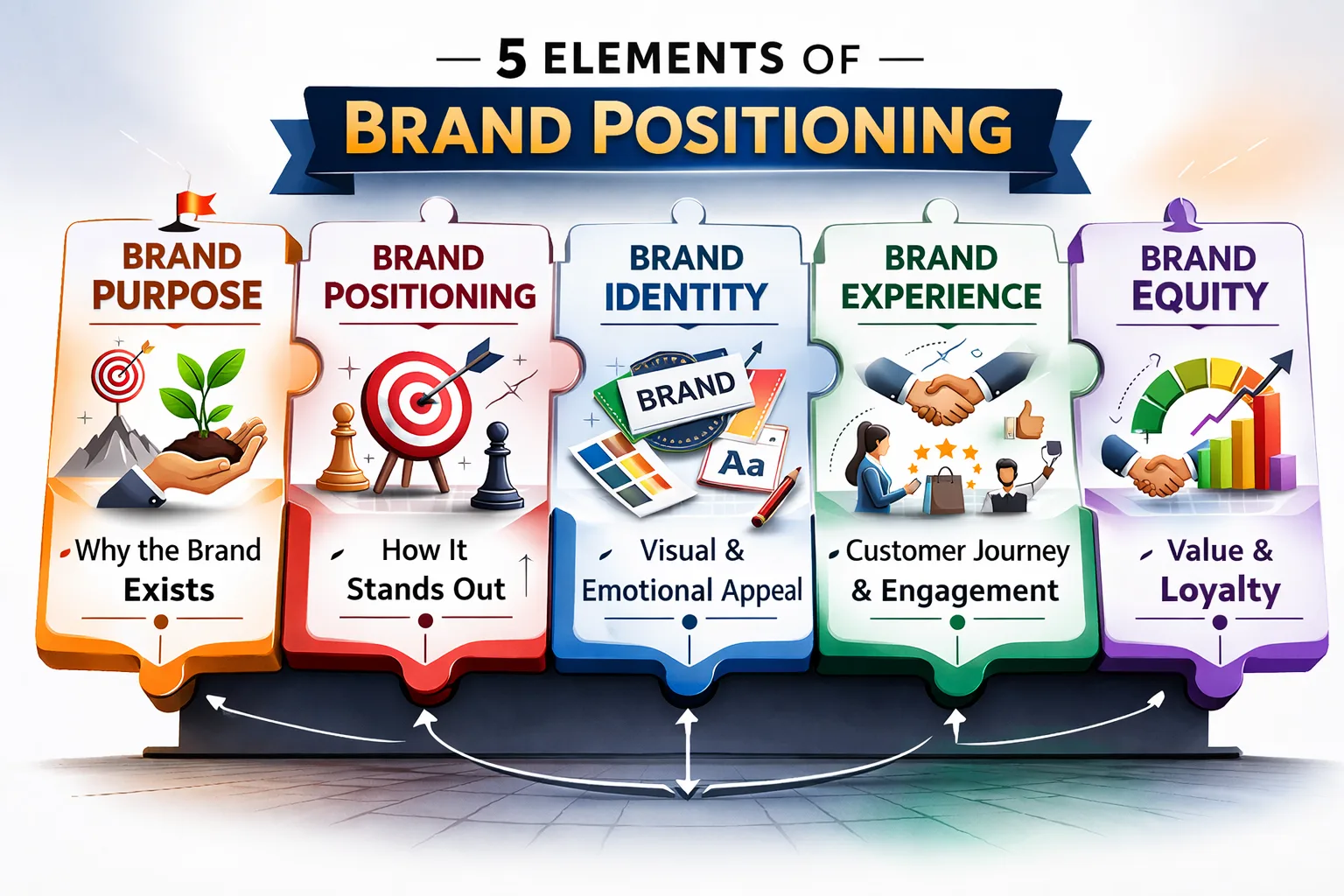
I follow an inside-out approach. First, I align mission and internal values. Then, I built a clear identity. Every touchpoint must reflect the same message. Brand development follows this cycle: Identity → Execution → Feedback → Optimisation.
Together, these elements drive sustainable commercial impact.
The structure depends on customer perception and growth goals. For example, Google follows a Branded House model. In contrast, Procter & Gamble uses a House of Brands model. Thus, the right structure ensures clarity and scalability in brand marketing.
Portfolio management assigns each brand a clear role. For example, a brand can act as a flagship, a flanker, a niche, or a premium. Thus, the goal becomes simpler. Maximise total value and avoid internal competition.

Brand equity is measured across:
Expansion requires consistency. Therefore, maintain quality and communication standards. When entering new markets, I aim to protect customer experience. Thus, strong governance prevents brand dilution.
My Brand Management GTM framework includes:
A strong launch balances short-term excitement with long-term engagement. Hence, I start with teaser campaigns, plan a strong launch event, and follow up with sustained communication to maintain momentum.
A 360-degree campaign delivers consistent storytelling across paid, owned, earned, and shared media. As a result, the brand voice remains the same across all channels and touchpoints.

I prioritise:
Consumer behaviour analysis reveals why people buy. I combine data insights with qualitative research to understand both actions and motivations.
I use CRM and transactional data along with psychographic insights, such as motivations and buying triggers. Personas are linked to specific pain points and updated regularly.

Consumer journey mapping identifies every interaction a customer has with the brand. Furthermore, it highlights friction points that reduce conversions. Fixing these gaps can increase sales without increasing ad spend.
Consistency starts with clear brand guidelines. I define visual style, tone of voice, and community rules. Furthermore, templates and a centralised content calendar ensure every post reflects the same brand personality.
It includes three main activities:
Social media is about community building, not just broadcasting.
E-commerce brand marketing focuses strongly on conversion optimisation, user experience, and digital positioning. Besides this, the brand experience includes website speed, checkout flow, and even packaging. Since attention spans are short online, the brand message must be clear and immediate.
Few related topics for your knowledge
Conflicts often arise from short-term revenue goals versus long-term brand building. I align both teams around profitable growth. Besides this, shared dashboards, joint planning, and linking brand initiatives to revenue metrics encourage collaboration and accountability.

Integrated marketing communication means presenting “one voice” across all channels. Digital campaigns, offline promotions, PR, and performance marketing must reinforce the same positioning. Moreover, clear brand guidelines and messaging pillars ensure consistency, which strengthens recall and trust.
I use the 3C framework:
If any pillar is weak, I refine the strategy before launch.
I begin with clear positioning that supports business goals. Then I develop visual and verbal identity elements to match that strategy. Finally, I test and optimise these elements across channels to ensure measurable commercial impact.
Strong positioning is clear, relevant, differentiated, credible, and sustainable. It creates emotional connection, builds preference, and stays consistent while adapting to market changes.
I track financial metrics such as Customer Acquisition Cost (CAC), Customer Lifetime Value (LTV), and Return on Ad Spend (ROAS). If brand management is effective, CAC should decrease over time, while LTV should increase due to loyalty and repeat purchases.
Digital positioning ensures visibility across search engines and social platforms. Strong SEO and consistent content build authority and a competitive advantage.
Every extension must align with the brand’s core identity. The new offering should feel like a natural evolution. Hence, I check whether it serves the same audience, reinforces positioning, and maintains quality standards. Discipline protects long-term brand equity.
Continuous learning improves expertise in positioning, brand equity measurement, and digital analytics. Hence, upskilling helps professionals stay competitive in a fast-changing market.
To successfully handle the brand marketing interview questions, you require practical knowledge more than theory. Recruiters expect creativity, strategic thinking, and financial understanding. By mastering these 30 brand marketing interview questions, you can demonstrate strong brand marketing knowledge and real-world application in 2026.
Brand marketing focuses on building long-term brand value. Thus, the key responsibilities include defining positioning, leading campaigns, tracking performance, and protecting brand equity.
Brand marketing interview examines your perception and skills for long-term brand value. It assesses how you analyse customers’ perception and connect them with the brand.
In contrast, a product management interview focuses on your knowledge of product development and lifecycle execution. While product teams build the offering, brand marketing builds demand and emotional connection.
Brand marketing performance is measured using clear KPIs. These include brand awareness, market share, and revenue growth.
In addition, teams track Customer Acquisition Cost (CAC), Customer Lifetime Value (LTV), and Return on Investment (ROI). Strong brand marketing should reduce CAC and increase LTV over time.
Yes, brand marketing remains a strong career path in 2026. As competition increases, organisations rely on strong brand marketing leadership to drive sustainable growth. Therefore, skilled professionals remain in high demand.

 }})