
Courses
A UGC creator makes photos and videos. Brands use these to show off products and connect with customers. They are hired for the content they create, not their follower count, unlike traditional influencers.
Brands are now focused on short videos and relatable ads. UGC creation is a great chance for anyone who likes making content or working in digital marketing. You don’t need a large audience or fancy gear to start, but you do need creativity, an understanding of brand needs, and a portfolio showing your work.
This guide covers what a UGC creator does. It also explains how they differ from influencers. You’ll learn the skills needed, how to build a portfolio, and find paid opportunities in India.
A UGC creator produces photos, videos, or other digital content that features a brand or product for marketing. This content usually reflects real customer experiences. Examples include product demos, unboxing videos, and personal reviews.
UGC stands for user-generated content. Traditionally, it refers to content made by customers based on their real experiences. In marketing, brands hire creators to produce content in this relatable style.
For instance, a skincare brand might hire a creator to film a video showing how to use its moisturiser. The brand can then share the video on its social media or use it in ads, based on agreed usage rights.
The creator aims to showcase key product features and benefits naturally. This approach captures attention and aligns with the brand’s guidelines.
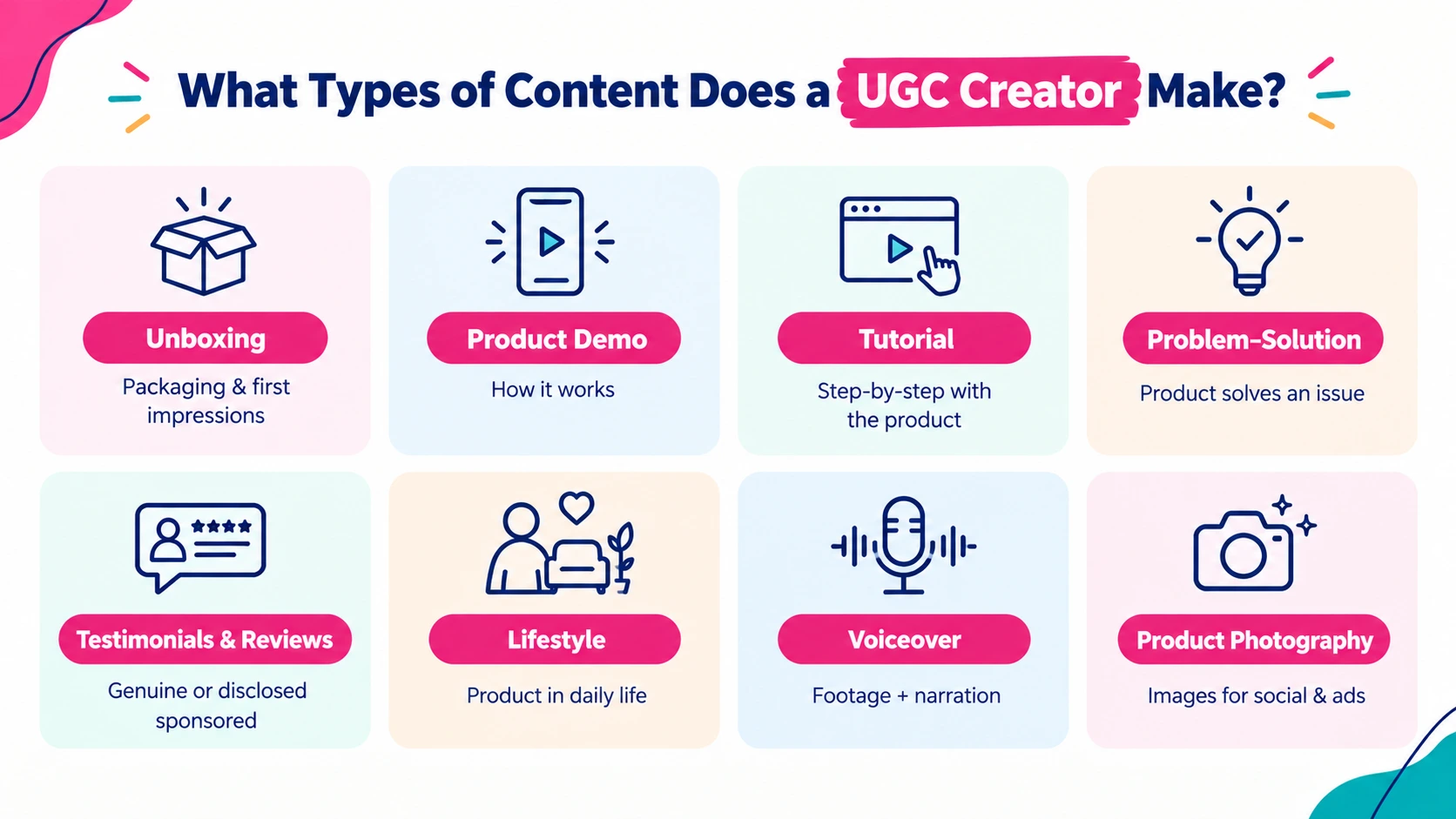
UGC creators create various content types based on the brand and campaign goals.
The format can vary from short vertical videos to edited clips, photos, or raw footage. Brands usually provide their requirements in a content brief.
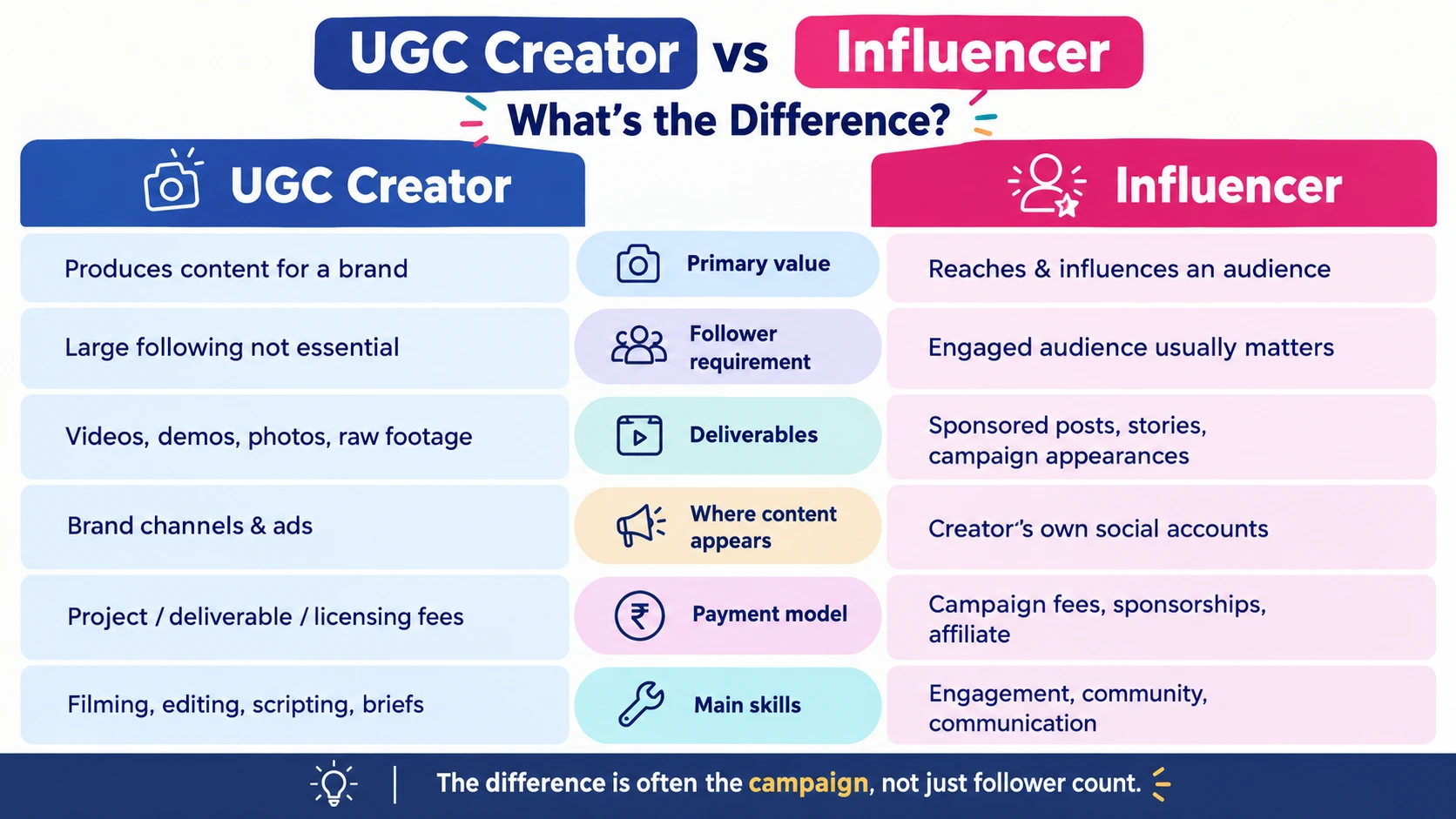
The main difference between a UGC creator and an influencer is what a brand pays for: content production or audience access.
A UGC creator is hired to produce content for the brand. An influencer is hired to promote a product to their established audience. Some professionals can do both.
| Comparison | UGC Creator | Influencer |
|---|---|---|
| Primary value | Produces content for a brand | Reaches and influences an audience |
| Follower requirement | A large following is not essential for content-production work | An engaged audience is usually important |
| Typical deliverables | Videos, product demonstrations, photos and raw footage | Sponsored posts, stories, videos and campaign appearances |
| Where content appears | Brand channels, advertising or other agreed placements | Often the influencer’s own social media channels |
| Common payment models | Project fees, deliverable-based fees or licensing fees | Campaign fees, sponsored content, affiliate commissions or other arrangements |
| Main skills | Filming, editing, scripting and interpreting briefs | Audience engagement, communication, content creation and community building |
For example, a fitness brand launching a new water bottle might hire a UGC creator to make videos for the brand’s social media. An influencer would create a sponsored video for their followers.
A creator with a big following can produce UGC, while an influencer may create content for brand channels. The difference often depends on the campaign, not just follower count.
Brands need content that explains their products and answers customer questions. UGC-style content helps communicate these messages through demos and relatable storytelling.
Here are common reasons brands hire UGC creators:
Brands may want multiple videos showing the same product in different ways. One video might focus on convenience, while another highlights a feature. This variety helps marketers evaluate options.
A demonstration can clarify what a product description may not explain well. For instance, a creator showing how a compact organizer fits in a travel bag helps viewers understand its size and use.
Brands can use UGC for organic posts, paid ads, and product pages. The creator produces the content, while the brand decides how to use it.
A brand selling the same product to students, professionals, and parents may need different messages. Creators can adapt their storytelling for each audience while keeping the product facts consistent.
UGC doesn’t always outperform professional ads. Success depends on creativity, audience, offer, and campaign execution.
You can start developing UGC skills without waiting for a brand to hire you. Learn the basics, create sample content, build a portfolio, and use it to find opportunities.
A niche is the product category you want to focus on. Start with products you know well. This helps you create realistic scripts and demos.
Potential niches include:
You can start with one or two niches and expand as you find your strengths.
A smartphone is enough for your first videos. Focus on using it well.
Practice the following:
You can learn basic editing with mobile or desktop tools. You don’t need expensive gear to practice.
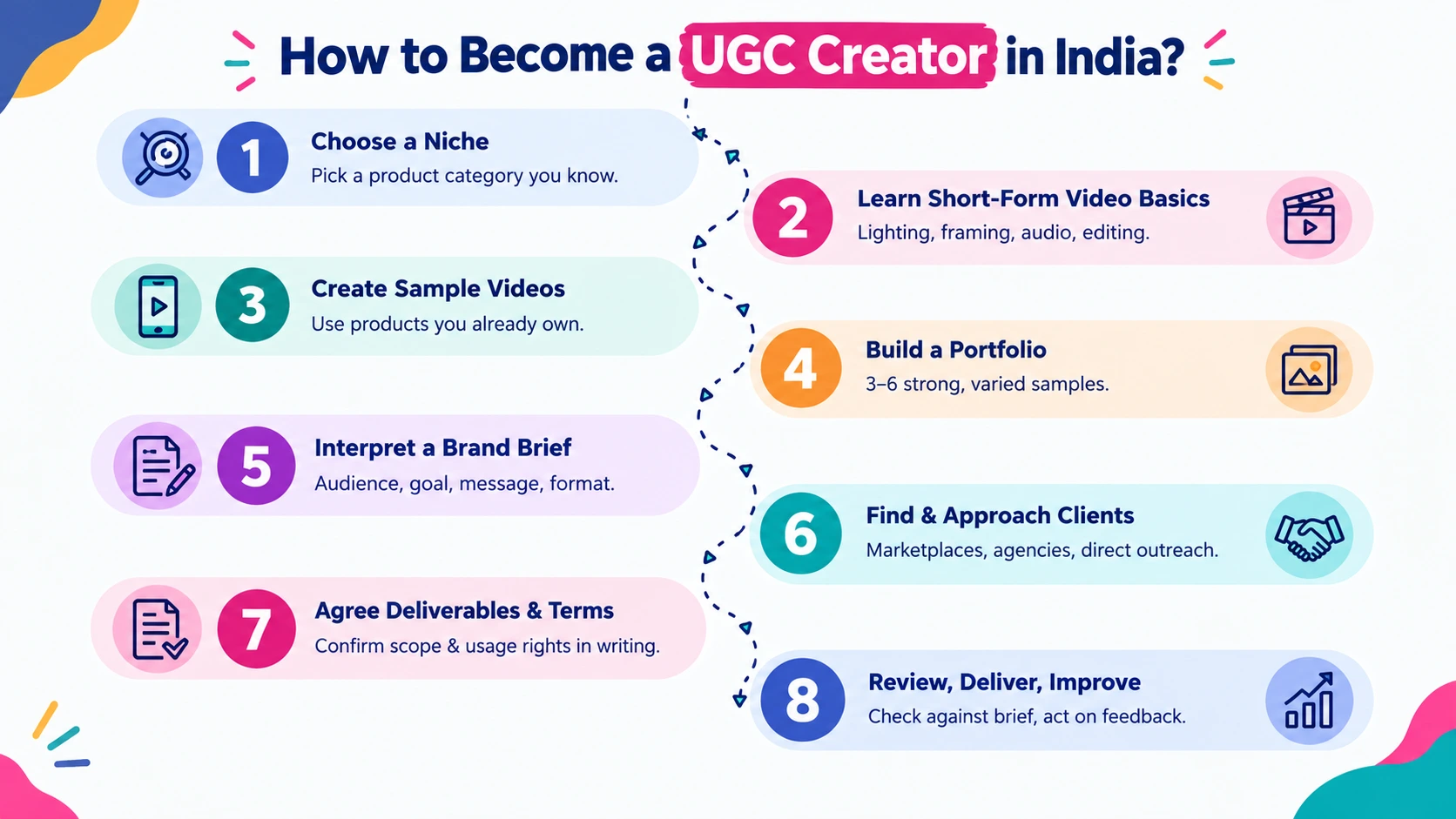
Don’t wait for a paid assignment to start practising. Use products you own to create sample videos in various formats. Label these as portfolio samples.
For example, if you want to work in skincare, create:
These samples show your creativity, even without client work.
Your portfolio should clearly showcase your abilities. Start with a simple website or organised folder with selected samples.
Include:
For each sample, explain the creative choices behind it. A focused portfolio is more valuable than a large collection of similar videos.
A content brief outlines what the brand expects from you. Before filming, identify:
For example, a brand wanting a video for a portable blender might ask you to show its size and operation. Understanding the brief helps reduce revisions and ensures you meet the requirements.
Once your portfolio is ready, research brands that fit your niche.
Potential paths include:
Check each platform’s eligibility, payment terms, and fees before applying.
When contacting a brand, keep your message clear. Your content suits their product because it aligns well with their audience’s interests. For example, you could use a sample that highlights key features. A great video idea could be a tutorial showcasing how to use the product effectively.
Instead of saying, “I can make videos for your brand,” show a demo. For instance, highlight how a travel organiser packs efficiently for a weekend trip.
Before making paid content, confirm the details in writing. Discuss the number of videos, duration, editing needs, deadlines, and payment schedule.
Clarify content usage rights. A brand’s right to post a video doesn’t mean they can use it for paid ads without agreement. Discuss the platforms, duration, and any exclusivity terms before filming.
After filming, check the video against the brief. Ensure that you make the product visible, clarify the audio, and include the required message.
Deliver the files in the requested format and respond to feedback professionally. Keep track of which creative approaches clients like and areas for improvement.
Consistent communication and delivery help build professional relationships. However, repeat work depends on client needs and content quality.
Step Into the World of Digital MarketingLearn from Digital Marketing Experts |
|
| Advanced Diploma in Digital Marketing | |
| More Learning Options for you: Diploma in Digital Marketing | Google Ads Certification Training | Certification Course |
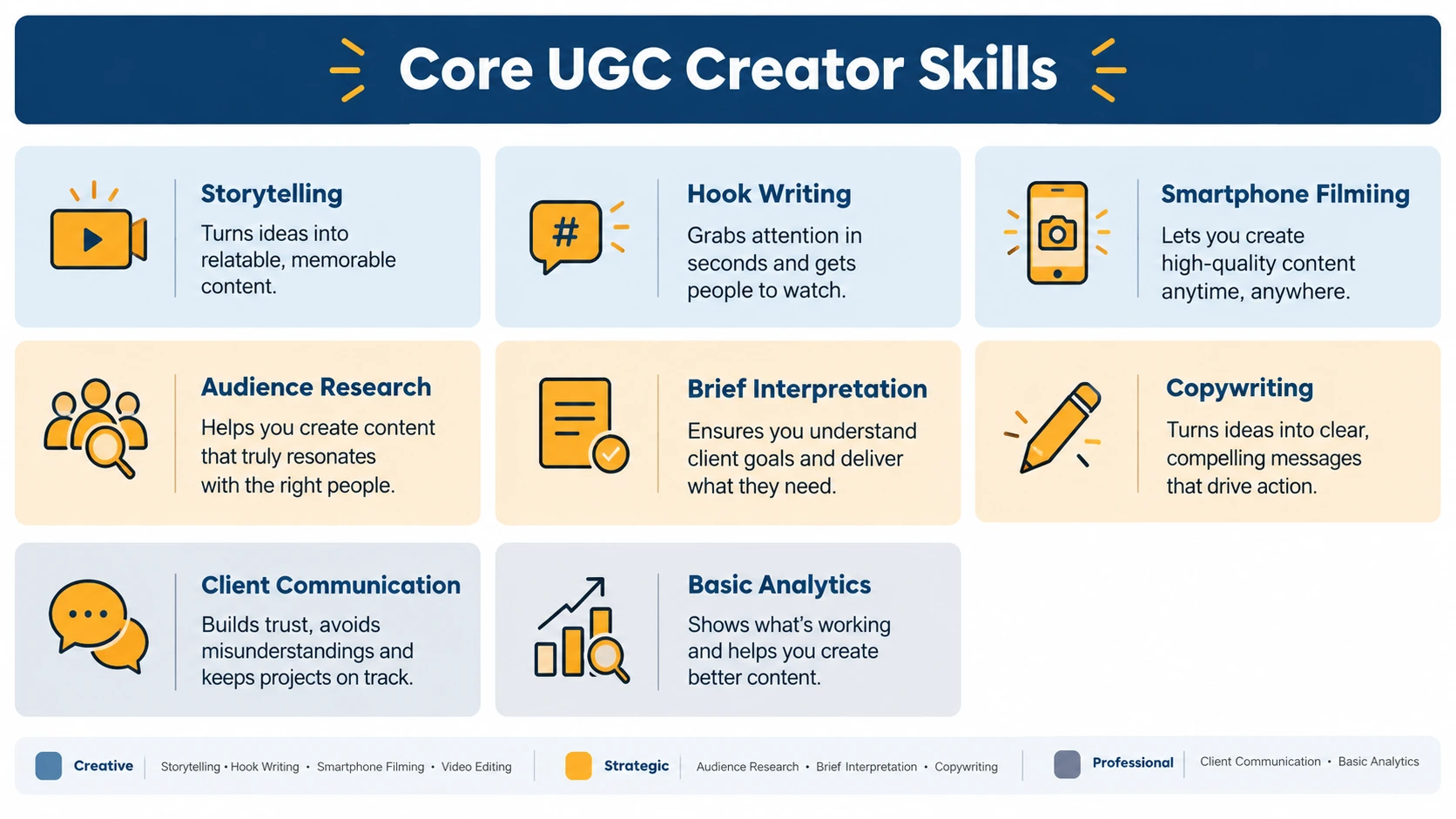
UGC creation combines creative production with communication and basic marketing knowledge. You do not need to master every skill before starting, but you should understand the fundamentals and practise them consistently.
| Skill | Why it matters | How to practise |
|---|---|---|
| Storytelling | Gives the video a clear narrative | Turn a product feature into a short demonstration |
| Hook writing | Helps communicate the topic quickly | Write several opening lines for the same brief |
| Smartphone filming | Makes product details clear | Practise lighting, framing and stable shots |
| Video editing | Improves pacing and clarity | Edit out unnecessary pauses and add readable captions |
| Audience research | Helps match the message to the viewer | Identify the audience’s needs and likely questions |
| Brief interpretation | Keeps deliverables aligned with client expectations | Convert a brief into a shot list |
| Copywriting | Helps explain benefits in simple language | Write concise, accurate scripts |
| Client communication | Reduces misunderstandings | Confirm deadlines, revisions and deliverables in writing |
| Basic analytics | Helps assess creative performance when data is available | Learn how to interpret watch time, engagement and conversion metrics |
A useful way to practise is to take one product and create three versions of a video, each with a different opening or message. This helps you understand how creative choices can change the way a product is presented.
UGC creator earnings in India vary depending on the creator’s experience, the type of content, the client’s budget, the scope of work and the rights granted to the brand. There is no single reliable fee that applies to every creator or project.
Rather than relying on a generic earning claim, evaluate each opportunity based on its requirements.
Start by estimating the time and resources for the entire project.
For example, one task might need a script, one edited video, captions, and one revision. Another might require three videos, raw footage, various openings, and paid usage rights.
These projects should not share the same fee since their scopes and values differ.
A simple pricing worksheet can include:
Calculate a minimum fee, then align it with market data and client needs.
Don’t rely on speculative monthly earnings or social media screenshots as proof of consistent earnings. Focus on building skills, creating a strong portfolio, and developing a professional process. This will help you compete for the right jobs.
You can search for opportunities through several channels. Each has different application processes, eligibility requirements and commercial terms.
| Channel | How to approach it | What to check |
|---|---|---|
| Creator marketplaces | Create a profile and apply to relevant briefs | Eligibility, fees, payment process and usage rights |
| UGC agencies | Submit a portfolio and niche information | Commission structure, exclusivity and contract terms |
| Direct brand outreach | Contact relevant brands with a specific content idea | Deliverables, budget, deadlines and licensing |
| Freelance platforms | Build a service profile and respond to suitable projects | Platform fees, competition and payment protection |
| Professional referrals | Share your portfolio with relevant contacts | Scope, responsibilities and written agreements |
Do not assume that every platform accepts creators from India or offers guaranteed assignments. Verify the current terms before signing up.
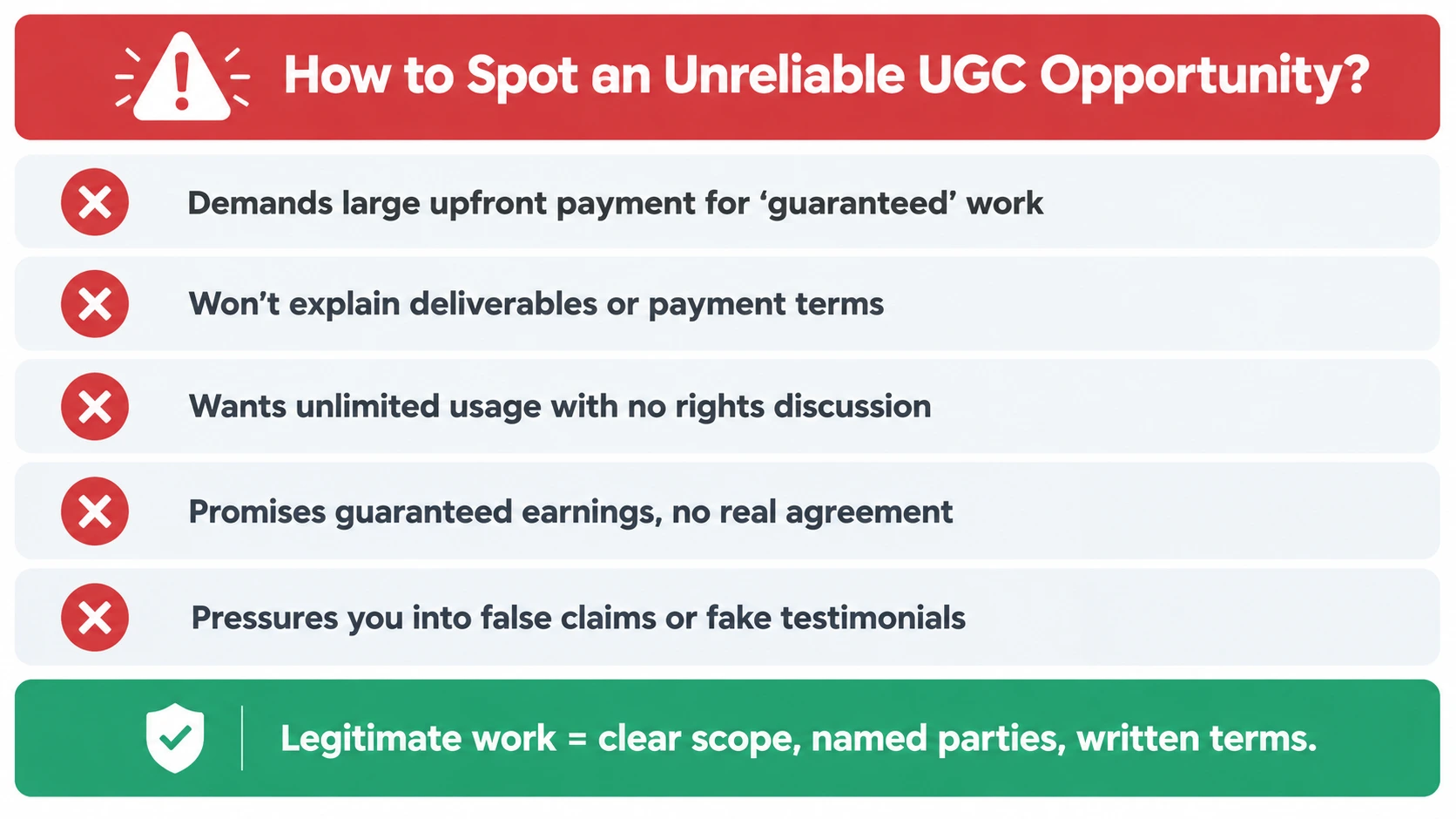
Be cautious if a supposed client:
A legitimate opportunity should have a clear scope, identifiable parties and understandable commercial terms. When in doubt, verify the company and review the agreement before committing your time or money.
UGC creators need to produce content that is accurate, properly authorised and consistent with the agreed brief.
If you create sponsored content for publication on your own social media account, disclosure requirements may apply. The Advertising Standards Council of India (ASCI) explains that material connections can include money, gifts, discounts and other benefits, and that applicable disclosures should be prominent and easy to notice. Review the ASCI guidelines for influencer advertising before publishing commercial content.
Creators should also:
If a brand asks you to make a claim you cannot verify, raise the issue before producing the content. A creative brief does not remove the responsibility to communicate honestly.
UGC creation is one part of a wider digital marketing process. Brands need more than a video file: they need content that communicates a relevant message to a specific audience and supports a campaign objective.
Understanding the broader process can help creators work more effectively with marketing teams.
Content marketing helps you understand audience needs, choose relevant topics and communicate useful information. Copywriting helps turn those insights into hooks, scripts and calls to action.
Social media knowledge helps you understand platform formats, audience behaviour, content calendars and the differences between organic publishing and paid promotion.
Practical production skills help you create clear, polished assets that follow a brief and work across the intended placements.
Basic knowledge of paid advertising helps explain why brands may request several creative variations. Analytics can help marketers evaluate metrics such as video retention, click-through rate and conversions, depending on the campaign and data available.
These skills do not guarantee UGC work, but they provide useful context for collaborating with marketing teams and understanding how creative assets fit into a campaign.
For people who want to develop a broader foundation, IDCM’s Advanced Diploma in Digital Marketing covers areas including content marketing, video creation, social media optimisation, paid advertising and analytics. Explore the syllabus to determine whether the programme matches your learning goals.
UGC creation may suit you if you enjoy making videos, explaining products, experimenting with storytelling and working on creative projects. It can also be worth exploring if you want to develop a freelance service alongside other professional skills.
However, it is not an automatic route to quick income. Finding clients requires consistent practice, a relevant portfolio, professional communication and an understanding of commercial terms. Some creators work freelance, while others combine content creation with social media management, content marketing or broader marketing roles.
If you are a student, fresh graduate, job seeker or working professional considering this path, begin with a small, practical goal: learn the basics, create a few portfolio samples and seek feedback before investing heavily in equipment or paid services.
As you progress, decide whether you want to focus on content production or develop a wider skill set in digital marketing. Understanding both the creative and commercial sides of content can help you make a more informed career decision.
A UGC creator makes content that helps brands show their products, explain benefits, and reach potential customers. You don’t need many followers on social media to start making content for brands, but you do need skills, a good portfolio, and a professional attitude. If you want to try UGC creation in India, start small: pick a niche, practice with products you have, build a portfolio, and contact brands with clear ideas. Learn about briefs, deliverables, payment, and usage rights before taking on work.
No. A large following is not essential when a brand hires you primarily to produce content for its own channels or advertising campaigns. However, audience size and engagement may matter if the assignment also requires you to publish content to your own social media accounts.
Yes. Beginners can start by learning basic filming, scripting and editing, then producing sample videos with products they already own. A portfolio can demonstrate your skills before you have paid client experience.
No. A smartphone can be sufficient for many beginner projects. Clear lighting, stable framing, understandable audio and thoughtful editing often matter more than buying expensive equipment before you have established your workflow.
Start by creating a portfolio, identifying suitable brands and applying through verified creator platforms or agencies. You can also contact relevant brands directly with a concise introduction, a relevant sample and a specific content idea.
No. UGC creation generally focuses on producing content for a brand, while influencer marketing generally involves promoting a product or message through a creator’s own audience. The roles can overlap when a creator both produces content and publishes it to their followers.
There is no universal earning figure. Fees depend on the project scope, experience, deliverables, editing requirements, usage rights and client budget. Beginners should research comparable projects and calculate their costs rather than rely on guaranteed-income claims.
It can become a full-time freelance or business activity for some creators, but results depend on their skills, client pipeline, repeat work, pricing and operating costs. It is sensible to build experience and assess demand before relying on it as your sole source of income.
Start with storytelling, hook writing, smartphone filming, basic editing and understanding a brand brief. Then develop portfolio presentation, client communication, pricing and usage-rights knowledge. Digital marketing skills can provide additional context for understanding brand campaigns.

 }})