
Courses
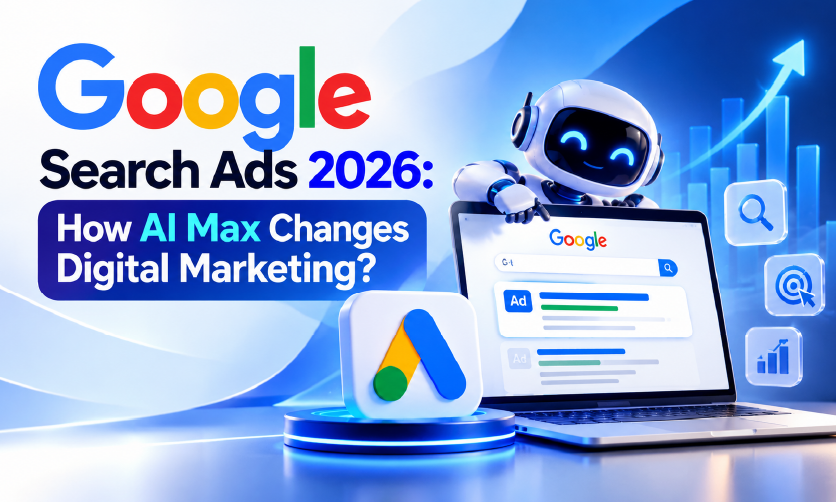
Google Search Ads are the paid text results that appear at the top of Google when someone searches for something. In 2026, how those ads are built and targeted is changing because of a Google feature called AI Max for Search. AI Max hands more of the manual work- keyword matching, ad copy, and landing-page selection- to Google’s AI.
For people running campaigns, that shifts the daily job. For anyone training for a career in digital marketing, it changes which skills actually get you hired. This guide explains what Google Search Ads are, what AI Max does, what changed in 2026, and the skills that now matter most.
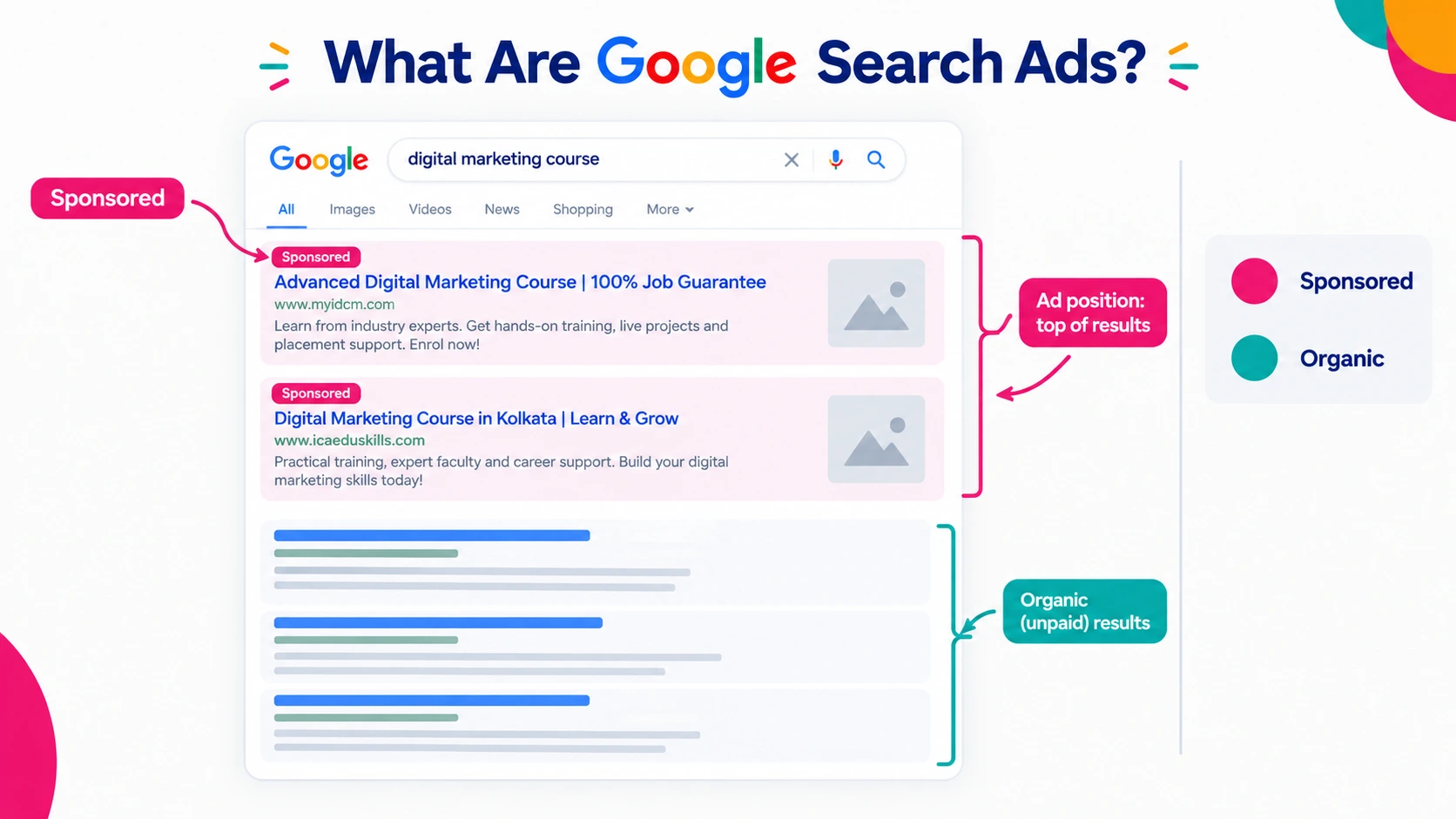
Google Search Ads are paid text listings that show on the Google search results page when a user’s query matches what an advertiser is bidding on. They usually sit above or below the organic (unpaid) results and carry a small “Sponsored” label.
Advertisers do not simply buy the top spot. They compete in a real-time auction every time someone searches. Each advertiser chooses keywords, sets a bid (what they are willing to pay), and writes ad copy. Google then ranks the competing ads using a mix of the bid and how relevant and useful the ad and landing page are.
Three terms beginners often blur:
A campaign can earn thousands of impressions and clicks and still fail if those clicks never convert. Good advertising is judged on conversions and cost-per-conversion, not on traffic. Keep this distinction in mind, because AI Max is designed to influence all three.
AI Max for Search is not a new campaign type. It is an optimisation layer you switch on inside an existing Search campaign. Google launched it in May 2025 as a one-click suite of targeting and creative features that brings its latest AI into campaigns you already run.
In practice, enabling AI Max lets Google’s AI do three things your keyword list and static ads could not: find relevant searches your keywords missed, rewrite your ad text to match each query, and send clicks to the most relevant page on your site. You keep your campaign structure, budgets, and goals. You hand over some manual control in exchange for wider reach and more automated relevance.
This matters for how you think about the job. The skill is shifting from building every keyword and ad by hand to directing and supervising an AI that does the first draft.
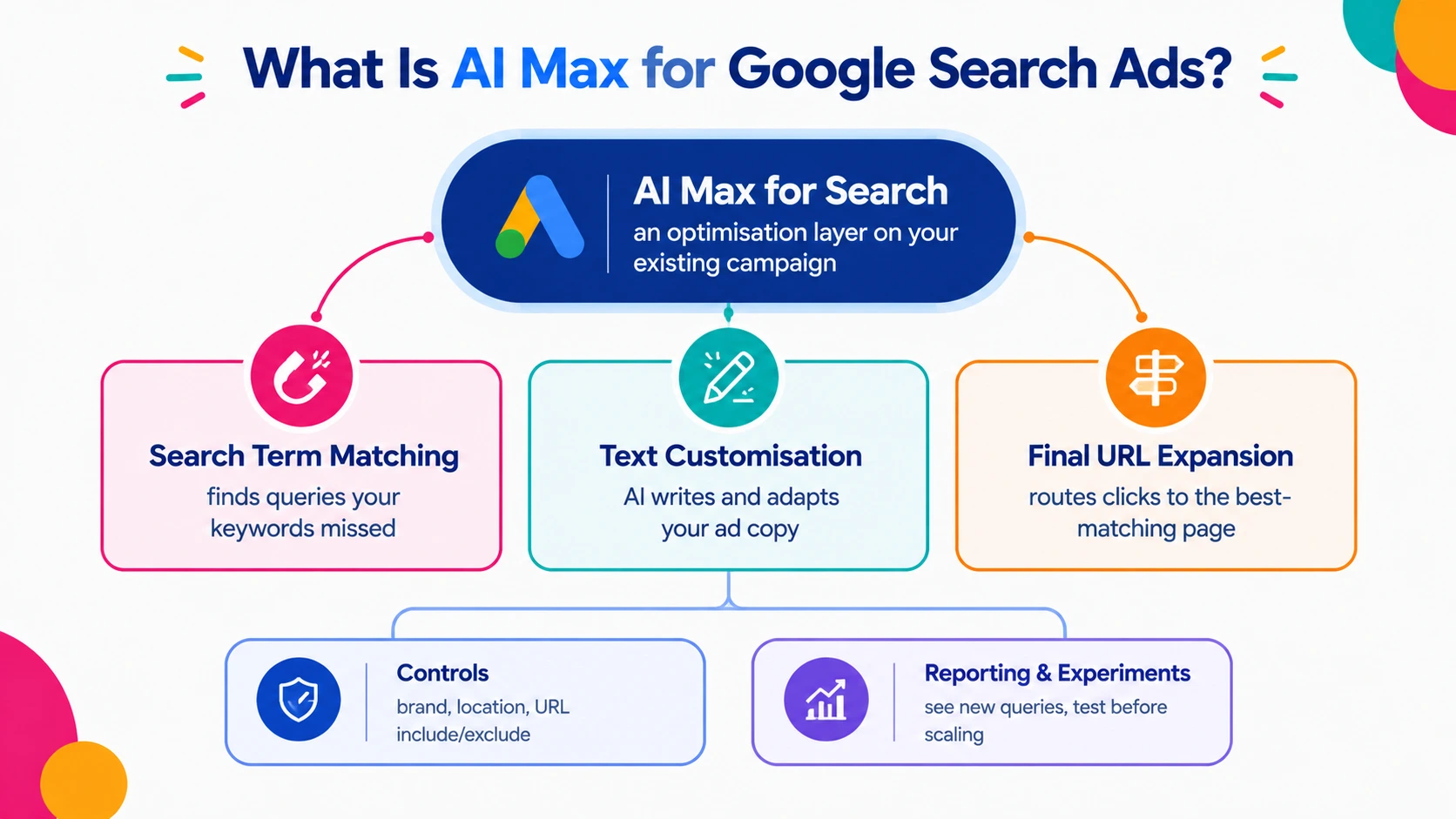
AI Max changes four parts of a campaign and one part of how you measure it. Here is each, in plain terms.
Traditionally, your ad showed mostly for the keywords you chose. Search term matching combines broad match with keywordless technology: Google reads your existing keywords, ad copy, and landing pages, then shows your ad for related searches you never listed. The goal is incremental reach, meaning conversions from net-new queries you would otherwise miss. In Google’s own example, a beauty brand unlocked conversions from searches like “what is the best cream for facial dark spots” that no keyword list targeted.
Text customisation (previously called automatically created assets) uses generative AI to write headlines and descriptions that fit the user’s query, drawing from your landing page, ads, and keywords. Instead of one static ad serving every searcher, the ad adapts its wording in real time to look more relevant to each person.
Final URL expansion lets Google send a click to the most relevant page on your site, not just the single landing page you set. If someone searches for a specific course and your ad points at a generic homepage, AI Max can route them to the matching course page instead. It works only alongside text customisation, and you can exclude pages you do not want used.
Handing work to AI without guardrails is risky, so AI Max adds controls. You can set brand controls (which brands your ads may or may not appear beside), locations of interest (reach people by geographic intent at the ad group level), and URL inclusions and exclusions (force or forbid specific pages for final URL expansion). These controls are where a skilled marketer earns their keep.
Automation is only trustworthy if you can see what it did. AI Max improves the search terms report so you can see the new queries, AI-generated headlines, and expanded URLs, and it adds a URL parameter for clearer tracking across match types. Google also offers experiment tools so you can test AI Max against your current setup before committing budget.
Step Into the World of Digital MarketingLearn from Digital Marketing Experts |
|
| Advanced Diploma in Digital Marketing | |
| More Learning Options for you: Diploma in Digital Marketing | Google Ads Certification Training | Certification Course |
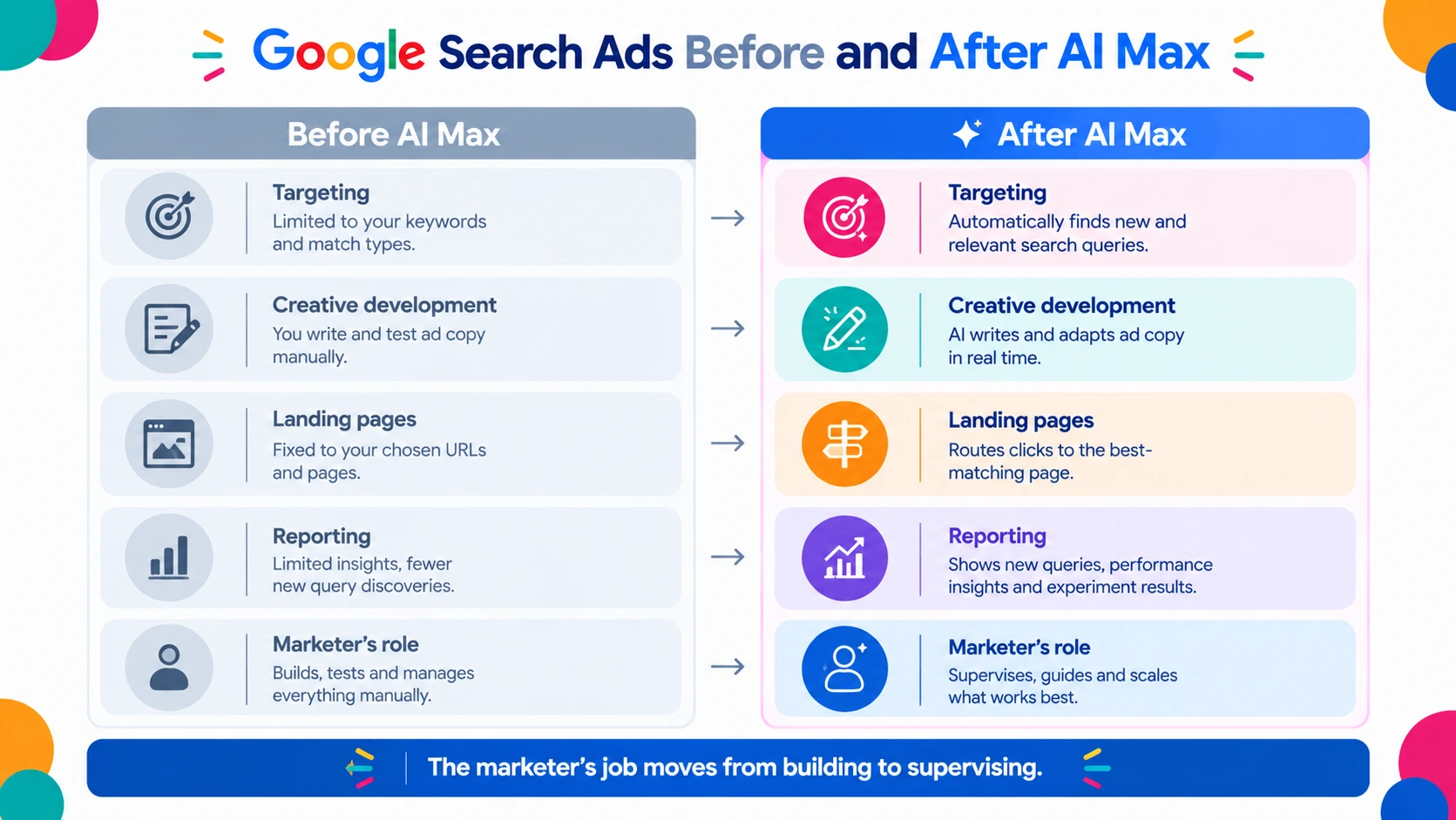
The shift is easiest to see side by side. The bottom row is the real story. The work moves up the ladder, from manual building to strategic supervision.
| Area | Before AI Max | After AI Max |
|---|---|---|
| Targeting | Advertiser picks keywords and match types | Keywords plus keywordless AI matching find related queries |
| Creative development | Marketer writes fixed headlines and descriptions | AI generates and adapts ad text per query |
| Landing pages | Traffic goes to the one URL you set | AI can route clicks to the most relevant page on your site |
| Reporting | Keyword-level reports, limited query visibility | Search terms report shows new queries, AI headlines, expanded URLs |
| Marketer’s role | Build and manage every keyword and ad by hand | Direct, supervise, and correct the AI; manage controls and budget |
Picture an institute advertising a digital marketing course. Here is how an AI Max campaign plays out, step by step.
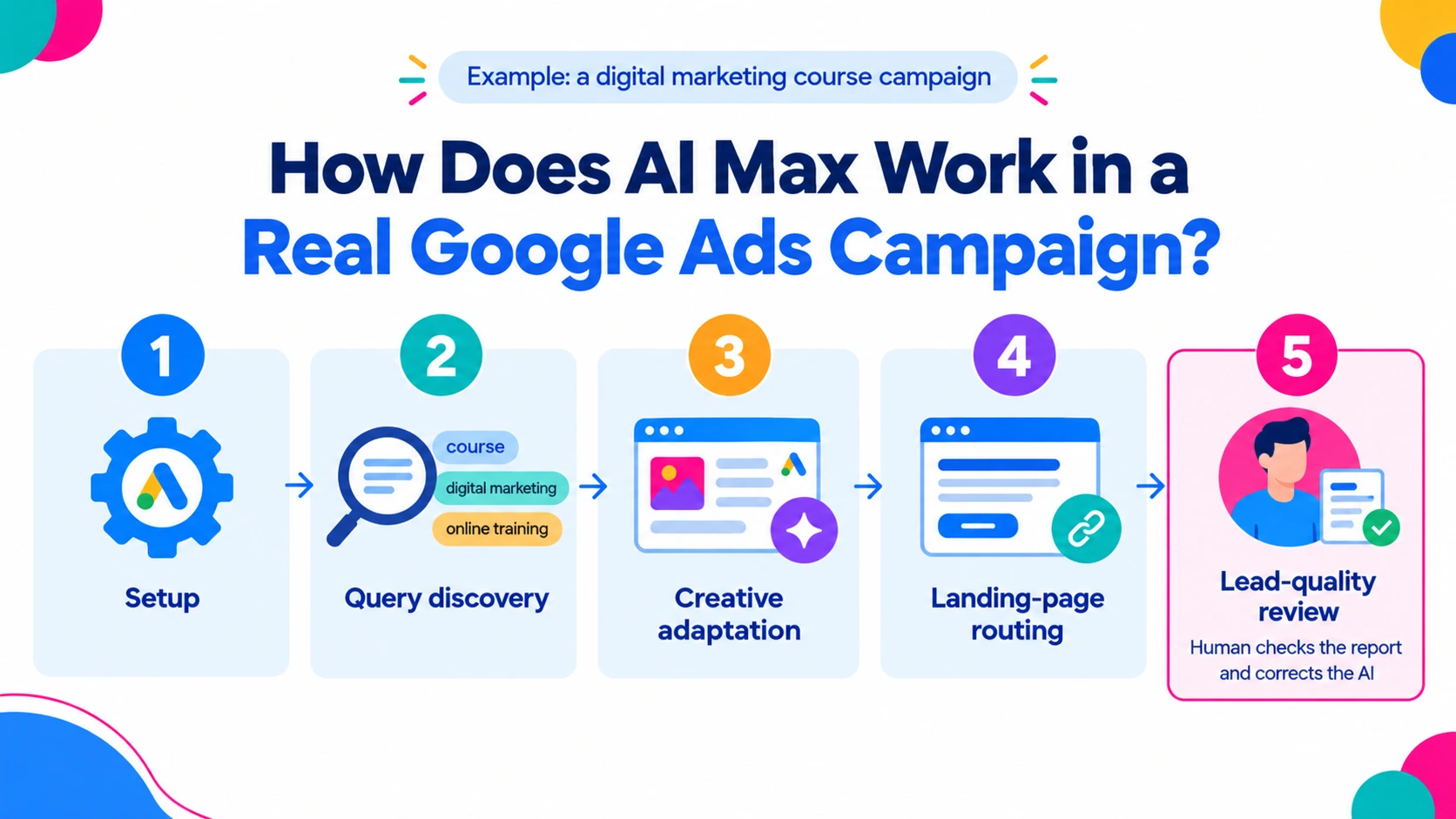
The campaign reached more people automatically, but it improved results only because a human read the reports and corrected the AI. That loop, automation plus judgment, is the whole point.
AI Max is powerful, not magic. Treat it as a capable junior who still needs supervision.
Benefits
Limitations
The limitations are not reasons to avoid AI Max. They are the reasons skilled marketers still matter.
Run this checklist before you switch it on.
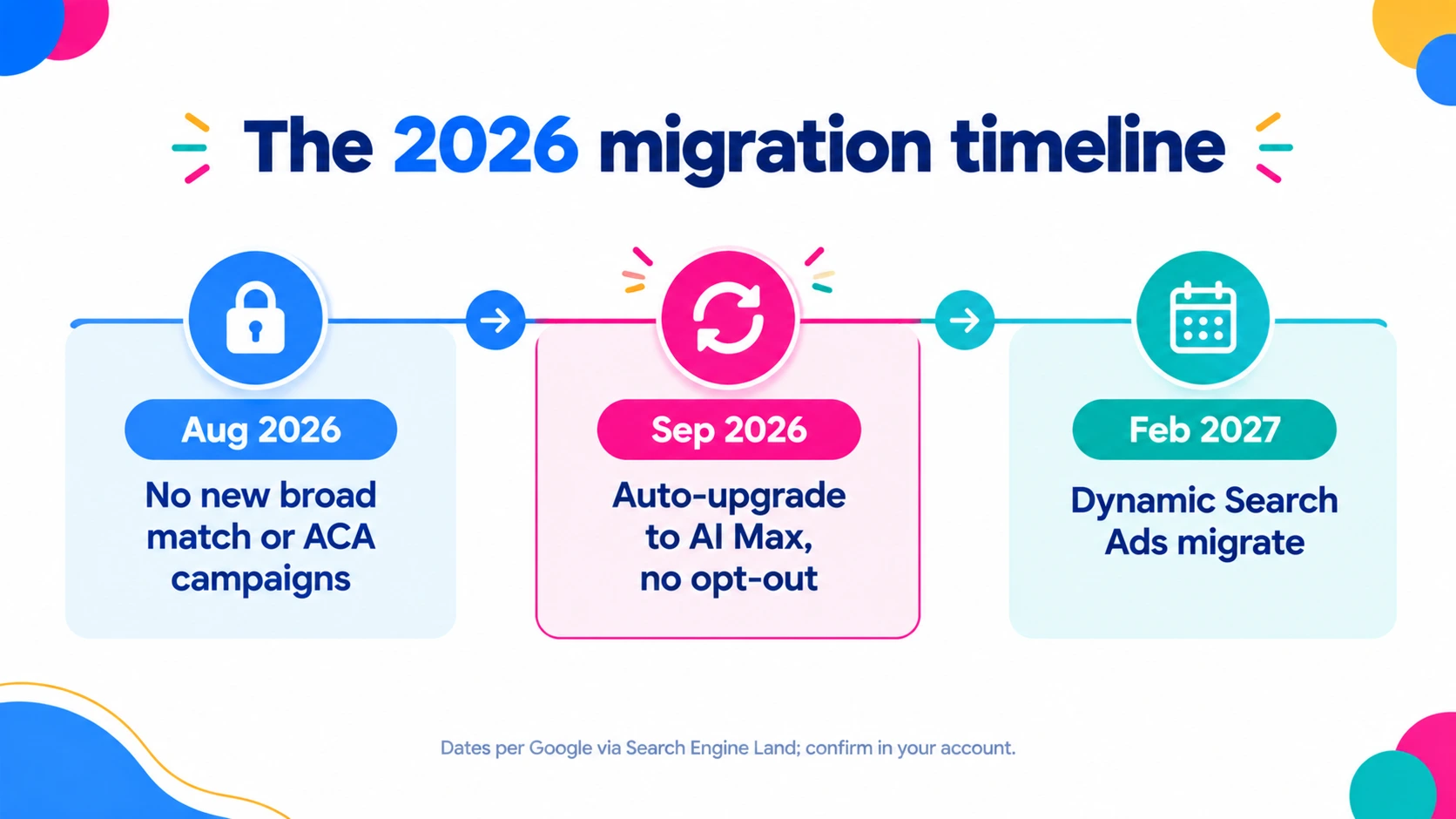
AI Max is optional for most campaigns, but Google is moving some campaigns automatically. Based on Google’s schedule as reported by Search Engine Land:
If you run Google Search Ads, check your account now rather than waiting for the automatic switch. Dates can shift, so confirm against Google’s current in-account notices.
AI Max automates tasks, not judgment. The skills that get you hired in 2026 are the ones AI cannot do alone.
The pattern is clear. Someone who only knew how to build keyword lists is less useful than before. Someone who can direct the AI, read the data, and make the call is more valuable than ever. That is the skill set worth training for.
Google Search Ads have not become easier in 2026. They have become more automated, which is a different thing. AI Max can expand reach, adapt creative, and route traffic on its own, but it still spends real money on queries a human has to judge. The campaigns that win pair Google’s AI with a marketer who knows how to direct it.
That is also why the career has not disappeared, only changed shape. The skills in demand are strategy, analytics, copy direction, and optimisation, the parts AI cannot do alone.
To build those skills, IDCM’s digital marketing programmes such as diploma in digital marketing, Advanced diploma in digital marketing and so on cover Google Search Ads, campaign management, and analytics with hands-on practice, including how to work alongside AI tools like AI Max. Explore the course to see what the training covers
Yes. Search Ads still reach people at the moment they are looking for a product or service. AI Max changes how campaigns are run, not whether paid search works.
No. It is an optimisation layer you enable inside an existing Search campaign. Your structure, budget, and goals stay the same.
For most campaigns, it is optional. However, Google began auto-upgrading campaigns using campaign-level broad match or legacy automatically created assets in September 2026, and Dynamic Search Ads are scheduled to follow in February 2027.
No, but it changes the job. Manual tasks are automated, while demand grows for people who can supervise the AI, read reports, and make strategic decisions.
Yes. You can set brand controls, location targeting, URL inclusions and exclusions, turn off text customisation or final URL expansion, and remove AI-generated assets.
Enable it on one campaign with a small share of budget, keep conversion tracking and negative keywords in place, and compare performance against your current setup before scaling.

 }})