

How to Become a SEO Expert in 2026: The Roadmap 90% Expert Won’t Share
Most people who try to learn SEO quit within 90 days because they follow outdated advice. They chase algorithms instead of users. This roadmap avoids that mistake.
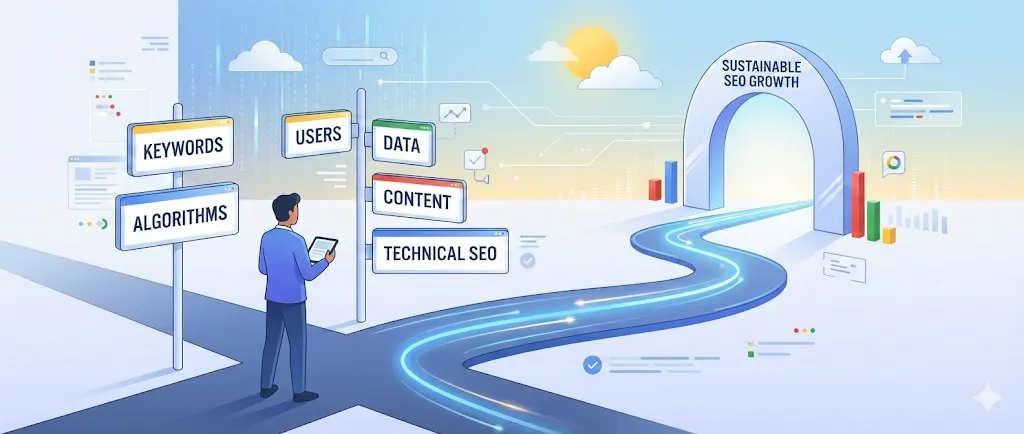
It isn’t magic. It combines engineering, psychology, and data. But to master it, you need the right strategy.
If you want to learn SEO without wasting time on tactics that died in 2020, you are in the right place.
What is an SEO Expert?
An SEO expert is a professional who improves website visibility in search engines by optimizing content, technical structure, and authority signals. They bridge the gap between user intent and search engine algorithms to drive organic traffic.
An SEO expert is a professional who improves website visibility in search engines by optimizing content, technical structure, and authority signals. They bridge the gap between user intent and search engine algorithms to drive organic traffic.
Table of Contents
The Real “SEO Career Roadmap”
Before we dive into the “how,” we need to clear up a misconception.
When I optimized my first site, I focused only on keywords—and it failed. Traffic didn’t move until I fixed site speed and internal links.
That was a hard lesson. It taught me that an SEO career roadmap isn’t just about writing. It is about understanding the entire ecosystem.
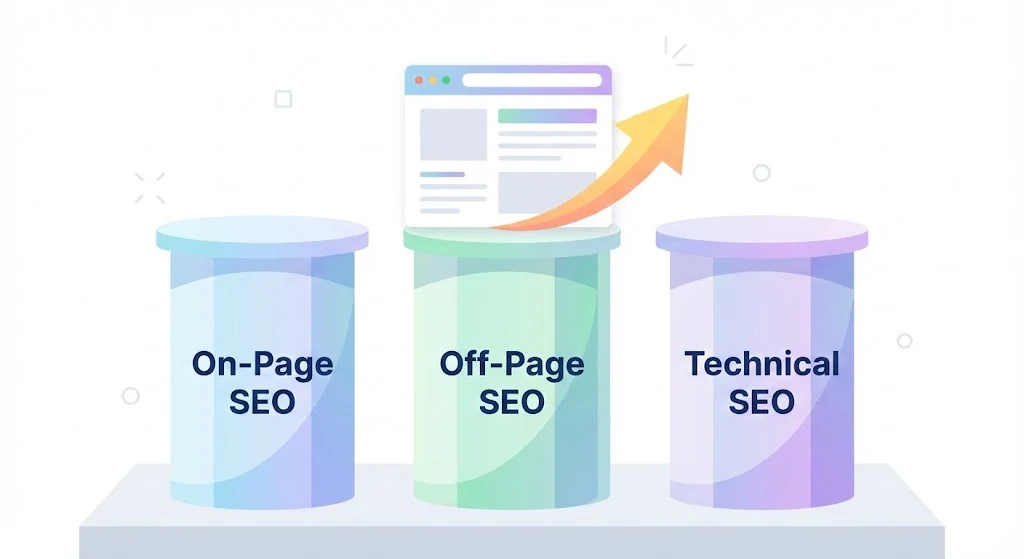
You need to master three pillars. If one is missing, the strategy collapses.
1. On-Page SEO
This is what happens on the website. You have full control here.
- Keyword Research: Finding what people search for.
- Content Quality: Writing helpful, unique articles.
- HTML Tags: Using Title tags and Header tags correctly.
2. Off-Page SEO
This happens off the website. It builds authority. It tells Google that others trust you.
- Backlinks: Getting other sites to link to you.
- Social Signals: Shares and likes on social media.
3. Technical SEO
This is the engine under the hood. It ensures Google can read your site.
- Site Speed: How fast pages load.
- Crawlability: Can Google bots access your pages?
Boost Your Digital Marketing SkillsGet Hands-On Learning with Expert Mentors |
|
| Advanced Diploma in Digital Marketing | |
| More Learning Options for you: Facebook Ads Certification | Certificate in Digital Marketing | Diploma in Digital Marketing |
Step by Step: Learn SEO From Scratch
You have the theory. Now, let’s look at the practical steps to learn SEO from scratch.
Step 1: Understand How Search Engines Work
You cannot game the system if you don’t understand the rules.
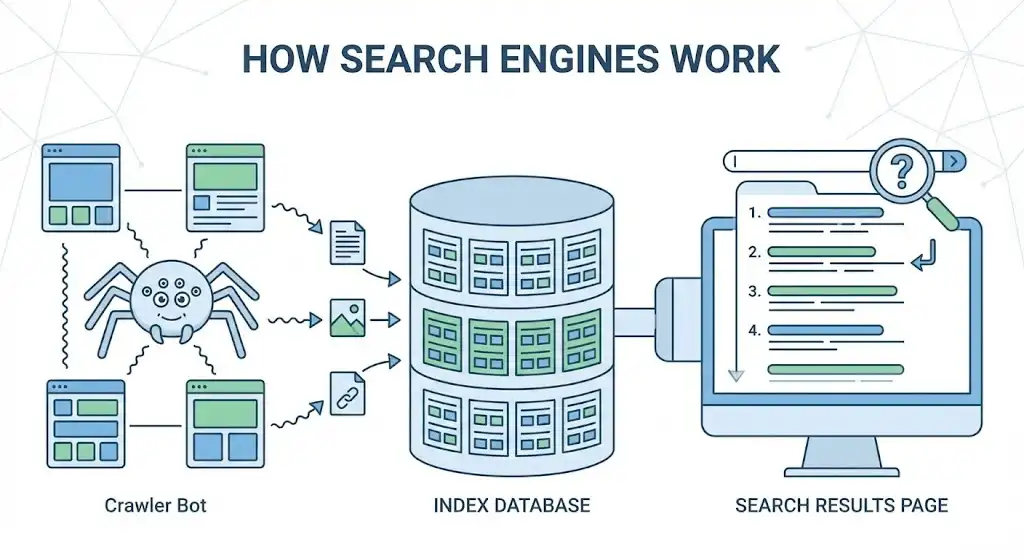
Google uses “crawlers.” These bots scan the web and add pages to a massive index. When you search, Google looks through this index. It uses an algorithm to rank results based on over 200 factors.
Action Item: Read Google’s “Search Quality Evaluator Guidelines.” It is long, but it is the foundation of all SEO expert skills.
Step 2: Start Your Own Website
This is the most critical step. You cannot learn this skill just by reading. You must do it.
Many beginners read blogs for months but never rank a page. Don’t be that person. Build a blog. Pick a hobby. Pick a passion. Use WordPress, as it powers a huge chunk of the web and is very SEO-friendly.
Why do this?
- You can experiment safely.
- You will see real-time results.
- You make mistakes on your own site, not a client’s.
Step 3: Master Keyword Research
Keywords are the compass. They tell you what users want.
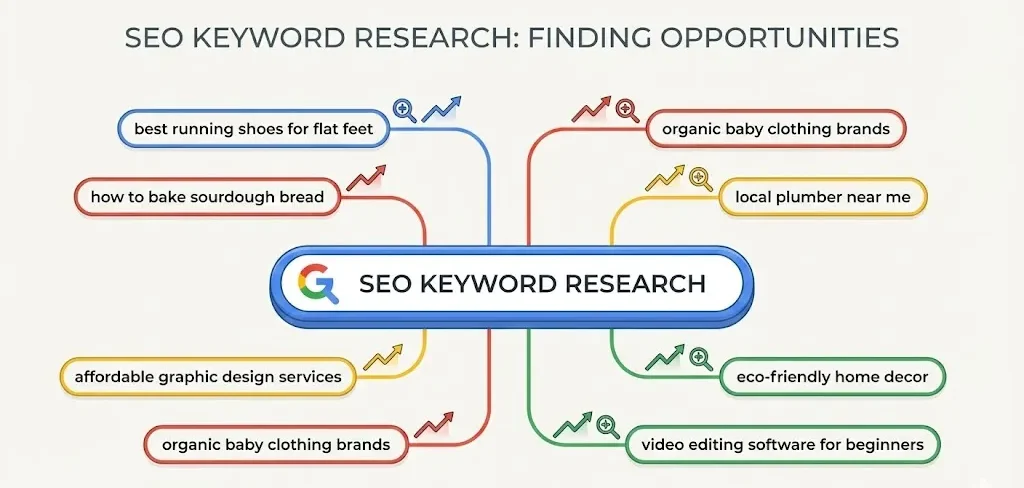
Early in my career, I targeted broad terms like “Marketing.” I never ranked. Once I switched to long-tail keywords like “digital marketing strategies for small bakeries,” traffic skyrocketed.
Types of Keywords:
- Short-tail: “Shoes” (High volume, hard to rank).
- Long-tail: “Best running shoes for flat feet” (Lower volume, easier to rank).
Step 4: Content Marketing
Google wants to rank the best answer. To be an expert, you must create that answer.
Your content should be:
- Comprehensive: Cover the topic fully.
- Readable: Use short paragraphs.
- Engaging: Use images and videos.
Transition words are key here. They help the reader flow through the text. Words like “however,” “therefore,” and “finally” keep people reading.
Essential SEO Expert Skills and Tools
You cannot build a house without a hammer. You cannot do SEO without tools. Tools provide data you cannot get otherwise.
Here is a breakdown of the essential stack.
| Tool Category | Free Options | Paid Options | What It Does |
|---|---|---|---|
| Analytics | Google Analytics | Adobe Analytics | Tracks who visits your site. |
| Performance | Google Search Console | – | Shows how Google sees your site. |
| Keyword Research | Google Keyword Planner | Ahrefs, SEMrush | Finds search terms and volume. |
| Technical Audit | Screaming Frog (Free ver.) | Screaming Frog (Paid) | Finds broken links and errors. |
Pro Tip: Master Google Search Console (GSC) first. It is free. It comes straight from Google. It is the most accurate source of data for your site.
Few related topics for your knowledge
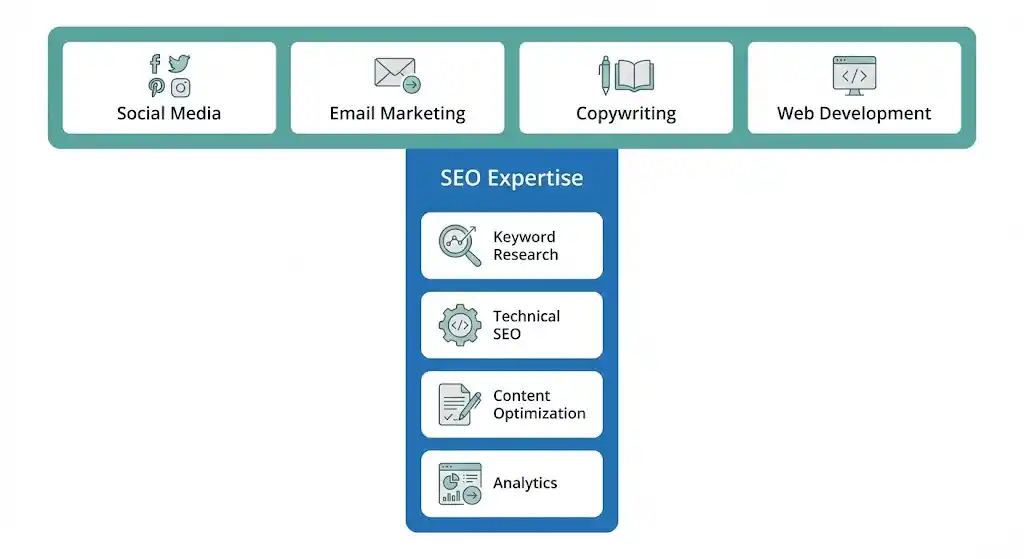
Developing the “T-Shaped” Skill Set
To truly become a SEO expert, you need to be “T-Shaped.”
What does this mean?
The horizontal bar of the “T” represents broad knowledge. You should know a little bit about:
- Social Media Marketing.
- Email Marketing.
- Copywriting.
- Web Development.
The vertical bar of the “T” represents deep knowledge. This is SEO. You should know everything about ranking websites.
Why is this important?
SEO works with other marketing channels. If you understand the big picture, you become more valuable to clients.
Keeping Up with Algorithm Updates
Here is the hard truth. The industry changes constantly.
Google updates its algorithm thousands of times a year. A tactic that worked in 2020 might get you penalized in 2025. This means your education never ends.
How to stay updated:
- Follow Industry Blogs: Read Search Engine Journal and Search Engine Land.
- Join Communities: Reddit has a great SEO community (/r/SEO).
- Test: Use your personal website to test new theories.
Building Your Portfolio
You have learned the skills. You have practiced on your blog. Now, you need to prove it.
Employers want results. They do not care what you know. They care what you can do.
How to build a portfolio:
- Showcase your own site: Show the traffic growth. Show the ranking keywords.
- Do free work: Find a local charity. Offer to fix their site speed or local listings.
- Document everything: Take screenshots “Before” and “After.”
- Write Case Studies: Explain the problem. Explain your solution. Show the result.
A strong portfolio is more powerful than any certificate.
Conclusion: Start Your Journey Today
Learning to become a SEO expert is a marathon, not a sprint.
It requires a mix of skills. You need the logic of an engineer. You need the creativity of an artist. And you need the curiosity of a scientist.
Don’t get overwhelmed. Start small.
- Read about how Google works.
- Start a blog.
- Install Google Analytics.
- Write your first optimized article.
The best time to start was yesterday. The second best time is now.
Frequently Asked Questions (FAQ)
1. How long does it take to become an SEO expert?
It varies. You can grasp the basics in 1-3 months. However, mastering SEO expert skills usually takes 1-2 years of consistent, hands-on work.
2. Do I need to know how to code?
No, you do not need to be a developer. However, knowing basic HTML and CSS is very helpful for technical audits and communicating with dev teams.
3. Is SEO a good career in 2025?
Yes. As long as people use search engines, businesses need experts to help them rank. It offers high demand and competitive salaries.
4. Can I learn SEO from scratch for free?
Yes. Use resources like Google Search Central, HubSpot Academy, and YouTube. You can become proficient without spending money on expensive courses.
5. What is the difference between On-Page and Off-Page SEO?
On-Page is what you do on your site (content, speed). Off-Page is what happens outside your site (backlinks, social media).
6. Which SEO tool is best for beginners?
Google Search Console is the best starting point. It is free and provides direct data from Google.
7. How much does an SEO expert earn?
Salaries vary by location. Entry-level specialists earn less, but experienced managers and freelancers can earn six-figure incomes.
8. Will AI replace SEO experts?
AI will change the workflow, but not replace the role. Strategy, creativity, and understanding user intent (E-E-A-T) still require human expertise.

Qualification: M.Sc. in Chemistry
Profession: Content Expert
Rajdeep Chakraborty brings 3 years of experience in SEO content writing, blog writing, creative narratives, and Meta Ad copywriting.
Linkedin: https://www.linkedin.com/in/rajdeep-chakraborty-517a392a5/
Profession: Content Expert
Rajdeep Chakraborty brings 3 years of experience in SEO content writing, blog writing, creative narratives, and Meta Ad copywriting.
Linkedin: https://www.linkedin.com/in/rajdeep-chakraborty-517a392a5/
Latest posts by Rajdeep Chakraborty (see all)
- When the Product is the Message: A Digital Case Study of Lux’s Campaign - March 7, 2026
- Google’s February 2026 Discover Core Update - February 7, 2026
- Finding the Best AI Content Writing Tool for 2026 - January 30, 2026
 }})