
Courses
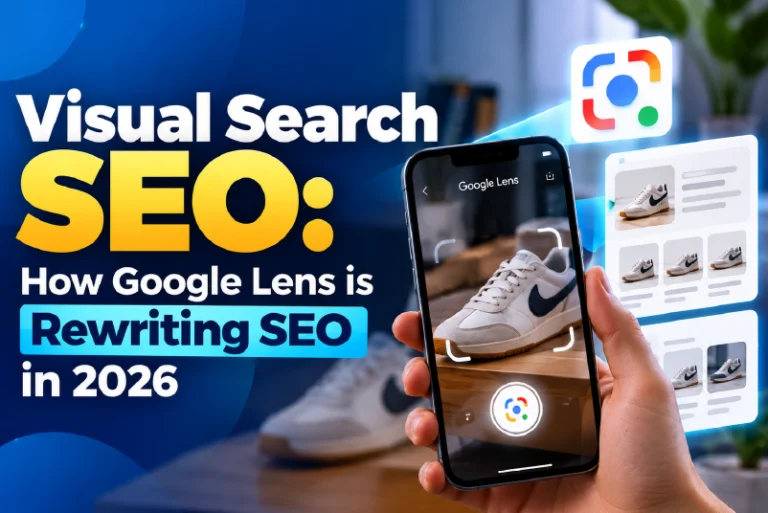
Visual Search SEO is the practice of optimising images, on-page context, and structured data so a website appears when people search with a photo or screenshot instead of typed keywords. It targets image-led discovery through Google Lens, Circle to Search, image uploads, and AI Mode, where Google reads the picture’s meaning rather than matching a keyword.
This is already a real channel, not a feature. According to Google, Google Lens now handles more than 25 billion visual searches every month, and roughly one in five carries commercial intent. Yet almost nobody entering the job market knows how to work it.
That gap is your opening. Learn Visual Search SEO now, while experienced marketers are still arguing about whether it matters, and you walk into interviews with a skill most senior candidates cannot demonstrate. This guide shows you what it is, how it works, and how to practise it with zero budget.
Visual Search SEO is optimising your images, page context, and structured data so people can find your content when they search with a picture instead of a keyword. The tools driving it are Google Lens, Circle to Search on Android, image uploads, and Google’s AI Mode.
The old mental model was simple: a keyword goes into a box. The new model is a photograph being understood. Because of that shift, the whole measurement system marketers relied on for twenty years suddenly misses a growing slice of traffic.
Here is why this matters for a fresher specifically. Keyword-only skills are now commodity skills. However, visual search is new enough that the playbook is still being written. So the person who learns it early is scarce, and scarcity is leverage in a job hunt.
To optimise for visual search, you first need to understand what the machine actually does with an image. It does not read your filename and hope.
Instead, Google converts the pixels into meaning. Its newer models map text, images, and video into one shared mathematical space, which means a photo and the words that describe it now sit in the same neighbourhood. Think of it as Google turning every image into a long string of numbers that captures what the image means.
On top of this sits AI Mode, powered by a custom version of Gemini that reads an entire scene: objects, colours, materials, and how they relate. Google reports a 65% surge in visual searches since AI Mode went multimodal, and AI Mode queries run about twice as long as typed searches.
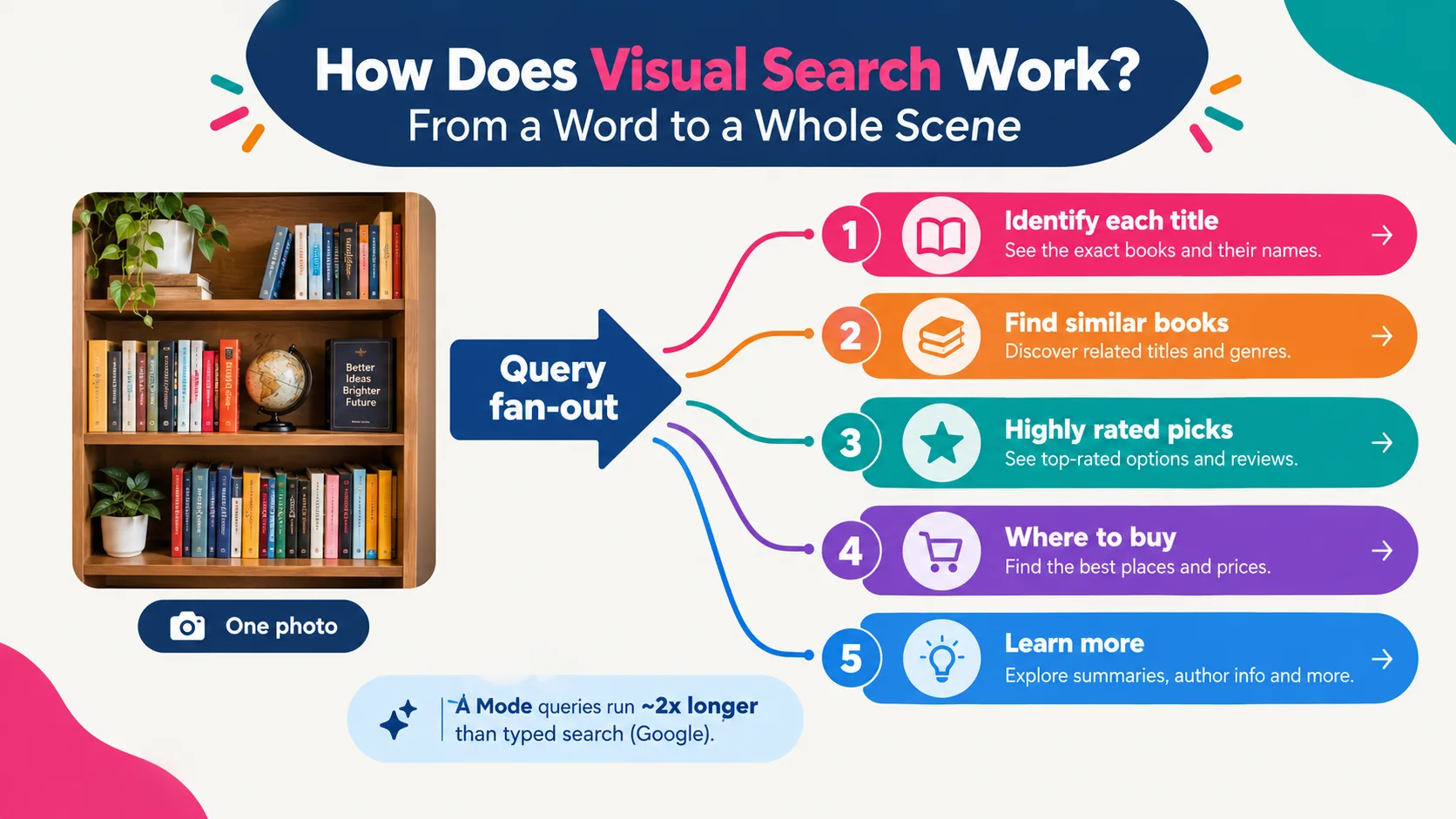
Next comes the part that rewrites your strategy. Google uses a technique it calls query fan-out. When you submit a photo of a bookshelf, AI Mode does not run one search. It issues many at once: identify each title, find similar books, surface highly rated picks, and link to places to buy.
As a strategist, read that twice. You are no longer competing for one query. Instead, you are competing to be a credible answer to a fan of related queries the user never typed and never saw. Consequently, the surface area to win multiplies, and so does the surface area to lose.
For years, the problem was simple and brutal. You could not see visual search traffic at all, because visual search mostly does not use keywords. You were optimising for one kind of search and being measured on another.
That blind spot just closed. On 24 September 2026, Google began a global rollout of a multimodal filter inside the Search Console Performance report. It sits under the Web search type and covers searches where someone used an image, whether through Lens, Circle to Search, an image upload, or Chrome’s “Search this image.” For the first time, you can see which of your pages people reach with a camera.
However, there are two real limits, because pretending otherwise wastes your time. First, there is no query data, since these searches use images, so the Queries tab disappears for this type. You get pages, impressions, clicks, country, and device. Second, the data appears only for sites that actually receive this traffic, and the rollout is gradual.
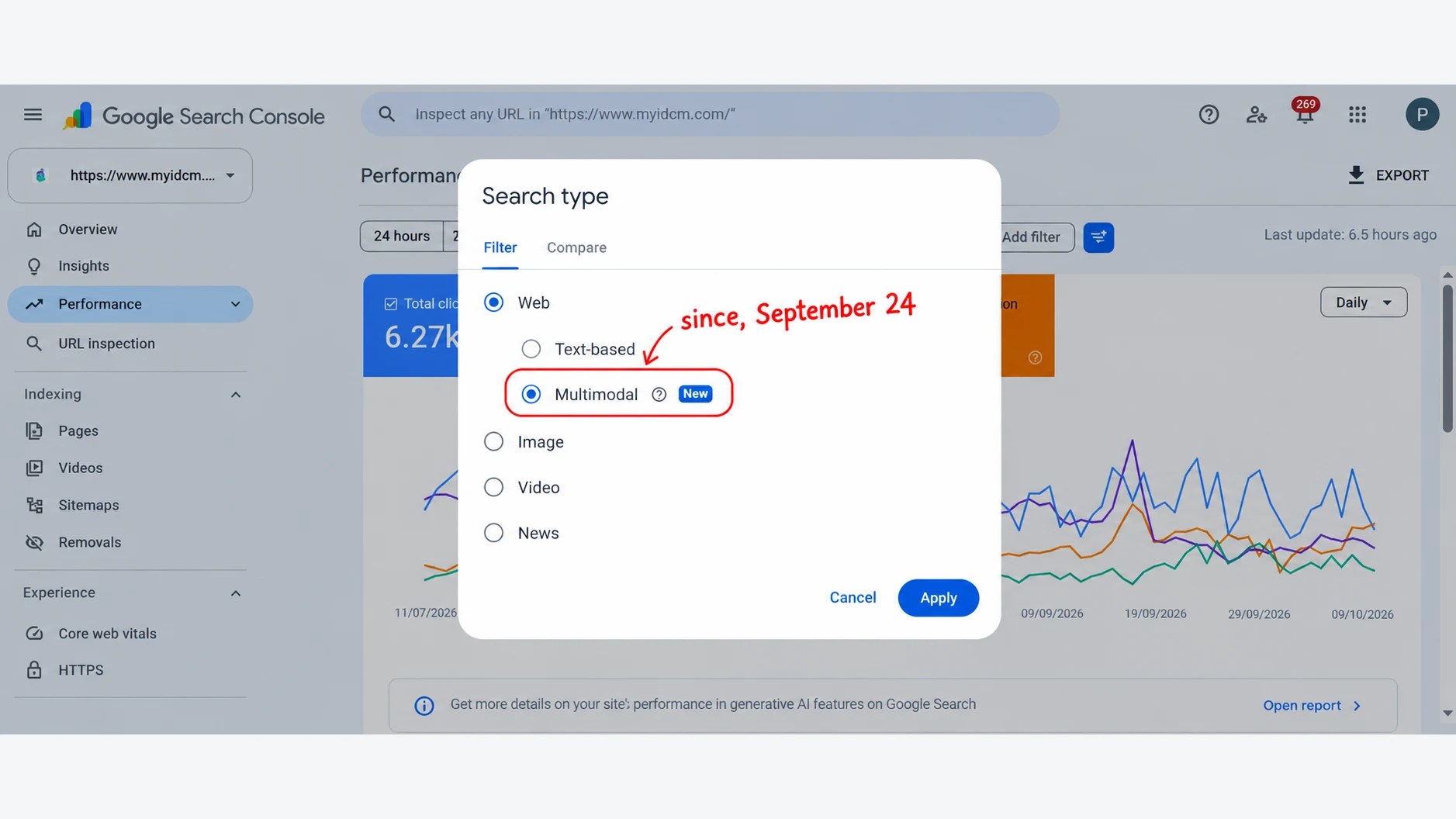
Follow these steps on any property you can access, even a free practice site:
The gaps are your map. Pages that win on text but vanish on multimodal are under-optimised for how machines see. Meanwhile, pages that win on multimodal are proof your visual signals work, and a template for the rest of the site
Step Into the World of Digital MarketingLearn from Digital Marketing Experts |
|
| Advanced Diploma in Digital Marketing | |
| More Learning Options for you: Diploma in Digital Marketing | Google Ads Certification Training | Certification Course |
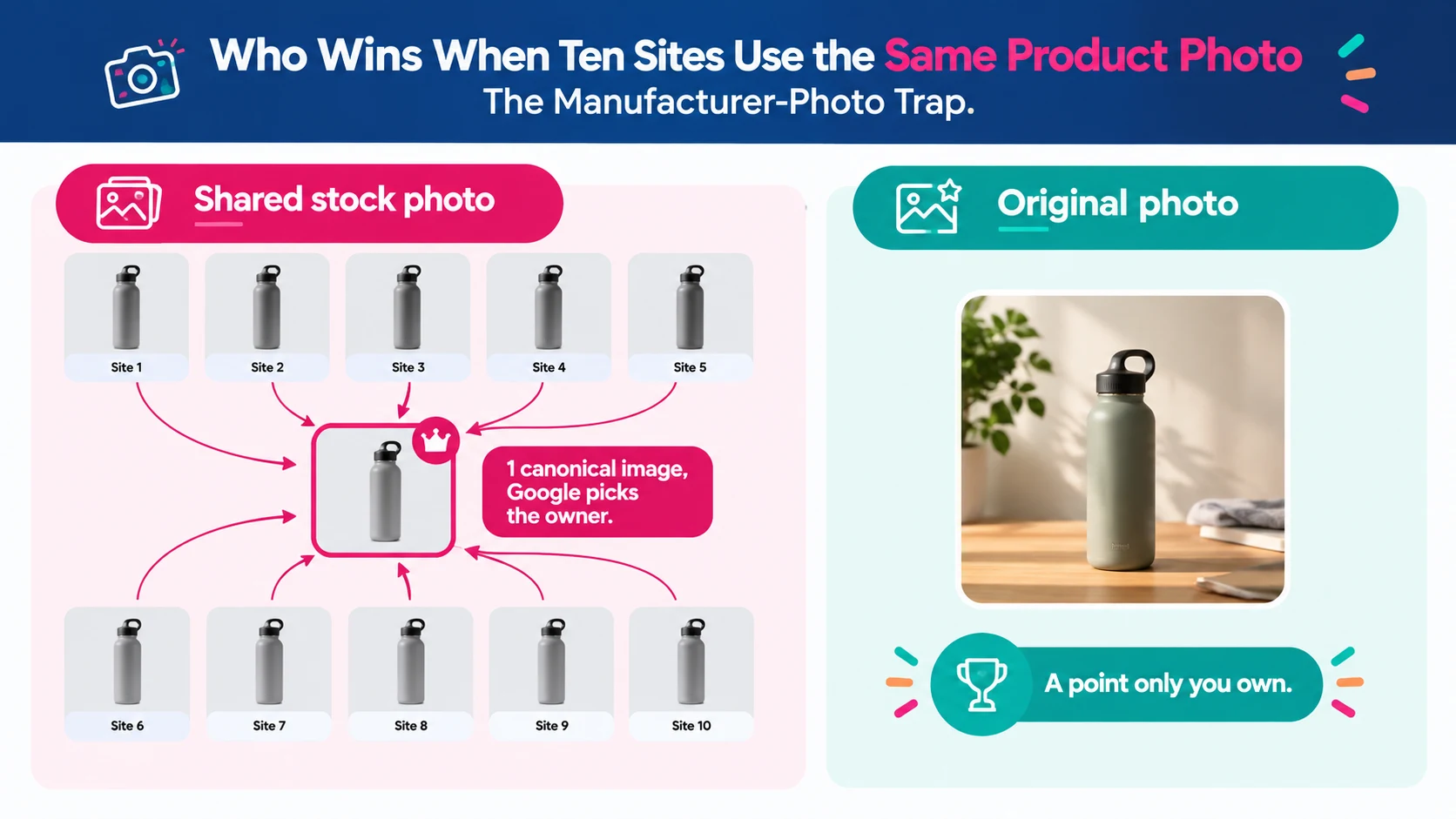
Now an edge case almost no visual search article mentions, yet it decides visibility for most online shops. Google does not store ten copies of one image as ten results. Instead, it clusters near-identical images and ties them to a single canonical version.
So when 500 retailers upload the manufacturer’s supplied product shot, they are not competing on their image. They all point to one slot, and Google must pick who owns it.
Here is the insider mechanic. Because pixel-identical images sit at the same point in that mathematical space, the model cannot break a tie between them. Therefore, the tiebreaker falls back to everything around the image: brand strength, domain authority, structured data, and page context. The image stops being the differentiator, and your brand signals take over.
This is the manufacturer-photo trap. Original photography is the quiet moat. A unique angle, your own lighting, or a real in-use shot creates an image that lives at a point only you own.
The lesson: image uniqueness, not just image quality, decides visibility. Shared stock makes you a duplicate the system can safely collapse into someone else.
Next, the “it depends” truth that sales-driven blogs avoid, because it is inconvenient. Visual search does not always send you traffic. Sometimes it answers the question and keeps the click.
The outcome depends on intent. Identification queries like “what is this plant” or “what is this part” often get answered right there in the result. You earn an impression and no click. However, transactional and “find me similar, available to buy” queries still open a real path to your site, because the user must go somewhere to act.
| Visual Query Type | Likely Outcome | What to Measure |
|---|---|---|
| Identify an object, plant, place, part | Answered in the surface, impression without click | Brand exposure, not sessions |
| Learn more about a known item | Mixed, some clicks to depth content | Engagement, assisted conversions |
| Find similar or compare options | Clicks to listing and comparison pages | Clicks, add-to-cart, lead events |
| Where to buy this | Clicks to product and store pages | Conversions and revenue |
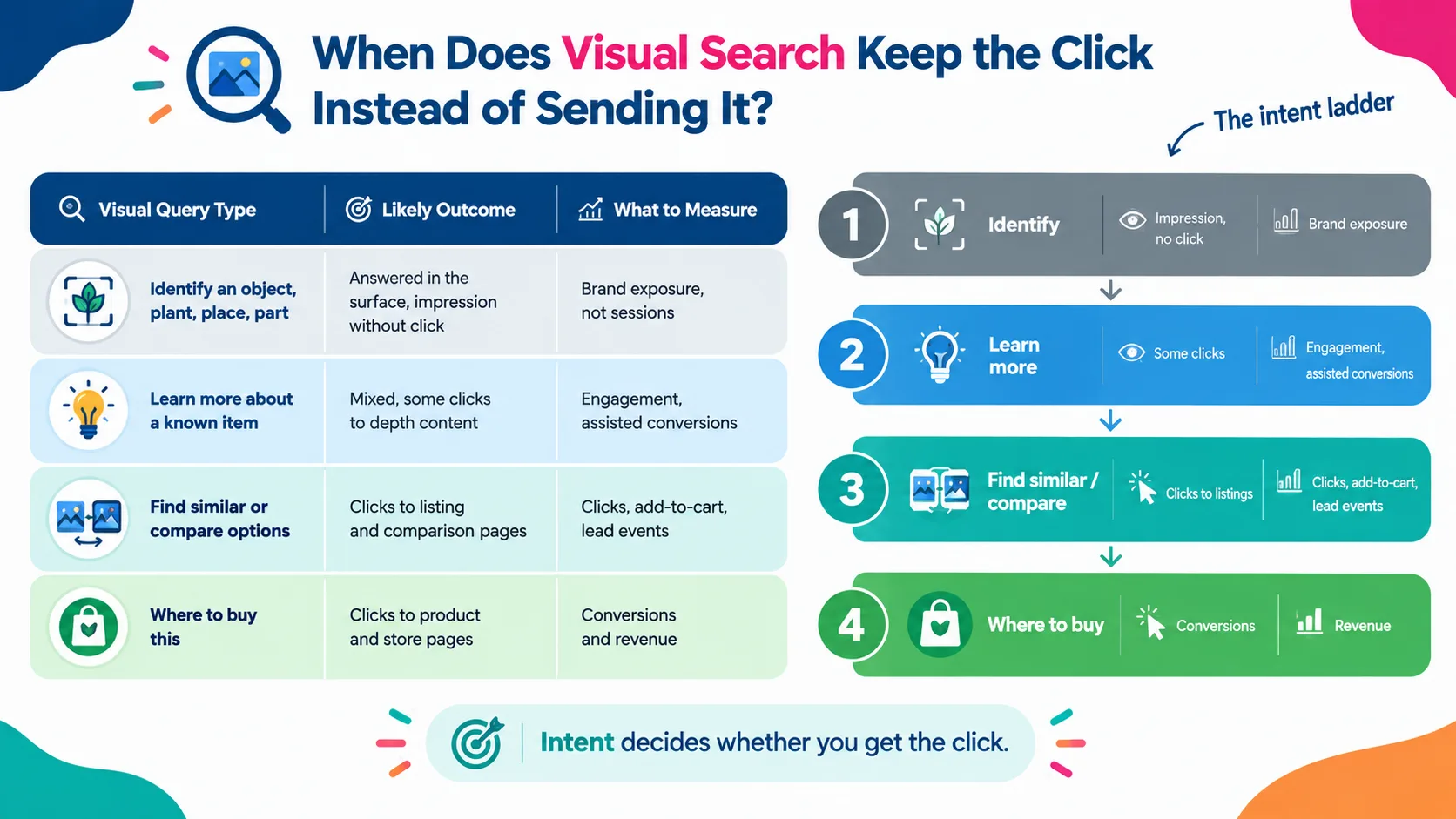
As a result, an “impressions up, clicks down” pattern is expected for identification content, not a bug to chase. If you run a reference library, your win may look like a traffic drop. So move the metric from clicks to presence and assisted conversions, and give identification content a reason to click deeper.
None of the following is a magic ranking button, and anyone who promises one does not understand how Google talks about this. Instead, these are the foundations that make your content legible to machines that see. Treat them as normal hygiene.
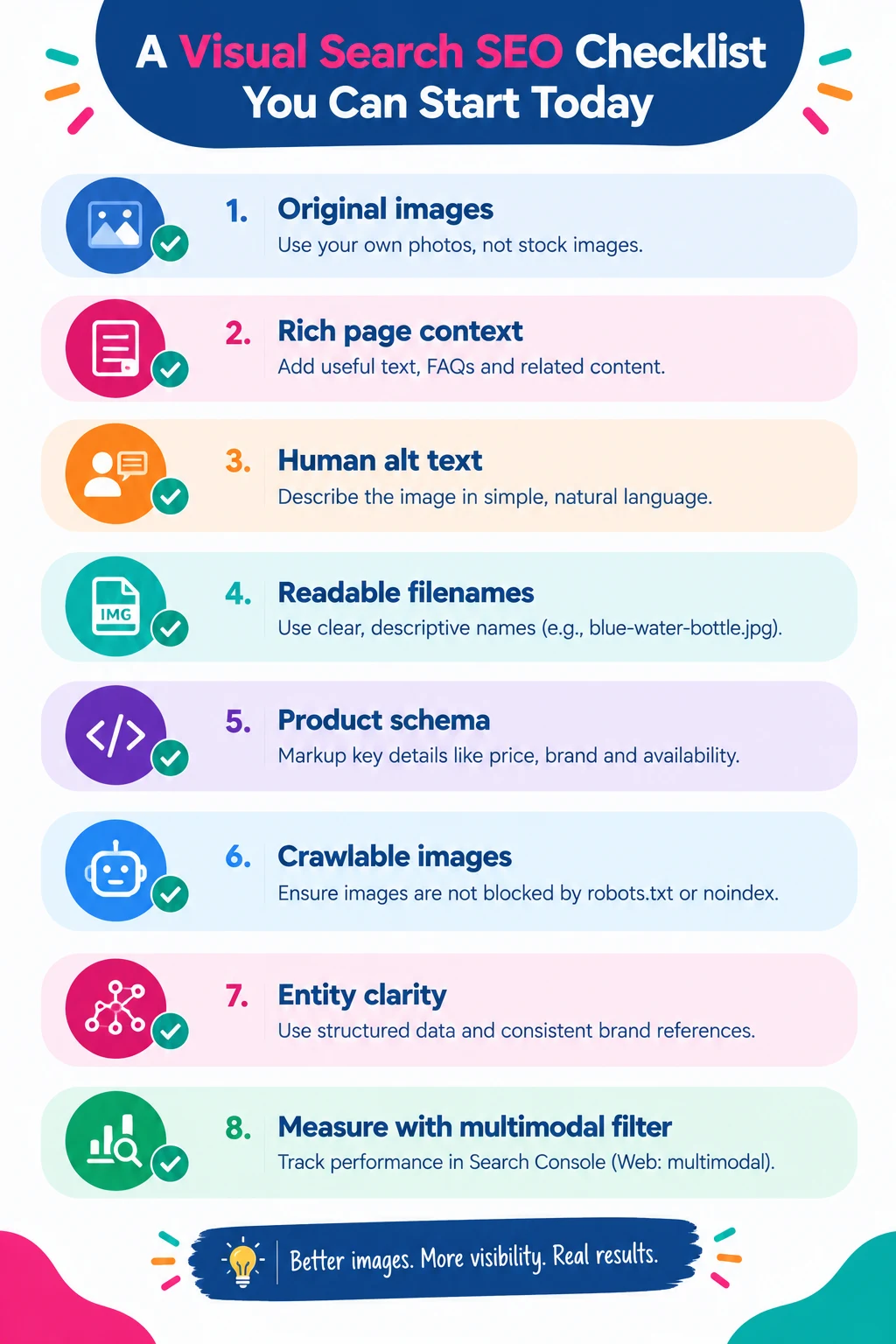
Because this field is new, the same errors repeat everywhere. Avoid these and you already stand out.
Here is the honest part most “learn SEO” posts skip. You can practise this with almost no money.
Tools you need (free tier is enough to start):
What it costs: mostly your time. A free Search Console property and a simple practice site cover the essentials. Paid tools help later, but they are not where a fresher should start.
How long to get job-ready: with steady practice, a motivated learner can grasp the fundamentals in a few weeks and build a small evidence portfolio within a couple of months. Structured training shortens that curve, because you skip the trial-and-error of figuring out which signals actually move.
This is the section hiring managers care about, so make it yours. Visual search is where keyword-only competitors cannot follow, because their entire toolset is built around text queries this traffic does not generate. The scarce, valuable skill is teaching machines to understand images in context and then measuring it with the new report.
In practice, that opens doors across several roles:
| Role You Can Target | How Visual Search SEO Helps You Stand Out |
|---|---|
| SEO Executive / Analyst | You read the multimodal filter that most seniors have not opened |
| Content / Catalogue Associate | You brief original images and page context that get content surfaced |
| E-commerce Marketing | You know why manufacturer photos lose and how to fix feeds |
| Performance Marketer | You connect visual presence to assisted conversions |
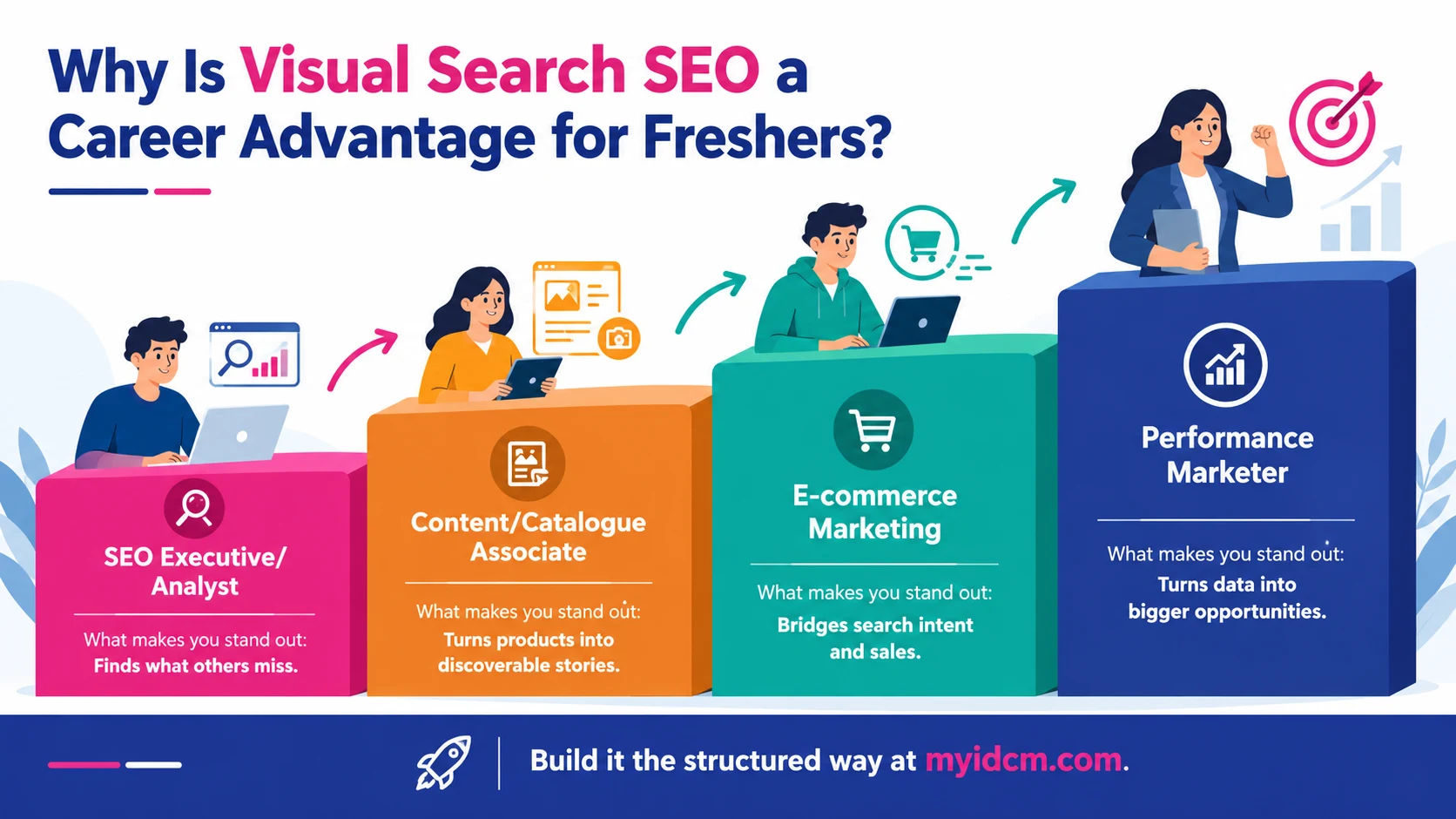
Because the playbook is still forming, a fresher who demonstrates this looks less like a beginner and more like an early specialist. That framing is the point of a strong portfolio. If you want to build this capability the structured way, IDCM’s digital marketing training (Adavanced Diploma in Digital Marketing or diploma in digital marketing) covers visual search, AI search, and technical SEO inside one programme. Explore the courses at myidcm.com to see where it fits your goals.
Most myth sections are filler. Worse, the advice they recycle is itself outdated image SEO written before embeddings existed. Here is the corrected record.
| Myth | Reality | What to Do |
|---|---|---|
| Alt text is the main lever | Embeddings read pixels and the page; alt text is secondary | Write alt text for humans, invest in context |
| Visual search is a separate engine | It draws on the same index, entities, and shopping data | Fix core content, not a siloed layer |
| You can see what users photographed | Multimodal traffic has no query data | Report by page and intent, not keyword |
| More images means better ranking | Redundant images dilute the signal | Fewer, original, context-rich images |
| Schema guarantees a Lens appearance | Schema affects eligibility, not placement | Use schema to qualify, then compete |
The lesson: most visual search advice online is recycled image SEO, repeated by people who have not opened the new reports.
When you reach a large catalogue later in your career, the game changes. Then teams keep product names and attributes identical across the site, schema, and feed so the brand forms one trusted cluster. They also add image provenance data and decide which photo represents which variant, so similar products do not collapse together. You do not need this on day one. However, knowing it exists tells an interviewer you see the whole field.
Visual search closed the gap between the physical world and your website. The people who learn to speak to machines that see, and to measure it properly, will own a channel that keyword-only competitors cannot even observe. For a fresher, that is a rare head start. Learn it, document it, and let your portfolio prove it.
It is optimising your images, page text, and structured data so Google finds your content when someone searches with a photo, using tools like Google Lens and AI Mode, instead of typing keywords.
Yes. Since 24 September 2026, a multimodal filter under the Web search type shows searches where an image was used. It reports pages, not queries, and appears only for sites that receive this traffic.
Because these searches use an image instead of typed text, there is no text query to show. So you analyse pages, intent, and conversions instead.
Original helps far more than most beginners expect. Google collapses identical images into one version, so shared stock makes you hard to tell apart. Your own images give a signal only you own.
No. Commercial queries are a large share, yet publishers, educators, and service businesses are all discoverable through images when their visual content is original and well supported by page context.
Set up a free Search Console property, run your own images through Google Lens, build a small practice site with original photos, and track your pages in the multimodal filter.
Yes. It is new, scarce, and hard for keyword-only marketers to copy, which makes it a strong way for a fresher to stand out in SEO and e-commerce roles.


 }})